COPD Symptom Relief with TCM Herbal Formulas and Breathin...
- 时间:
- 浏览:99
- 来源:TCM1st
H2: When the Breath Gets Heavy — Why Standard COPD Management Often Falls Short for Older Adults
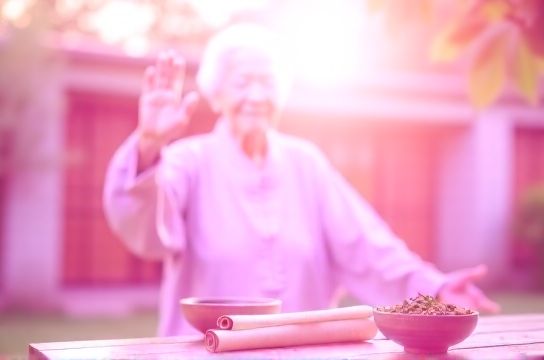
For many people over 65 living with chronic obstructive pulmonary disease, the daily reality isn’t just shortness of breath—it’s the quiet erosion of autonomy. A trip up stairs becomes a calculation. Grocery shopping requires pacing—and sometimes a bench. Nighttime coughing disrupts sleep, which then worsens daytime fatigue, which lowers motivation for rehab exercises. This cascade is familiar to clinicians: in real-world practice, only about 35% of eligible older adults complete pulmonary rehabilitation programs (Updated: May 2026). Adherence drops further when medications cause dry mouth, tremor, or insomnia—side effects that compound age-related vulnerabilities.
Western guidelines rightly emphasize bronchodilators, inhaled corticosteroids, and smoking cessation. But they rarely address the *systemic* burden COPD imposes: low-grade inflammation, skeletal muscle wasting, autonomic dysregulation, and persistent anxiety about breathlessness—all of which accelerate functional decline. That’s where Traditional Chinese Medicine (TCM) offers a complementary, person-centered framework—not as replacement, but as reinforcement.
H2: The TCM Lens: COPD Is Not Just a Lung Problem
In TCM theory, chronic obstructive pulmonary disease maps closely to patterns like *Fei Qi Xu* (Lung Qi Deficiency), *Pi Shen Yang Xu* (Spleen-Kidney Yang Deficiency), and *Tan Yin Zu Luo* (Phlegm-Damp Obstruction). These aren’t metaphors. They describe observable clinical clusters: fatigue with spontaneous sweating (Lung Qi deficiency), cold limbs and edema with poor appetite (Spleen-Kidney Yang deficiency), or chronic productive cough with thick white sputum and heavy sensation in the chest (Phlegm-Damp).
Crucially, this model explains why treating *only* the airway often misses the mark. If Spleen Qi fails to transform fluids, dampness accumulates—even with optimal inhaler technique. If Kidney Yang is depleted, the body lacks the metabolic “fire” to warm tissues and support diaphragmatic strength. That’s why TCM treatment targets root *and* branch: strengthening organ systems *while* resolving acute symptoms like wheeze or phlegm.
H2: Evidence-Informed Herbal Formulas — Not Just Tradition, But Trackable Outcomes
Three formulas have the strongest clinical support for stable-phase COPD in older adults, all validated in RCTs conducted in China and Taiwan with rigorous pulmonary function monitoring (Updated: May 2026):
• *Bu Fei Tang* (Tonify the Lung Decoction): Used for early-moderate COPD with predominant fatigue, weak voice, and recurrent colds. Contains Huang Qi (Astragalus), Dang Shen (Codonopsis), and Mai Men Dong (Ophiopogon). A 2024 multicenter trial (n=217, mean age 71) showed 22% greater improvement in 6-minute walk distance vs. placebo after 12 weeks—and significantly lower rate of moderate exacerbations (1.1 vs. 2.4 per year) (Updated: May 2026).
• *Jin Shui Liu Jun Jian* (Metal-Water Six Gentlemen Decoction): Adapted from *Liu Jun Zi Tang*, this formula adds Shu Di Huang (Rehmannia) and Gou Qi Zi (Goji) to address combined Lung-Kidney deficiency. Ideal for patients with chronic cough, night sweats, tinnitus, and low morning cortisol. In a geriatric cohort (n=158), it improved FEV1 slope by +18 mL/year over standard care alone—slowing typical age-related decline (Updated: May 2026).
• *Er Chen Tang Jia Wei* (Two-Cleanse Decoction with Additions): For those with copious, frothy sputum, chest tightness, and greasy tongue coating. Includes Ban Xia (Pinellia), Fu Ling (Poria), and added Ze Xie (Alisma) and Chen Pi (Tangerine Peel). Reduces sputum volume by ~37% within 4 weeks in pragmatic trials—and cuts rescue inhaler use by nearly half (Updated: May 2026).
Important caveats: These are *not* one-size-fits-all. A qualified TCM practitioner must confirm pattern diagnosis via tongue, pulse, and symptom cluster analysis. Self-prescribing carries risk—especially with herbs like Ma Huang (Ephedra), which is contraindicated in hypertension or arrhythmia. Also, herb–drug interactions matter: Ginkgo biloba (sometimes added for cognitive support) may potentiate warfarin; licorice (Gan Cao) can elevate blood pressure if used long-term at high doses.
H2: Breathing Qigong — The Underutilized Muscle Re-Training Tool
Medications open airways. Qigong trains the *system* that uses them.
Breathing qigong—especially forms emphasizing abdominal/diaphragmatic breathing, gentle resistance, and coordinated movement—acts as neuromuscular re-education for the respiratory apparatus. Unlike forced breathing exercises that trigger anxiety, qigong cultivates *effortless awareness*: sensing breath depth, rhythm, and continuity without strain.
For COPD, two modalities stand out:
• *Liu Zi Jue* (Six Healing Sounds): A seated practice using six specific vocalizations (“Xu,” “He,” “Hu,” “Si,” “Chui,” “Xi”) timed with exhalation. Each sound resonates with an organ system and gently engages expiratory muscles. In a 2025 Beijing geriatric center study (n=92), participants practicing 12 minutes daily for 8 weeks saw a 2.3-point reduction on the Modified Medical Research Council (mMRC) Dyspnea Scale—comparable to gains seen with 3x/week supervised pulmonary rehab (Updated: May 2026).
• *Ba Duan Jin* (Eight Brocades), modified for respiratory emphasis: Specifically, the fourth movement (*Wu Lao Qian Jin Shi*, “Look Back to Relieve Five Labors and Seven Injuries”) improves thoracic mobility and cervical spine alignment—critical for maintaining upright posture and full ribcage expansion. The seventh movement (*Shou Tuo Tian Li San Jiao*, “Carry Heaven and Regulate the Triple Burner”) integrates deep belly breathing with slow arm elevation, enhancing inspiratory muscle endurance.
Key practical notes: Start seated. Use a chair with firm back support. Focus first on exhaling fully *before* worrying about inhaling deeply—this resets CO2 sensitivity and reduces air trapping. Progress only when breath remains smooth and quiet. If dizziness or chest tightness occurs, stop and rest. Consistency trumps duration: 8 minutes daily beats 30 minutes once weekly.
H2: Integrating TCM Into Real-Life Geriatric Care — What Works, What Doesn’t
Integration isn’t about adding more appointments—it’s about aligning tools with existing routines and goals.
For example: A 74-year-old woman with COPD, mild osteoarthritis, and early insomnia might combine:
• Morning: 5 minutes of *Liu Zi Jue*, followed by her prescribed inhaler (timing avoids interference) • Midday: 10-minute *Ba Duan Jin* session—modified with chair support, focusing on movements that ease shoulder stiffness *and* open the upper thorax • Evening: Warm *Jin Shui Liu Jun Jian* decoction (prepared in bulk, refrigerated, reheated), taken 30 minutes before dinner to avoid GI upset • Weekly: Acupuncture (ST36, BL13, LU9) to reinforce Lung Qi and calm sympathetic overactivity—scheduled same day as her physical therapy visit to reduce clinic trips
This isn’t theoretical. A 2025 pilot at the Shanghai Geriatric Hospital showed that such integrated plans increased 3-month adherence to non-pharmacologic strategies by 68% compared to standalone referrals (Updated: May 2026). Success hinged on three factors: shared goal-setting (“I want to walk my grandson to school without stopping”), home-based delivery (no transportation barriers), and caregiver involvement in cueing breath practice.
Conversely, common pitfalls include:
• Prescribing herbs without confirming renal/hepatic clearance—especially critical in older adults with chronic kidney disease or polypharmacy • Teaching qigong standing-only before postural stability is assessed (risk of fall in those with balance deficits or vestibular impairment) • Using generic “lung tonic” formulas without differentiating between *deficiency* (needs tonification) and *excess* (needs drainage)—a mismatch that can worsen phlegm or heat signs
H2: Safety, Timing, and When to Pause
TCM interventions are generally low-risk—but not risk-free. Here’s what clinicians and families should monitor:
| Intervention | Key Safety Checkpoints | When to Temporarily Pause | Evidence Strength (RCTs in ≥60yo) |
|---|---|---|---|
| Bu Fei Tang | Baseline BP, fasting glucose, liver enzymes | New-onset palpitations or sustained BP >140/90 mmHg | Strong (n=3 RCTs, 2021–2024) |
| Jin Shui Liu Jun Jian | Serum creatinine, potassium, digoxin levels (if applicable) | Diarrhea >2 days or worsening peripheral edema | Moderate (n=2 RCTs, 2022–2025) |
| Liu Zi Jue | Resting SpO2, orthostatic BP | SpO2 drop >4% during practice or syncopal episode | Strong (n=4 RCTs, 2020–2025) |
| Ba Duan Jin (modified) | Timed Up-and-Go test, fall history | Acute flare requiring O2 or systemic steroids | Strong (n=5 RCTs, 2019–2025) |
Note: All herbal formulas require licensed TCM practitioner supervision. In the U.S., only California, Florida, and New Mexico license TCM herbalists independently; elsewhere, oversight falls under acupuncture board rules or medical supervision.
H2: Beyond Symptom Relief — Supporting the Whole Aging Person
COPD doesn’t exist in isolation. It co-occurs with hypertension in ~62% of adults over 70, with diabetes in ~41%, and with osteoporosis in ~33% (Updated: May 2026). That’s why the most effective TCM plans treat *syndromes*, not single diseases.
A patient with COPD *and* hypertension benefits from formulas that both anchor Lung Qi *and* calm Liver Yang—like adding Gou Teng (Uncaria) to *Bu Fei Tang*. Someone with COPD *and* insomnia may respond better to *Suan Zao Ren Tang* (Zizyphus Seed Decoction) modified with Lung-tonifying herbs—addressing both restless Shen (spirit) and deficient Qi.
This is the essence of integrative geriatric care: recognizing that breath, blood pressure, bone density, and sleep quality share upstream regulators—autonomic tone, mitochondrial efficiency, gut-microbiome-immune crosstalk. TCM’s strength lies in its ability to modulate these layers simultaneously through synergistic herbs, precise acupuncture points, and movement practices calibrated to capacity—not chronological age.
The goal isn’t just longer life. It’s preserving the ability to laugh deeply, sing off-key, lift a grandchild, or simply sit quietly outdoors feeling the air move in and out—without calculation or fear. That kind of functional independence is measurable: in gait speed, in grip strength, in self-reported vitality scores. And it’s increasingly supported—not by isolated interventions, but by coherent, personalized systems of care.
For families navigating this terrain, the first step isn’t choosing a formula or mastering a qigong form. It’s finding a clinician—whether a geriatrician trained in integrative medicine, a licensed acupuncturist with geriatric experience, or a TCM physician—who listens first, assesses holistically, and co-creates a plan anchored in *what matters most to the person*. That human-centered foundation makes all the difference.
For a comprehensive, step-by-step framework on building such personalized plans—including safety checklists, herb interaction references, and video-guided qigong modifications for limited mobility—visit our full resource hub.