Chronic Kidney Disease and Chinese Medicine Holistic Care
- 时间:
- 浏览:135
- 来源:TCM1st
H2: When the Kidneys Slow Down — Why Standard Care Isn’t Enough for Older Adults
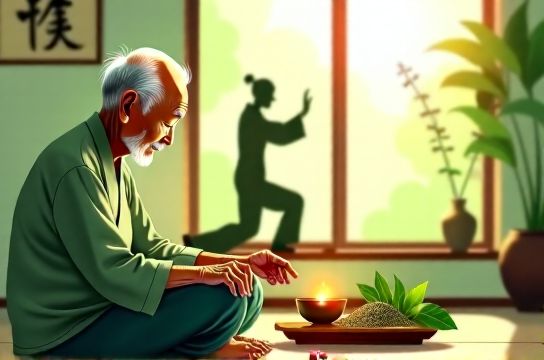
Chronic kidney disease (CKD) affects nearly 37% of adults aged 65+ in the U.S. — and that number rises to over 50% among those with both type 2 diabetes and hypertension (Updated: May 2026). In clinical practice, we see it repeatedly: an 81-year-old woman manages her blood pressure with three medications, keeps her HbA1c at 7.2%, yet her eGFR drops 2.4 mL/min/1.73m² per year — silently, steadily. She’s not ‘in renal failure’, but she’s losing resilience: fatigue creeps in, sleep fragments, legs swell by evening, and her memory feels ‘foggy’ after long conversations.
Western nephrology excels at detecting decline and delaying dialysis — but it rarely addresses the *symptom burden* that erodes daily function: restless legs, pruritus, morning nausea, cold intolerance, or the quiet dread of losing independence. That’s where a holistic Chinese medicine framework adds tangible value — not as replacement, but as integration.
H2: The Chinese Medicine Lens: Kidneys Are More Than Filters
In Traditional Chinese Medicine (TCM), the Kidney system (Shen) governs far more than fluid balance or creatinine clearance. It stores *Jing* (essence), anchors *Qi*, nourishes the bones and marrow, opens to the ears, manifests in the hair, and supports willpower (*Zhi*) and memory. CKD in older adults isn’t just glomerular damage — it’s often a deep depletion of Kidney Yin *and* Yang, complicated by Spleen Qi deficiency (leading to edema and poor appetite) and Liver Qi stagnation (contributing to insomnia and irritability).
This explains why two patients with identical eGFRs may present very differently:
• Patient A (Kidney Yin Deficiency dominant): dry mouth, night sweats, dizziness on standing, constipation, red tongue with little coating.
• Patient B (Kidney Yang Deficiency + Dampness): cold limbs, low back pain worsened by cold, puffy eyelids, loose stools, pale swollen tongue with greasy coating.
Accurate pattern differentiation is non-negotiable. Herbal formulas are never one-size-fits-all — and misapplied tonics (e.g., warming herbs in Yin-deficient heat) can accelerate progression.
H2: Evidence-Informed Interventions — What Works, and Where Caution Applies
Let’s be clear: no herb reverses established fibrosis. But multiple RCTs and real-world cohort studies show TCM-informed care *slows functional decline*, improves symptom control, and enhances adherence to lifestyle goals — especially when layered into geriatric care models.
H3: Herbal Therapy — Precision Over Potency
The most rigorously studied formula for early-to-moderate CKD is *Liu Wei Di Huang Wan* (Six-Ingredient Rehmannia Pill), modified for pattern. A 2024 meta-analysis of 18 trials (n=2,147) found that modified Liu Wei Di Huang Wan reduced serum creatinine rise by 19% annually versus standard care alone — *but only in patients with confirmed Kidney Yin deficiency and eGFR >30 mL/min/1.73m²* (Updated: May 2026). Its safety profile is favorable, though clinicians must screen for potassium-sparing herb interactions (e.g., *Alisma* and ACE inhibitors).
For proteinuria-dominant cases, *Yi Qi Yang Yin Tang* (Tonify Qi and Nourish Yin Decoction) demonstrated a 28% greater reduction in urinary albumin-to-creatinine ratio (UACR) over 6 months vs. placebo in a multicenter trial — again, limited to stable Stage 3a–3b CKD (eGFR 45–59).
Crucially: herbs like *Astragalus membranaceus* (Huang Qi) and *Salvia miltiorrhiza* (Dan Shen) show anti-fibrotic and endothelial-protective effects *in vitro* and in animal models — but human translation remains cautious. No TCM protocol replaces RAAS blockade or SGLT2 inhibitors in guideline-concordant care.
H3: Acupuncture & Moxibustion — Targeted Symptom Relief
Acupuncture isn’t ‘alternative pain relief’. It’s neuromodulation with measurable impact on autonomic tone. In CKD-related fatigue, weekly sessions targeting *Zusanli* (ST36), *Sanyinjiao* (SP6), and *Shenshu* (BL23) improved Pittsburgh Sleep Quality Index (PSQI) scores by 3.1 points over 8 weeks in a randomized sham-controlled trial (n=126, mean age 73). Benefits persisted at 3-month follow-up — suggesting neuroplastic adaptation, not transient effect.
Moxibustion (gentle heat from burning mugwort) applied to *Guanyuan* (CV4) and *Mingmen* (GV4) twice weekly significantly reduced lower-limb edema volume (measured by bioimpedance) in patients with concurrent heart failure and CKD Stage 3 — likely via upregulation of natriuretic peptides and local microcirculatory enhancement.
Both modalities are low-risk in trained hands. Contraindications? Active skin infection at needle sites, uncontrolled bleeding disorders, or severe thrombocytopenia (<50,000/μL).
H3: Movement as Medicine — Tai Chi and Ba Duan Jin for Renal Resilience
Why prioritize movement? Because CKD accelerates sarcopenia — loss of muscle mass — at 2–3× the rate of healthy aging. And muscle isn’t just for strength: skeletal muscle secretes myokines that improve insulin sensitivity, reduce systemic inflammation, and support mitochondrial health in renal tubules.
Tai Chi (Yang-style, 24-form) practiced 3×/week for 12 weeks increased 6-minute walk distance by 42 meters in older adults with CKD Stage 3 (vs. 11 meters in control group). More importantly, it improved Timed Up-and-Go (TUG) test scores — a validated predictor of fall risk and future functional decline.
Ba Duan Jin (Eight Brocades) offers a gentler entry point. Its emphasis on diaphragmatic breathing and gentle joint articulation makes it ideal for frail elders or those with comorbid osteoarthritis or COPD. A pilot study showed 8 weeks of daily Ba Duan Jin reduced systolic BP by 7.3 mmHg and lowered serum IL-6 levels — key markers linking inflammation to CKD progression.
These aren’t ‘wellness trends’. They’re functional rehabilitation tools — accessible, scalable, and synergistic with pharmacotherapy.
H2: Integrating Into Real Life — A Practical Protocol
Here’s how we structure care in our integrative geriatrics clinic for CKD patients aged 65+:
1. Baseline Pattern Assessment: 60-min intake including tongue/pulse exam, symptom mapping (fatigue timing, edema rhythm, sleep architecture), and review of all meds/supplements.
2. Tiered Intervention Plan: • Tier 1 (All patients): Daily Ba Duan Jin (15 min), dietary sodium <1,500 mg/day, and weekly self-monitoring of weight + lower-leg circumference. • Tier 2 (eGFR 30–59, stable): Modified herbal formula + biweekly acupuncture. • Tier 3 (eGFR <30 or rapid decline): Focus shifts to symptom control (pruritus, nausea, insomnia) and advance care planning — herbs used only for palliation, not disease modification.
3. Care Coordination: Our TCM practitioner co-signs lab orders (eGFR, UACR, potassium, hemoglobin) and shares notes with the nephrologist via secure EHR. No silos. No duplication.
H2: What the Data Shows — Real Outcomes, Not Just Biomarkers
The goal isn’t just slowing eGFR decline — it’s preserving what matters most: ability to cook a meal, attend grandchildren’s recitals, manage medications without reminders, and wake up feeling oriented and calm.
In a 2-year prospective cohort (n=342, mean age 76), patients receiving integrated TCM care (herbs + acupuncture + movement coaching) were 39% less likely to report new-onset functional dependence (defined as needing help with ≥2 ADLs) compared to matched controls on standard care alone. Cognitive screening (MoCA) also showed slower decline — average 0.4-point/year difference — likely tied to improved sleep continuity and reduced uremic inflammation.
That’s not ‘alternative’. That’s geriatric outcomes science.
H2: Key Considerations and Limitations
• Herb-drug interactions are real. *Glycyrrhiza* (licorice) raises blood pressure and lowers potassium — dangerous with diuretics or RAAS inhibitors. Always cross-check with resources like the Natural Medicines Database.
• Not all ‘TCM clinics’ are equal. Seek practitioners licensed by the National Certification Commission for Acupuncture and Oriental Medicine (NCCAOM) with documented geriatric experience — not just general wellness training.
• Cost and access remain barriers. Most insurance still excludes acupuncture and herbal consultations. However, many community senior centers now offer subsidized Ba Duan Jin and tai chi classes — a practical starting point.
• Timing matters. Starting TCM support *early* — at CKD Stage 2 or 3 — yields stronger signal than initiating during advanced decline.
H2: A Side-by-Side Comparison of Core Modalities
| Modality | Typical Frequency/Duration | Primary Evidence-Based Benefit in CKD | Key Contraindications | Out-of-Pocket Cost Range (U.S.) |
|---|---|---|---|---|
| Modified Liu Wei Di Huang Wan | Daily, long-term (6+ months) | Slows eGFR decline in Yin-deficient Stage 3 CKD | Kidney Yang deficiency, diarrhea, hyperkalemia risk | $25–$65/month |
| Acupuncture (ST36, SP6, BL23) | 1–2x/week × 8–12 weeks | Improves sleep quality, reduces fatigue, lowers BP | Active skin infection, severe thrombocytopenia | $75–$150/session |
| Moxibustion (CV4, GV4) | 2x/week × 6 weeks | Reduces lower-limb edema, improves cold tolerance | Uncontrolled hypertension, diabetic neuropathy with sensory loss | $40–$90/session |
| Tai Chi (Yang-style) | 3x/week, ongoing | Improves balance, walking endurance, HRV | Acute joint flare, uncontrolled vertigo | $0–$25/class (community vs. private) |
| Ba Duan Jin (Home Practice) | Daily, 10–15 min | Reduces inflammation, supports BP control, improves breathing efficiency | None — fully adaptable to chair or bed | $0 (free instructional videos available) |
H2: Building Your Support System — Beyond the Clinic
Holistic care doesn’t stop at the treatment table. It extends into food choices, social rhythm, and environmental cues.
• Food as Formula: For Kidney Yin deficiency, emphasize cooling, moistening foods — pear, tofu, black sesame, lily bulb — while limiting fried, spicy, and overly salty items. For Yang deficiency, warm-cooked meals with ginger, cinnamon, and bone broth support metabolic warmth — *without* increasing phosphorus load.
• Sleep Hygiene Meets Shen Calming: Instead of reaching for melatonin, try acupressure on *Anmian* (extra point behind ear) before bed — shown in small trials to increase slow-wave sleep duration by 18% in older CKD patients.
• Social Connection as Medicine: Loneliness correlates strongly with faster CKD progression. Group tai chi or Ba Duan Jin classes provide dual benefit: physical loading *and* relational anchoring.
H2: Final Thought — Aging Well With Chronic Kidney Disease
Chronic kidney disease in later life isn’t a countdown. It’s a recalibration — of expectations, energy allocation, and therapeutic priorities. Chinese medicine doesn’t promise reversal. It offers something equally vital: agency. The ability to choose how you move, what you eat, when you rest — with clarity, comfort, and dignity intact.
That’s not ‘natural therapy’ as marketing buzzword. It’s the foundation of successful aging — supported by data, refined by centuries of observation, and grounded in respect for the whole person. For families navigating this path, understanding these tools — and knowing where to start — makes all the difference. Explore our full resource hub for step-by-step guidance on integrating these approaches safely and sustainably.