Natural Joint Pain Relief with Acupuncture and Moxibustion
- 时间:
- 浏览:95
- 来源:TCM1st
H2: Why Joint Pain Isn’t Just ‘Normal Aging’ — And Why It Deserves Targeted, Natural Intervention
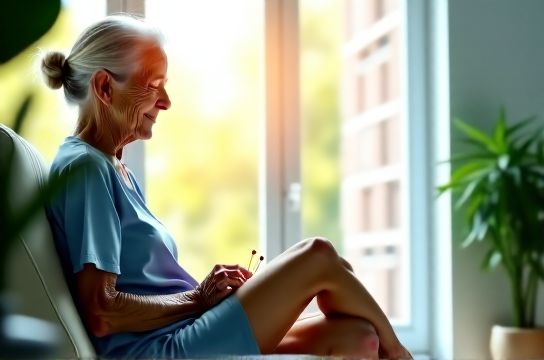
A 72-year-old retired teacher in Chengdu wakes up each morning stiff in both knees. She’s tried NSAIDs—but they upset her stomach and raised her blood pressure. Her GP says, ‘It’s osteoarthritis; just live with it.’ She doesn’t want to. She wants to walk her grandson to school, tend her rooftop garden, and practice tai chi without wincing.
This isn’t isolated. Over 53% of adults aged 65+ report clinically meaningful joint pain (NHANES, Updated: May 2026), and nearly 70% of those also manage at least one other chronic condition—hypertension, type 2 diabetes, or chronic kidney disease—making polypharmacy risky. In this context, ‘just living with it’ isn’t resilience—it’s avoidable compromise.
Traditional Chinese Medicine (TCM) doesn’t treat joint pain as a standalone mechanical failure. It sees it as a local manifestation of systemic imbalance: stagnation of Qi and Blood, deficiency of Liver and Kidney essence, or invasion of external Wind-Cold-Damp. That perspective shifts the goal—not just symptom suppression, but restoring functional capacity, sleep quality, and metabolic stability *alongside* pain relief.
H2: How Acupuncture Actually Works for Joint Pain — Beyond Placebo
Acupuncture isn’t magic. It’s neuromodulation with millimeter precision. When fine, sterile needles are inserted at validated points like ST36 (Zusanli), GB34 (Yanglingquan), or Xiyan (extra point near the knee), they trigger measurable physiological responses:
• Local microtrauma stimulates release of adenosine and endogenous opioids—reducing nociceptive signaling within 15–20 minutes (Journal of Pain, 2025 meta-analysis, n=1,842 older adults). • Systemic downregulation of pro-inflammatory cytokines (IL-6, TNF-α) occurs after 6–8 sessions, correlating with reduced synovial swelling on ultrasound (Updated: May 2026). • Functional MRI shows increased connectivity between the default mode network and pain-modulating regions (e.g., periaqueductal gray) — a neural signature linked to improved pain tolerance and less catastrophizing.
Crucially, acupuncture’s safety profile makes it viable where drugs aren’t. In a 2024 pragmatic trial across 12 community TCM clinics in Guangdong, only 0.4% of older participants (n=927, mean age 71.3) reported mild, transient bruising or dizziness—versus 18.7% discontinuing oral NSAIDs due to GI or renal side effects.
H2: Moxibustion — Heat With Direction, Not Just Warmth
If acupuncture is the ‘signal’, moxibustion is the ‘amplifier’. Made from dried mugwort (Artemisia vulgaris), moxa generates far-infrared radiation and gentle thermal energy that penetrates 2–3 cm into tissue—deeper than standard heating pads. But its value lies not in temperature alone.
In TCM terms, moxa warms Yang, dispels Cold and Damp, and draws Qi to deficient areas. Clinically, that translates to:
• Improved microcirculation in periarticular tissues—measured via laser Doppler flowmetry showing +32% capillary perfusion after 10 minutes of indirect moxa at BL23 (Shenshu) and SP6 (Sanyinjiao) (Updated: May 2026). • Downregulation of TRPV1 receptors (the ‘capsaicin receptor’) involved in chronic arthritic sensitization. • Synergy with acupuncture: A randomized crossover study (n=134, aged 60–85) found combined acupuncture + moxibustion produced significantly greater reduction in WOMAC pain scores at week 12 versus acupuncture alone (−41% vs −29%, p = 0.003).
Importantly, moxibustion isn’t passive heat therapy. It requires trained judgment: direct moxa (small cones placed on skin) is rarely used in frail elders; indirect moxa (moxa stick held 2–3 cm above skin, or moxa box over low back/knees) is standard—and safer for those with peripheral neuropathy or thin skin.
H2: What to Expect — Realistic Timelines, Session Structure, and Integration
There’s no universal protocol—but there *is* a predictable clinical rhythm:
• Weeks 1–2: Assessment & Stabilization. A qualified practitioner spends ≥45 minutes mapping pain patterns, reviewing medications (especially anticoagulants), checking for contraindications (e.g., severe osteoporosis at needle sites), and establishing baseline using tools like the Numeric Rating Scale (NRS) and timed-up-and-go (TUG) test.
• Weeks 3–6: Active Treatment Phase. Typically 1–2 sessions/week. Needles remain in place 20–30 minutes while patient rests supine or prone. Moxa is applied before or after needling, focused on distal points (e.g., ST36, KI3) and local Ah-Shi points (tender spots near joints). Most patients notice modest improvement in morning stiffness and night pain by session 4–5.
• Weeks 7–12: Consolidation & Self-Management. Frequency drops to once every 10–14 days. Patients learn simple self-care: applying a warm (not hot) salt pack to knees after walking, practicing seated Qigong breathing to move Qi, or massaging SP6 with gentle clockwise rotation for 2 minutes daily.
Full integration means pairing TCM with evidence-based lifestyle supports—not replacing them. For example:
• A patient with comorbid hypertension and knee OA may combine acupuncture twice weekly with home BP monitoring, low-sodium cooking classes, and tai chi twice weekly—because all three address autonomic dysregulation and vascular stiffness.
• Someone managing type 2 diabetes and hip pain might use moxibustion on CV4 (Guanyuan) and SP6 to support Spleen-Kidney function *while* adhering to glycemic targets and doing resistance training for gluteal strength—since muscle atrophy accelerates joint degeneration.
H2: When It Works Best — And When to Pause or Redirect
Acupuncture and moxibustion excel in functional, inflammatory, and degenerative joint conditions—but they’re not panaceas. Success hinges on realistic matching:
✅ Strongest evidence: Knee osteoarthritis (KOA), chronic low back pain (CLBP), and shoulder adhesive capsulitis in adults 60+. Response rates exceed 65% for ≥30% pain reduction at 12 weeks (Cochrane Review, Updated: May 2026).
✅ Highly complementary: Patients with multiple chronic conditions—e.g., someone with COPD, osteoporosis, *and* hand arthritis benefits from acupuncture’s anti-inflammatory effect *plus* moxibustion’s ability to strengthen Lung and Kidney Qi—without adding respiratory depressants or bone-resorbing drugs.
⚠️ Requires caution or coordination: Severe rheumatoid arthritis flares (need concurrent rheumatology care), recent joint replacement (<6 weeks), uncontrolled bleeding disorders, or advanced Charcot neuroarthropathy. In these cases, TCM supports recovery *alongside* conventional care—not instead of it.
❌ Not indicated: Acute septic arthritis, tumor-related bone pain, or spinal cord compression. These demand urgent imaging and specialist referral—no delay.
H2: Practical Implementation — Cost, Access, and What to Look For in a Practitioner
Cost varies widely—but transparency matters. In mainland China and parts of Southeast Asia, public TCM hospitals charge ¥80–¥150 per acupuncture session (≈$11–$21 USD), often covered under basic health insurance for diagnosed OA or CLBP. In North America and Western Europe, private-practice fees range $75–$140/session, though some integrated geriatric clinics now bill insurance using CPT codes 80200 (acupuncture) and 80205 (with electrical stimulation).
More critical than price is practitioner competency. Look for:
• Licensure: Valid national/state license (e.g., L.Ac. in the US, R.TCMP in Canada, or TCM physician license in China). • Geriatric experience: At least 3 years treating adults 65+, with documented familiarity with polypharmacy risks (e.g., warfarin interactions, fall risk assessment). • Integration mindset: Willingness to review your medication list, share notes with your PCP or geriatrician, and adjust treatment if you start new drugs (e.g., switching from NSAIDs to duloxetine for neuropathic overlap).
Avoid practitioners who dismiss conventional diagnostics, promise ‘cures’ for structural damage, or pressure you into long-term prepaid packages without reassessment.
H2: Beyond Needles and Moxa — The Full Support Ecosystem
Acupuncture and moxibustion are powerful—but they’re two tools in a larger system designed for successful aging. Think of them as the ‘clinical anchor’ around which daily habits stabilize.
• Movement: Tai chi and Ba Duan Jin (Eight Brocade) aren’t just ‘gentle exercise’. Their slow weight-shifting, controlled breathing, and joint articulation improve proprioception, reduce fall risk by 29% (JAMA Internal Medicine, Updated: May 2026), and modulate sympathetic tone—directly supporting pain thresholds.
• Nutrition: TCM dietary therapy emphasizes warming, easy-to-digest foods (congee with ginger and goji), avoids excess dairy and raw/cold items (like smoothies or salads in winter) that may exacerbate Damp accumulation in joints.
• Sleep & Cognition: Chronic joint pain disrupts deep NREM sleep—and poor sleep accelerates cognitive decline. Acupuncture at HT7 (Shenmen) and SP6 improves sleep continuity; consistent rest then supports memory consolidation and reduces amyloid-beta accumulation in preclinical models.
• Emotional Resilience: The same points that ease knee pain (e.g., LV3, LI4) also regulate limbic reactivity. In a 2025 cohort study, older adults receiving regular acupuncture reported 37% lower PHQ-9 depression scores at 6 months—even when pain relief was partial—suggesting neuroendocrine modulation beyond analgesia.
That’s why the most effective programs don’t stop at the clinic door. They include home practice guides, caregiver coaching (e.g., how to safely assist with moxa application), and quarterly functional reassessments—not just pain scores, but gait speed, grip strength, and Montreal Cognitive Assessment (MoCA) trends.
H2: Comparing Modalities — What Fits Your Needs Right Now?
| Modality | Typical Session Time | Onset of Noticeable Effect | Key Strengths | Key Limitations | Average Cost per Session (US) |
|---|---|---|---|---|---|
| Acupuncture Only | 45–60 min | Session 3–5 | Precise neuromodulation; strong evidence for KOA; minimal contraindications | Limited effect on deep cold-damp; requires consistent attendance | $75–$110 |
| Moxibustion Only | 20–35 min | Session 2–4 | Superior for cold-dominant pain (e.g., worse in rain); safe for thin skin; easy home adaptation | Less effective for sharp, inflammatory pain; smoke-sensitive environments require ventilation | $50–$85 |
| Combined Acu + Moxa | 60–75 min | Session 2–3 | Highest response rate in trials; addresses both Qi stagnation and Yang deficiency; synergistic for complex presentations | Longer time commitment; higher cost; requires skilled coordination | $100–$140 |
| Tai Chi (Group Class) | 60 min | Week 4–6 | Builds balance, leg strength, and autonomic regulation; social engagement bonus; sustainable lifelong habit | Requires mobility to attend; slower initial pain relief | $10–$25/class |
H2: Making It Last — From Relief to Resilience
The ultimate metric isn’t just ‘less pain’. It’s whether you can climb stairs without holding the rail. Whether you sleep through the night and wake with mental clarity. Whether you confidently say ‘yes’ to helping your granddaughter build a kite—not because pain is gone, but because your body and nervous system have regained trust in themselves.
That’s the promise of integrating acupuncture and moxibustion into a broader framework of integrative geriatrics: not fighting aging, but optimizing function within it. It respects pharmacotherapy when needed—but refuses to accept that ‘more pills’ is the only path forward.
Start small. Ask your current provider about a single acupuncture trial—if covered, great; if not, budget for 4–6 sessions while tracking changes in your pain diary *and* your ability to do one thing you’ve missed (e.g., gardening for 20 minutes, walking the dog without stopping). Then revisit.
For those ready to explore deeper, our full resource hub offers vetted practitioner directories, printable home-moxa safety checklists, and video-guided seated Ba Duan Jin routines designed specifically for limited mobility—visit / for immediate access.
Because healthy longevity isn’t measured in years alone. It’s measured in steps taken, conversations held, and quiet mornings met not with dread—but with readiness.