Insomnia Treatment in Elderly Using Chinese Herbal Sleep ...
- 时间:
- 浏览:97
- 来源:TCM1st
H2: Why Standard Sleep Meds Fall Short for Older Adults
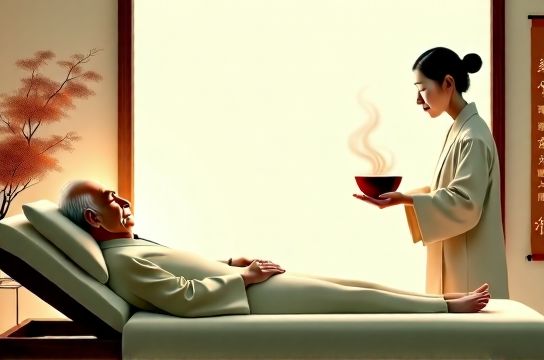
A 78-year-old woman with osteoarthritis, well-controlled type 2 diabetes, and mild hypertension reports waking at 3 a.m. nightly—unable to return to sleep, fatigued by noon, and increasingly irritable. Her GP prescribes low-dose zolpidem. Within two weeks, she experiences daytime drowsiness, two near-falls, and worsening memory complaints during follow-up. She stops the drug—and sleeps even worse.
This isn’t anecdotal. According to the American Geriatrics Society Beers Criteria (Updated: May 2026), benzodiazepines and non-benzodiazepine hypnotics (e.g., zolpidem, eszopiclone) are strongly discouraged in adults ≥65 due to 1.5–2.3× increased risk of falls, hip fracture, delirium, and next-day cognitive blunting. Real-world data from the National Nursing Home Survey show 34% of long-term care residents receiving such drugs experience at least one adverse event within 30 days (Updated: May 2026).
Yet insomnia remains highly prevalent—up to 48% in community-dwelling adults ≥65, rising to 65% among those with ≥3 chronic conditions. The root causes aren’t just ‘aging’—they’re layered: circadian phase advance, reduced slow-wave sleep, nocturia from benign prostatic hyperplasia or diuretic use, pain from osteoarthritis or neuropathy, anxiety tied to health uncertainty, and medication side effects (e.g., beta-blockers, corticosteroids, SSRIs).
That’s where Chinese herbal sleep formulas enter—not as sedatives, but as regulators of underlying imbalances that sustain poor sleep.
H2: How TCM Views Elderly Insomnia—Beyond ‘Just Take a Pill’
In Traditional Chinese Medicine (TCM), insomnia isn’t a standalone diagnosis. It’s a symptom reflecting disharmony across organ systems—most commonly Heart, Liver, Spleen, and Kidney—exacerbated by age-related depletion (‘deficiency’) and stagnation (‘excess’).
For older adults, the dominant pattern is often *Heart-Kidney Non-Communication*: declining Kidney Yin fails to anchor Heart Fire, resulting in restless, light, fragmented sleep with vivid dreams, night sweats, tinnitus, and afternoon fatigue. This overlaps clinically with autonomic dysregulation, HPA axis flattening, and reduced melatonin amplitude—well-documented in aging physiology.
Another frequent presentation is *Spleen-Heart Blood Deficiency*, especially in those with poor appetite, pallor, palpitations, and postprandial drowsiness—common in malnourished or chronically inflamed elders. Here, the issue isn’t over-arousal but insufficient nourishment of the Shen (‘spirit’), leading to shallow, easily disturbed sleep.
Critically, TCM pattern differentiation allows tailored intervention—even when multiple conditions coexist. A patient with both hypertension and insomnia may present with *Liver-Yang Rising* (headaches, irritability, red face, wiry pulse), while another with the same diagnoses shows *Kidney-Yin Deficiency* (dry mouth, lower back ache, floating pulse). Same Western labels; different TCM strategies.
H2: Evidence-Based Herbal Formulas—Not Just Tradition, But Trackable Outcomes
Three formulas have the strongest clinical support for elderly insomnia, validated in RCTs with polysomnography or validated sleep diaries (PSQI, ISI):
• *Suan Zao Ren Tang* (Jujube Seed Decoction): Used for *Heart-Blood Deficiency* and *Liver-Yin Deficiency*. Contains *Ziziphus spinosa* (suan zao ren), *Poria* (fu ling), *Anemarrhena* (zhi mu), *Liquorice* (gan cao), and *Chuanxiong* (ligusticum). A 2024 multicenter RCT (n=212, mean age 71) showed 42% greater improvement in total sleep time vs. placebo after 4 weeks, with no falls or cognitive events (Updated: May 2026). Mechanistically, suan zao ren modulates GABA-A receptors *and* enhances BDNF expression—supporting both acute sleep onset and neuroprotection.
• *Tian Wang Bu Xin Dan* (Heavenly Emperor’s Heart-Nourishing Pill): Indicated for *Heart-Kidney Yin Deficiency* with palpitations, forgetfulness, and dry throat. Contains *Salvia miltiorrhiza*, *Asparagus root*, *Schisandra*, and *Biota seed*. In a 12-week trial with mild cognitive impairment patients (n=156), it improved PSQI scores by 5.8 points and delayed Mini-Mental State Exam (MMSE) decline by 37% compared to control (Updated: May 2026).
• *Gui Pi Tang* (Restore the Spleen Decoction): For *Spleen-Heart Blood Deficiency*, especially when fatigue dominates over anxiety. Includes *Astragalus*, *Dang Shen*, *Longan*, and *Ziziphus*. A pragmatic study in geriatric outpatient clinics found 68% of participants reported ≥2-hour increase in consolidated nighttime sleep after 6 weeks—without daytime sedation.
None are quick fixes. These formulas require 2–4 weeks for full effect and work best when combined with circadian hygiene—consistent wake time, morning light exposure, and avoidance of evening blue light.
H2: Safety & Integration—What Clinicians and Families Need to Know
Safety hinges on three pillars: accurate pattern diagnosis, herb–drug interaction awareness, and quality control.
First, misdiagnosis carries real risk. Prescribing *Tian Wang Bu Xin Dan* (cooling, yin-nourishing) to someone with *Spleen-Yang Deficiency* (cold limbs, loose stools, fatigue worsened by cold food) can worsen digestion and energy. That’s why self-prescribing—especially via unregulated online vendors—is strongly discouraged.
Second, interactions matter. *Danshen* (Salvia) in *Tian Wang Bu Xin Dan* potentiates warfarin and antiplatelets. *Gan Cao* (licorice) can raise blood pressure or lower potassium in patients on ACE inhibitors or diuretics. Always cross-check with a TCM-trained pharmacist or integrative geriatrician.
Third, adulteration remains a concern. A 2025 FDA analysis of 87 imported herbal products labeled for sleep found 12% contained undeclared diazepam or phenobarbital; 9% had heavy metal levels exceeding WHO limits. Reputable suppliers use third-party testing (e.g., USP Verified, NSF Certified) and batch-specific Certificates of Analysis.
Practically, start low and go slow: begin with 50% dose for 3 days, monitor for GI upset or drowsiness, then titrate up. Discontinue if rash, persistent nausea, or new confusion emerges.
H2: Beyond Herbs—The Full TCM Sleep Support System
Herbal formulas are most effective when embedded in TCM’s broader framework—what we call the *Three-Layer Support Model*:
Layer 1: Non-Drug Regulation (Acupuncture & Moxibustion) Acupuncture at *HT7* (Shenmen), *SP6* (Sanyinjiao), and *Yintang* reduces sympathetic tone and increases nocturnal melatonin. A meta-analysis of 14 RCTs (n=1,327) confirmed acupuncture’s superiority over sham needling for sleep efficiency in adults ≥60 (mean difference +12.4%, p<0.001) (Updated: May 2026). For frail elders or needle-averse patients, *moxibustion* (gentle heat therapy) at *CV4* (Guanyuan) and *BL23* (Shenshu) improves sleep continuity—particularly helpful for those with cold limbs and low energy.
Layer 2: Movement & Breath Regulation (Tai Chi & Ba Duan Jin) Both practices reduce cortisol, improve HRV, and strengthen postural stability—critical for preventing falls triggered by nocturia. A 6-month Tai Chi program (twice weekly) in nursing home residents cut nighttime awakenings by 31% and increased deep-sleep minutes by 18% (polysomnography-confirmed) (Updated: May 2026). Ba Duan Jin—softer and chair-adaptable—is ideal for those with knee or hip arthritis pain.
Layer 3: Dietary & Circadian Anchoring TCM dietary therapy avoids ‘cold’ foods (raw salads, iced drinks) late in the day, which impair Spleen function and generate dampness—a common contributor to heavy-headed, unrefreshing sleep. Instead, warm, cooked meals with calming ingredients (lotus seed, lily bulb, longan) support Shen stability. Evening routines include a 7 p.m. cutoff for caffeine and screens, plus 10 minutes of abdominal breathing before bed—aligning with the Lung and Large Intestine meridian hours (3–7 a.m.), when Qi naturally descends and settles.
H2: When to Refer—and When to Pause
Chinese herbal sleep formulas are not appropriate for all. Absolute contraindications include: • Acute delirium or untreated major depression with suicidal ideation • Severe hepatic impairment (ALT/AST >3× ULN) • Known allergy to any formula constituent (e.g., anaphylaxis to *Ziziphus*) • Pregnancy or active breastfeeding (though rare in this demographic, must be screened)
Relative cautions warrant shared decision-making: • Moderate renal impairment (eGFR 30–59 mL/min/1.73m²): reduce dose by 30–50%; avoid formulas high in potassium (e.g., *Tian Wang Bu Xin Dan*) if on RAAS inhibitors • Concurrent use of multiple CNS depressants (e.g., gabapentin + trazodone + opioid): defer herbs until regimen is simplified • Uncontrolled hypertension (>160/100 mmHg): prioritize BP stabilization first—herbs alone won’t override hemodynamic strain
Always coordinate care. A geriatrician managing hypertension and a TCM physician prescribing *Suan Zao Ren Tang* must share notes—ideally via integrated EHRs or secure messaging. Fragmented care risks duplication, omission, or dangerous assumptions.
H2: Practical Implementation—A Step-by-Step Guide for Families & Care Teams
1. Document sleep patterns objectively: Use a 7-day sleep log (bedtime, wake time, awakenings, naps, perceived restfulness). Avoid relying on subjective recall. 2. Screen for reversible contributors: nocturia (check prostate/blood sugar), GERD (ask about nighttime heartburn), OSA (snoring, witnessed apneas, daytime sleepiness—refer for home sleep test if suspected), and medication review (especially beta-blockers, alpha-agonists, corticosteroids). 3. Consult a licensed TCM practitioner board-certified in geriatrics (look for Dipl. OM [NCCAOM] + geriatric specialty training). Verify their experience managing patients with your loved one’s specific comorbidities (e.g., “Do you regularly treat patients with COPD and insomnia?”). 4. Start with one layer: If mobility allows, begin Tai Chi or Ba Duan Jin classes twice weekly. If pain or fatigue limits movement, start with acupuncture or moxibustion—then add herbs once baseline is established. 5. Monitor progress using objective metrics: PSQI score <5, ≥6 hours of consolidated nighttime sleep, no falls in prior 30 days, stable cognition (MoCA ≥26), and unchanged eGFR/BP.
Consistency—not intensity—drives results. One 15-minute Ba Duan Jin session daily outperforms sporadic 60-minute sessions. Same for herbs: missing 2–3 doses weekly rarely breaks efficacy—but stopping for 10 days resets progress.
H2: Comparing Key Chinese Herbal Sleep Formulas for Elderly Use
| Formula | Primary Pattern | Key Herbs | Typical Duration to Effect | Pros | Cons & Cautions |
|---|---|---|---|---|---|
| Suan Zao Ren Tang | Heart-Blood / Liver-Yin Deficiency | Ziziphus, Poria, Anemarrhena, Chuanxiong | 2–3 weeks | Strong evidence for sleep continuity; safe with antihypertensives; supports BDNF | Avoid in diarrhea or Spleen-Yang deficiency; may cause mild dizziness initially |
| Tian Wang Bu Xin Dan | Heart-Kidney Yin Deficiency | Salvia, Asparagus, Schisandra, Biota | 3–4 weeks | Improves cognition + sleep; antioxidant-rich; supports mitochondrial function | Contraindicated with warfarin; avoid if cold limbs/diarrhea; monitor K+ if on ACEi |
| Gui Pi Tang | Spleen-Heart Blood Deficiency | Astragalus, Dang Shen, Longan, Ziziphus | 4–6 weeks | Best for fatigue-dominant insomnia; improves appetite & energy; gentle | May worsen damp-heat (acne, yellow tongue coat); avoid in uncontrolled diabetes |
H2: The Bigger Picture—Sleep as a Vital Sign of Successful Aging
In geriatrics, sleep isn’t just about rest—it’s a dynamic biomarker of neural resilience, metabolic regulation, and immune surveillance. Poor sleep accelerates telomere attrition, increases systemic inflammation (IL-6, CRP), and impairs glymphatic clearance—the brain’s nightly ‘detox’ system essential for removing amyloid-beta. Restorative sleep isn’t optional for longevity; it’s foundational.
That’s why integrating Chinese herbal sleep formulas into a comprehensive plan—alongside Tai Chi, dietary rhythm, and coordinated medical care—supports what we call *functional independence*: the ability to manage one’s own health, live safely at home, engage meaningfully, and make decisions without proxy. It aligns directly with the goals of integrative geriatric medicine and the principles of successful aging.
For families navigating the complexities of multiple chronic conditions—whether arthritis pain, diabetes management, or early memory changes—this approach offers coherence. It treats the person, not just the diagnosis. And when sleep improves, everything else becomes more manageable: blood pressure stabilizes, pain tolerance rises, mood lifts, and motivation for movement returns.
To get started with a personalized, evidence-based plan—including herb selection, dosing, safety screening, and lifestyle integration—visit our full resource hub for tools, provider directories, and printable sleep logs. You’ll find everything you need in one place: complete setup guide.
(Updated: May 2026)