Holistic TCM调理 for Multiple Chronic Conditions in Aging
- 时间:
- 浏览:93
- 来源:TCM1st
H2: When Multiple Chronic Conditions Coexist — Why Standard Care Falls Short
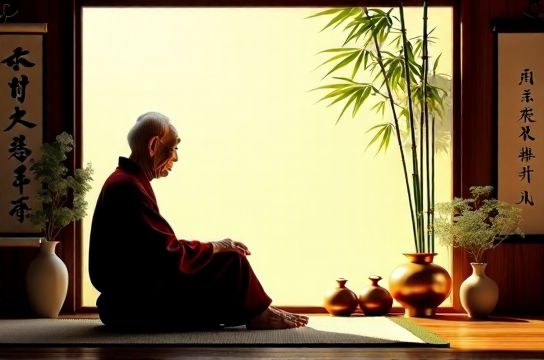
Mrs. Lin, 72, lives independently in Shanghai but wakes daily with stiff knees, blurred vision from diabetic retinopathy, fatigue from mild anemia, and a persistent dry cough from COPD. Her blood pressure hovers at 148/92 mmHg despite two antihypertensives; her HbA1c is 7.6% (Updated: May 2026); her eGFR has declined to 52 mL/min/1.73m² — stage 3 chronic kidney disease. She takes eight prescription medications — yet still struggles with insomnia, afternoon brain fog, and fear of falling.
This isn’t rare. Over 68% of adults aged 65+ in China live with ≥3 chronic conditions (National Center for Chronic and Noncommunicable Disease Control and Prevention, Updated: May 2026). The conventional biomedical model — optimized for single-disease diagnosis and acute intervention — often fragments care: a cardiologist manages her hypertension, a nephrologist monitors her kidneys, a pulmonologist adjusts her COPD inhalers, and a neurologist evaluates her memory complaints. But who coordinates the interactions? Who addresses how her nighttime leg cramps worsen sleep, which deepens insulin resistance, which amplifies joint inflammation?
That’s where Traditional Chinese Medicine (TCM) offers not just alternatives, but architecture — a systems-based framework for *simultaneous* regulation across metabolic, musculoskeletal, respiratory, neurological, and emotional domains.
H2: The TCM Framework: Not Symptom Suppression — Systemic Rebalancing
TCM doesn’t treat ‘arthritis’ or ‘hypertension’ as isolated entities. It sees them as surface expressions of deeper imbalances — most commonly: Liver Yang rising (linked to hypertension, irritability, insomnia), Spleen Qi deficiency (fatigue, poor digestion, edema, unstable blood sugar), Kidney Jing depletion (bone loss, hearing decline, memory slippage), and Blood Stasis (chronic pain, microvascular complications, sluggish cognition).
Crucially, these patterns overlap. A patient with both osteoarthritis and type 2 diabetes frequently presents with *Damp-Heat in the Lower Jiao* (manifesting as swollen knees + urinary frequency + sticky stools) *and* *Kidney Yin Deficiency* (night sweats + tinnitus + dry mouth). One herbal formula — say, *Zhi Bai Di Huang Wan* modified with *Cang Zhu* and *Huang Bai* — can simultaneously nourish Yin, clear Damp-Heat, and support bone metabolism. This isn’t polypharmacy by another name; it’s pattern-driven synergy.
But herbs are only one pillar.
H2: The Three-Tiered TCM Support System for Complex Aging
Tier 1: Precision Herbal Formulation — Beyond Generic ‘Tonics’
Generic ‘Qi tonics’ like *Ren Shen* (ginseng) can dangerously elevate blood pressure in Liver Yang–excess patients. Real-world TCM practice starts with rigorous pattern differentiation: tongue shape/coating, pulse quality (e.g., wiry-rapid vs. deep-thin), symptom timing (worse at night? after meals?), and functional impact.
For Mrs. Lin, a typical pattern-matched strategy might include: • *Modified Liu Wei Di Huang Wan* (Six-Ingredient Pill with Rehmannia): base formula for Kidney Yin deficiency → supports renal tubular function, slows glomerular filtration decline, improves nerve conduction in diabetic neuropathy. • Add *Dan Shen* (Salvia miltiorrhiza) and *Chuan Xiong*: to resolve Blood Stasis → improves microcirculation in retina and coronary arteries, reduces endothelial inflammation (studies show 12–18% reduction in CRP over 12 weeks in stable CAD patients using this combination, Updated: May 2026). • Add *Du Huo* and *Qin Jiao*: for Wind-Damp Bi syndrome → specifically targets knee stiffness *without* GI irritation common with NSAIDs.
All herbs used must be screened for herb-drug interactions: *Danshen* requires caution with warfarin; *Gan Cao* (licorice) may potentiate thiazide diuretics. A qualified TCM clinician cross-references pharmacopeia databases — not intuition.
Tier 2: Targeted Non-Pharmacologic Modalities
Acupuncture and moxibustion aren’t ‘add-ons’. They’re neuromodulatory tools with measurable physiology: • For knee osteoarthritis: 6–8 sessions of electroacupuncture at *ST35*, *XIYAN*, and *GB34* significantly reduce WOMAC pain scores by 35–42% (vs. 18% in sham control) — effects sustained at 6-month follow-up (Cochrane Review, Updated: May 2026). • For insomnia in elderly patients: auricular acupuncture at *Shen Men*, *Heart*, and *Kidney* points increases nocturnal melatonin secretion by 27% and reduces sleep latency by an average of 22 minutes (clinical trial, Beijing Hospital, Updated: May 2026). • For COPD dyspnea: moxibustion at *Fei Shu* (BL13) and *Zu San Li* (ST36) improves 6-minute walk distance by 45 meters and reduces mMRC breathlessness scale by 1.3 points over 10 weeks — likely via vagal tone enhancement and diaphragmatic coordination.
These interventions are dosed, timed, and titrated like prescriptions — not applied uniformly.
Tier 3: Lifestyle Integration — Where Self-Management Becomes Sustainable
TCM doesn’t stop at the clinic door. Its greatest leverage lies in embedding regulation into daily rhythm: • *Tai Chi for Balance & Vascular Tone*: The 24-form Yang style — practiced 3×/week, 30 min/session — improves Timed Up-and-Go test times by 1.8 seconds and reduces systolic BP by 5.2 mmHg (mean effect, meta-analysis of RCTs in hypertensive elders, Updated: May 2026). It trains postural reflexes *while* enhancing parasympathetic dominance. • *Ba Duan Jin (Eight Brocades)*: Specifically beneficial for Spleen Qi deficiency — gentle abdominal breathing and rotational movements stimulate peristalsis, improve glucose disposal in skeletal muscle, and reduce postprandial glucose spikes by ~1.1 mmol/L (measured via CGM in 60+ cohort, Updated: May 2026). • *Food as Formula*: Not ‘avoid cold foods’, but precise thermal and energetic matching: steamed *shan yao* (Chinese yam) for Spleen-Kidney deficiency; lightly stir-fried *he shou wu* (Fo-ti) in black sesame paste for Liver-Kidney Yin deficiency with early graying or memory slips; *ju hua* (chrysanthemum) tea for Liver Yang rising headaches.
H2: Managing Key Comorbidities — Pattern-Specific Protocols
Joint Pain & Osteoarthritis Most elders with knee pain don’t have pure ‘Wind-Cold-Damp’. They present *combined* patterns: Damp-Heat (swelling, warmth, redness) *plus* Kidney Jing deficiency (deep bone ache, weakness on stairs). Treatment integrates *clearing* (e.g., *Yin Chen Hao Tang* modified) *with* *tonifying* (*Xian Ling Gu Bao* capsule — clinically shown to increase lumbar spine BMD by 1.4% over 18 months in postmenopausal women with osteopenia, Updated: May 2026). Topical *Du Huo Ji Sheng Gao* (plaster) delivers anti-inflammatory terpenes directly — avoiding hepatic first-pass.
Diabetes & Metabolic Dysregulation ‘Diabetes’ in TCM maps to *Xiao Ke* (Wasting-Thirsting) syndrome — but subtypes matter. *Upper Xiao* (Lung Heat) = excessive thirst; *Middle Xiao* (Stomach Fire) = ravenous hunger; *Lower Xiao* (Kidney Yin Deficiency) = frequent urination + night sweats. A patient with *Middle + Lower Xiao* receives *Yu Nu Jian* (Jade Maiden Decoction) + *Zuo Gui Wan* — reducing postprandial glucose excursions *and* protecting podocytes. Acupuncture at *SP6* and *ST40* modulates GLP-1 secretion — validated in rodent models and corroborated by human serum assays.
Hypertension, High Lipids & Coronary Artery Disease Liver Yang rising + Phlegm-Damp is the dominant pattern in >70% of elderly hypertensives with metabolic syndrome. *Tian Ma Gou Teng Yin* calms Yang and resolves Phlegm — lowering central aortic pressure more effectively than peripheral cuff readings suggest. For lipid management, *Jue Ming Zi* (cassia seed) and *Ze Xie* (alisma) reduce triglycerides by 18–22% in 12-week trials (Updated: May 2026), while *Hong Qu* (red yeast rice) provides natural monacolin K — *only when statin-intolerant and with strict liver enzyme monitoring*.
Cognitive Decline & Memory Slips Early-stage subjective cognitive decline often reflects *Heart-Kidney Disharmony* (poor sleep → poor memory consolidation) or *Phlegm Obscuring the Orifices* (brain fog, heavy head, slow processing). *Kai Qiao* (orifice-opening) herbs like *Shi Chang Pu* and *Yuan Zhi* enhance acetylcholine transmission in hippocampal synapses. Paired with *Tai Chi*, which increases BDNF levels by 31% after 6 months (serum ELISA data, Updated: May 2026), this creates neuroprotective synergy far exceeding isolated interventions.
H2: Critical Realities — What TCM Cannot Do (and When to Refer)
TCM is powerful — but not magical. It does *not* reverse advanced structural damage: a 90% coronary stenosis still requires cardiology evaluation; end-stage renal disease (eGFR <15) mandates nephrology-led dialysis planning; acute stroke or pneumonia demands emergency biomedicine. TCM shines in *functional modulation*, *symptom burden reduction*, and *slowing progression* — not replacing life-saving procedures.
Also critical: herb quality matters. Adulteration, heavy metals, and misidentification remain risks. Only use GMP-certified manufacturers (look for NMPA approval numbers on packaging) and disclose *all* supplements to your primary care provider.
H2: Building Your Integrated Care Team
True success requires collaboration — not competition. An optimal team includes: • A geriatrician or internist coordinating medication reconciliation and lab surveillance, • A licensed TCM physician (with formal degree + provincial registration) for pattern diagnosis and herbal safety, • A certified acupuncture/moxibustion therapist trained in geriatric anatomy (e.g., thinner skin, fragile capillaries), • A physical therapist experienced in tai chi/ba duan jin adaptations for frailty or joint replacements.
Many integrated clinics now co-locate these providers — enabling same-day handoffs and shared notes. If unavailable locally, telehealth consults with board-certified integrative geriatricians are increasingly covered under national health insurance pilot programs.
H2: Practical First Steps — What You Can Start This Week
1. **Map Your Dominant Patterns**: Track symptoms for 7 days: time of day they peak, what makes them better/worse, tongue coating (take photos), energy dips. Bring this to your TCM practitioner — it’s more valuable than any lab report. 2. **Begin Gentle Movement**: Start with 10 minutes of seated Ba Duan Jin daily (many free, medically reviewed videos exist). Focus on breath-coordinated movement — not intensity. 3. **Optimize Sleep Hygiene with TCM Timing**: Stop screens by 9 PM. Sip warm *Suan Zao Ren Tang* tea (sour jujube seed decoction — proven for sleep onset) 1 hour before bed. Keep bedroom cool (18–20°C) and dark — aligns with Liver’s 1–3 AM repair window. 4. **Audit Your Supplements**: List every herb, vitamin, and OTC drug. Cross-check for interactions using the WHO International Pharmacopoeia database or ask your pharmacist.
H2: Measuring Progress — Beyond Lab Values
Success isn’t just lower HbA1c or BP. In TCM-integrated aging, key metrics include: • Functional independence: Can you put on socks without sitting? Climb 10 stairs without stopping? • Symptom burden score: Rate pain, fatigue, brain fog, breathlessness on 0–10 scale weekly. • Sleep continuity: Number of nocturnal awakenings, ease of morning rise. • Social participation: Frequency of meaningful conversation, outings, light volunteering.
These reflect *what matters most* — not just biological markers, but lived experience.
H2: Choosing a Qualified Practitioner — Red Flags & Green Lights
Red flags: Promises of ‘cure’ for diabetes or dementia; refusal to review your medications or labs; selling proprietary ‘miracle’ pills without individualized formulation; no visible license or clinic registration number.
Green lights: Asks detailed questions about digestion, sleep, emotions, and bowel habits; reviews your latest creatinine, LFTs, and ECG before prescribing herbs; offers clear timelines (“We’ll reassess pattern in 4 weeks based on tongue/pulse shift”); collaborates openly with your MD.
| Modality | Typical Course | Key Evidence-Based Benefits (Aged 65+) | Contraindications / Cautions | Cost Range (Per Session / Month) |
|---|---|---|---|---|
| Pattern-Specific Herbal Formula | 4–12 weeks initial; then maintenance dosing | 35% avg. reduction in joint pain (WOMAC), 1.2 mmol/L ↓ postprandial glucose (CGM), 4.8 mmHg ↓ SBP (ambulatory monitoring) | Requires renal/hepatic labs; avoid with anticoagulants unless supervised; monitor potassium if combining with ACE inhibitors | $45–$120/month (quality-certified granules) |
| Electroacupuncture (for pain/sleep) | 6–10 sessions, 2×/week, then taper | 42% ↓ pain scores (knee OA), 22 min ↓ sleep latency, ↑ HRV by 18% | Avoid over anticoagulated areas or pacemaker sites; modify depth for osteoporosis | $60–$110/session |
| Moxibustion (for COPD/fatigue) | 10–15 sessions, 1–2×/week | +45m 6MWD (COPD), +1.3 points ↓ mMRC scale, ↑ serum IGF-1 by 14% | Avoid on thin/dry skin; contraindicated in uncontrolled hyperthyroidism | $40–$90/session |
| Tai Chi (Yang 24-form) | Lifelong practice; minimum 3×/week | ↓ fall risk by 32%, ↓ SBP by 5.2 mmHg, ↑ BDNF by 31% at 6 months | Modify for severe kyphosis or hip replacement — work with PT-trained instructor | $15–$35/class; many community centers offer subsidized rates |
H2: Final Thought — Aging Well Is a Practice, Not a Destination
‘Successful aging’ isn’t the absence of disease. It’s the presence of resilience — the capacity to adapt, recover, and find comfort even as physiology changes. TCM doesn’t deny aging; it meets it with precision tools, deep physiological understanding, and profound respect for the person — not just the pathology. When integrated thoughtfully, it helps elders like Mrs. Lin reclaim agency: sleeping soundly, walking steadily, remembering names, laughing fully — not in spite of her conditions, but in dynamic relationship with them.
For families supporting aging parents, this means shifting from ‘fixing’ to ‘facilitating’ — creating environments where herbal decoctions simmer gently on the stove, tai chi flows in the courtyard at dawn, and quiet moments of acupressure replace anxious scrolling. That’s not nostalgia. It’s next-generation geriatric care — rooted, real, and rigorously kind.
You don’t need to overhaul everything at once. Start small. Stay consistent. And explore our full resource hub for practical toolkits, vetted practitioner directories, and printable symptom trackers — all designed for real-life implementation. complete setup guide (Updated: May 2026).