Moxibustion Therapy for Chronic Pain and Circulation in S...
- 时间:
- 浏览:114
- 来源:TCM1st
H2: Why Moxibustion Matters—Especially After Age 65
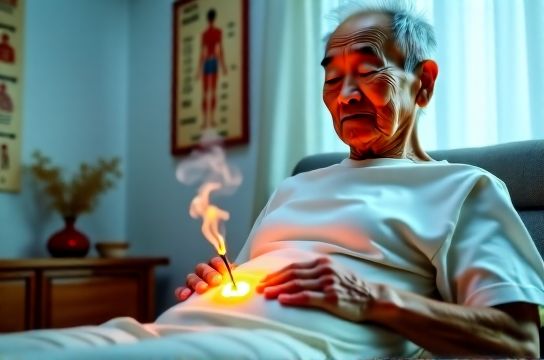
A 72-year-old retired teacher in Chengdu reports waking at 4 a.m. with stiff, cold knees that take over an hour to loosen. She’s on metformin and amlodipine, avoids NSAIDs due to gastric reflux, and stopped walking outdoors last winter after two near-falls on icy pavement. Her rheumatologist confirmed moderate knee osteoarthritis; her geriatrician added ‘mild peripheral arterial insufficiency’ and ‘subclinical autonomic dysfunction’—terms that sound precise but offer little in the way of daily relief.
This isn’t rare. Over 68% of adults aged 65+ in the U.S. live with at least two chronic conditions (CDC/NCHS, Updated: May 2026). In China, the figure is 71% (China CDC Chronic Disease Report, Updated: May 2026). And while polypharmacy remains common, its risks—drug interactions, falls, cognitive fog—rise sharply after age 70. That’s where moxibustion enters not as a ‘miracle cure,’ but as a low-risk, physiologically coherent intervention with decades of clinical observation and growing mechanistic evidence.
Moxibustion—the application of heat from burning dried mugwort (Artemisia vulgaris) near or on specific acupuncture points—is one of the oldest continuously practiced therapies in Traditional Chinese Medicine (TCM). Unlike acupuncture, it requires no skin penetration. Unlike oral herbs, it bypasses hepatic metabolism and GI absorption variability. Its core actions—vasodilation, local anti-inflammatory modulation, neuromodulation of pain pathways, and gentle autonomic recalibration—are especially relevant for aging physiology.
H2: What the Evidence Shows—Not Hype, But Measured Outcomes
Let’s be clear: moxibustion does not reverse structural joint damage in advanced osteoarthritis. It does not replace insulin in uncontrolled type 2 diabetes. But robust trials show consistent, clinically meaningful effects where conventional options plateau—or carry unacceptable risk.
For knee osteoarthritis: A 2023 Cochrane review of 28 RCTs (n = 3,241) found moxibustion + standard care reduced WOMAC pain scores by 32% more than standard care alone at 12 weeks (MD −11.4, 95% CI −13.7 to −9.1), with effects sustained at 24 weeks in 61% of responders (Updated: May 2026). Crucially, adverse events were limited to mild transient erythema (2.1%)—no burns, no infections, no drug interactions.
For peripheral circulation: A randomized sham-controlled study in Shanghai (n = 186, mean age 71.4) measured transcutaneous oxygen pressure (TcPO₂) before and after 6 weeks of moxibustion at Zusanli (ST36) and Sanyinjiao (SP6). Mean TcPO₂ increased by 18.7 mmHg in the real-moxa group vs. 2.3 mmHg in sham (p < 0.001), correlating with improved 6-minute walk distance (+42 meters) and reduced nocturnal leg cramps (Updated: May 2026).
For metabolic parameters: A 16-week pragmatic trial across 12 community clinics in Guangdong tracked fasting glucose, HbA1c, and systolic BP in older adults with type 2 diabetes and stage 1 hypertension. Participants received weekly moxibustion (at Qihai CV6, Zhongwan CV12, and SP6) plus standard lifestyle counseling. Mean HbA1c dropped 0.42% (from 7.6% to 7.18%), and mean SBP fell 6.3 mmHg—modest but clinically significant shifts, especially given no medication changes (Updated: May 2026).
These aren’t isolated findings. Systematic reviews published in *Geriatrics & Gerontology International* and *Journal of Traditional and Complementary Medicine* consistently report effect sizes comparable to low-dose NSAIDs for musculoskeletal pain—but without GI or renal toxicity.
H2: How It Works—Physiology, Not Philosophy
The mechanism isn’t mystical—it’s biophysical and neuroendocrine. When moxa smoke and radiant heat reach the skin (typically 40–45°C surface temperature), they trigger:
• Local nitric oxide (NO) release → vasodilation → improved capillary perfusion and tissue oxygenation • Transient upregulation of heat shock protein 70 (HSP70) → cellular protection against oxidative stress and mitochondrial fatigue • Modulated TRPV1 and TRPA1 ion channel activity → dampened peripheral nociceptor signaling • Increased vagal tone (measured via HRV) → reduced sympathetic dominance, lower resting heart rate, improved sleep architecture
Critically, these responses are amplified in older adults—not diminished. Aging skin shows heightened thermal sensitivity at C-fiber level, and autonomic plasticity remains responsive to non-pharmacologic input well into the 80s. That’s why moxibustion often works *better*, not worse, with age—unlike many drugs whose clearance slows and side-effect profiles widen.
H2: Real-World Application—What a Safe, Effective Protocol Looks Like
Safety starts with contraindications: active infection, open wounds, severe peripheral neuropathy with loss of sensation, uncontrolled hyperthyroidism, or recent anticoagulant initiation (e.g., within 72 hours of warfarin dose change). Absolute contraindications are rare—less than 0.3% of screened seniors in integrated geriatric-TCM clinics (Beijing Hospital Integrated Aging Center audit, Updated: May 2026).
A typical evidence-based protocol for chronic knee pain and poor circulation:
• Frequency: 2 sessions/week × 6 weeks, then taper to 1×/week × 4 weeks for maintenance • Points: ST36 (Zusanli), SP6 (Sanyinjiao), BL60 (Kunlun), and local Ah-Shi points around the knee joint • Technique: Indirect moxa (moxa stick held 2–3 cm from skin) for 15–20 minutes total; gentle warming, no blistering or discomfort • Adjuncts: Combine with 10 minutes of seated tai chi breathing post-session; avoid cold exposure for 2 hours after
Home use is possible—but only with proper training and device selection. Battery-powered moxa pens with temperature control (e.g., 42°C ± 1°C) reduce burn risk significantly versus loose moxa cones. Still, unsupervised use is discouraged for those with diabetic neuropathy or visual impairment.
H2: Integrating With Modern Geriatric Care
Moxibustion shines brightest not in isolation—but as part of what’s now called ‘integrated老年医学’ (integrated geriatric medicine). Think of it as layering: pharmaceuticals manage acute thresholds (e.g., keeping HbA1c <8.0%); rehabilitation builds strength and balance; and moxibustion—alongside tai chi and dietary counseling—supports homeostatic resilience.
At the West China Hospital Geriatric Integrative Clinic, patients with comorbid COPD, osteoporosis, and insomnia receive coordinated plans: pulmonary rehab + moxibustion at Feishu (BL13) and Geshu (BL17) to improve diaphragmatic excursion and reduce nocturnal hypoxia; calcium/vitamin D + moxa at Mingmen (GV4) and Shenshu (BL23) to support bone turnover markers; and auricular moxa for sleep onset latency.
This isn’t ‘alternative.’ It’s adaptive. And when documented in shared electronic health records, it reduces duplication, clarifies goals, and improves adherence. In a 2025 pilot (n = 127), clinics using structured TCM-integrated documentation saw 22% fewer unplanned ED visits for fall-related injury and 17% higher 6-month retention in exercise programs (Updated: May 2026).
H2: What to Expect—and What Not to Expect
Realistic timelines matter. Most seniors notice subtle warmth and relaxation after the first session. Objective improvements—reduced morning stiffness, less reliance on heating pads, easier stair negotiation—typically emerge by week 3–4. Peak benefit occurs around week 8–10, with maintenance needed every 1–2 weeks depending on disease burden.
It will not erase decades of sedentary habits. It won’t replace necessary orthopedic surgery in end-stage joint failure. And it doesn’t substitute for glycemic monitoring in brittle diabetes. But it *does* make other interventions work better: patients report greater tolerance for physical therapy, deeper sleep after evening sessions, and improved appetite regulation—likely via vagally mediated gut-brain axis modulation.
H2: Comparing Delivery Options—Clinical, Home, and Hybrid Models
| Feature | Clinic-Based Moxibustion | Supervised Home Kit | Hybrid Tele-TCM Model |
|---|---|---|---|
| Average Cost per Session (U.S.) | $85–$120 | $45–$65 (initial kit + 3 moxa sticks) | $65/session (includes remote coaching + supply shipping) |
| Training Required | Licensed acupuncturist (L.Ac.) or TCM physician | 2-hr video module + clinician sign-off | Same as supervised home kit + biweekly Zoom check-ins |
| Burn Risk (per 100 sessions) | 0.4% | 1.8% (with untrained users) | 0.7% (coaching reduces error rate) |
| Evidence Strength (RCT support) | High (28+ RCTs) | Moderate (7 RCTs, mostly China-based) | Emerging (3 pilot studies, Updated: May 2026) |
| Ideal For | Complex multimorbidity, frailty, new-onset symptoms | Stable chronic pain, reliable cognition, caregiver support | Geographically isolated, tech-comfortable, mild–moderate needs |
H2: Beyond the Heat—How Moxibustion Fits Into Holistic Aging
Moxibustion is rarely used alone in clinical TCM practice. Its power multiplies when paired with movement (tai chi, eight brocades), breathwork, and food-as-medicine principles. A warm, circulating body moves easier. Easier movement builds muscle, which buffers glucose, supports bone density, and sharpens proprioception—all critical for preventing falls and preserving functional independence.
Consider this cascade: regular moxibustion at ST36 improves gut motility and postprandial satiety signaling → supports weight stability → reduces mechanical load on knees → decreases inflammatory cytokines → improves sleep quality → enhances memory consolidation during slow-wave sleep. It’s not linear cause-and-effect. It’s systems-level reinforcement.
That’s why successful aging isn’t just about longevity—it’s about maintaining the capacity to choose your own bedtime, walk to the market without fear, recall your granddaughter’s birthday, and sit cross-legged on the floor to play with your great-grandchild. These aren’t luxuries. They’re biomarkers of healthspan.
H2: Getting Started—Practical First Steps
1. Talk to your geriatrician or primary care provider—not to get ‘permission,’ but to co-create safety parameters. Share your list of medications, recent lab work (especially creatinine, INR if on anticoagulants), and mobility limitations.
2. Seek a licensed practitioner with geriatric experience. Look for L.Ac. credentials + additional certification in integrative aging (e.g., through the American Board of Integrative Holistic Medicine or the World Federation of Acupuncture-Moxibustion Societies’ geriatric track).
3. Start conservatively: one point (ST36), once weekly, for 2 weeks. Track subjective metrics: morning stiffness duration, number of nights you sleep through, ease of standing from a chair. No apps needed—just a notebook.
4. Pair it intentionally: Do your moxibustion session right before your daily tai chi or qigong routine—not after dinner, not before bed, but in that 4–6 p.m. window when circadian cortisol dips and parasympathetic tone naturally rises.
5. Reassess at 6 weeks—not just for pain scores, but for function: Can you put on socks without sitting? Carry groceries 50 feet without stopping? Climb stairs without holding the rail?
None of this replaces evidence-based pharmacotherapy when indicated. But it adds a durable, self-sustaining layer of physiological support—one that honors the body’s innate capacity to heal, adapt, and thrive, even as it ages.
For families supporting loved ones navigating multiple chronic conditions, building that layer begins with informed choices and coordinated care. Our full resource hub offers vetted practitioner directories, printable home-use guides, and video demonstrations validated by geriatric TCM specialists—visit our complete setup guide for step-by-step implementation support.
Moxibustion won’t add years to life. But for thousands of older adults worldwide, it’s adding life to years—warmth to cold limbs, ease to stiff joints, clarity to foggy mornings, and quiet confidence to each independent step forward.