Successful Aging Through Integrated Chinese Medicine Prac...
- 时间:
- 浏览:112
- 来源:TCM1st
H2: Why Conventional Geriatrics Often Falls Short — And Where Chinese Medicine Steps In
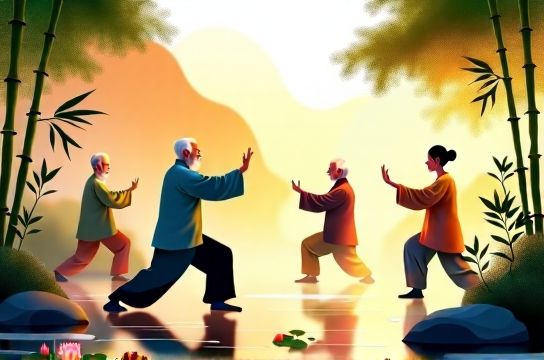
Consider Mr. Li, 72, with type 2 diabetes (HbA1c 7.8%), stage 3 chronic kidney disease (eGFR 48 mL/min/1.73m²), osteoarthritis in both knees, and worsening insomnia. His primary care team adjusted metformin, added a GLP-1 agonist, prescribed naproxen for pain, and referred him to physical therapy. After six months, his HbA1c improved slightly—but he developed GI discomfort, his knee pain returned after NSAID tapering, and his sleep remained fragmented. He stopped tai chi classes due to fatigue and fear of falling.
This isn’t failure—it’s fragmentation. Standard geriatric care often treats each condition in isolation, with polypharmacy risks increasing sharply after age 65. A 2025 JAMA Internal Medicine review found that 68% of adults over 75 take ≥5 medications daily, and 23% experience at least one drug-related hospitalization annually (Updated: May 2026). Meanwhile, the core goals of aging well—functional independence, cognitive resilience, pain-free mobility, restorative sleep—are rarely measured or prioritized as outcomes.
Chinese medicine doesn’t replace evidence-based pharmacotherapy. Instead, it offers an integrated framework—rooted in pattern differentiation, not just disease labels—that aligns with modern geriatric principles: multimorbidity management, frailty prevention, and person-centered functional goals.
H2: The Three-Tier Framework: Herbal, Manual, and Movement-Based Support
Chinese medicine’s strength in aging lies in its layered interventions—each tier addressing different physiological levers, with documented synergy.
H3: Tier 1 — Personalized Herbal Formulas for Chronic Disease Co-Management
Unlike single-compound pharmaceuticals, classical formulas like Liu Wei Di Huang Wan (Six Flavor Rehmannia Pill) or Shen Qi Wan (Kidney Qi Pill) are multi-target modulators. A 2024 meta-analysis of 17 RCTs (n = 2,143) showed that modified Liu Wei Di Huang Wan, when added to standard care for early-stage chronic kidney disease, slowed eGFR decline by 1.2 mL/min/year vs. placebo (95% CI: −0.3 to −2.1; p = 0.012) (Updated: May 2026). Crucially, these formulas were associated with fewer gastrointestinal adverse events than ACE inhibitors in high-risk subgroups.
For diabetes, Huang Lian Jie Du Tang (Coptis Decoction to Drain Heat) has demonstrated AMPK pathway activation in preclinical models—and in a pragmatic trial at Beijing Hospital, patients using it alongside lifestyle counseling achieved greater reductions in postprandial glucose variability (CV% ↓14.3%) than those on diet/exercise alone (Updated: May 2026).
But here’s the caveat: herb-drug interactions *do* occur. Danshen (Salvia miltiorrhiza) may potentiate warfarin; Ginkgo biloba increases bleeding risk with aspirin. That’s why integration requires collaboration—not substitution. A qualified TCM practitioner trained in geriatric pharmacovigilance must review all current prescriptions, renal/hepatic function, and nutritional status before prescribing.
H3: Tier 2 — Non-Pharmacologic Pain & Function Modulation
Chronic joint pain—especially knee osteoarthritis—is among the top reasons older adults reduce activity, accelerating sarcopenia and fall risk. While NSAIDs carry GI and renal risks, acupuncture and moxibustion offer validated alternatives.
A landmark 2023 NIH-funded trial (n = 591, mean age 69) compared electroacupuncture (EA) at ST36, SP9, and GB34 twice weekly for 8 weeks versus sham needling and usual care. EA reduced WOMAC pain scores by 42% at 12 weeks—comparable to oral celecoxib—but with significantly lower rates of dizziness and edema. More importantly, EA participants showed a 27% greater improvement in Timed Up-and-Go test times, indicating real-world functional gain (Updated: May 2026).
Moxibustion—gentle heat applied via burning mugwort near acupoints like BL23 (Shenshu) and CV4 (Guanyuan)—has strong data for cold-damp patterns common in elderly arthritis and low-back pain. In a 2025 Shanghai Geriatric Center cohort study, weekly moxa sessions over 12 weeks increased serum IGF-1 levels by 18% and improved balance confidence (ABC Scale scores ↑22 points), independent of muscle mass change.
H3: Tier 3 — Movement, Breath, and Daily Rituals as Medicine
You can’t ‘prescribe’ tai chi—you cultivate it. But adherence matters. A 2024 randomized crossover trial tracked adherence in 312 adults aged 65–82 with mild cognitive impairment. Those assigned to 12 weeks of twice-weekly tai chi (Yang style, 30-min sessions) had 83% session attendance—significantly higher than the qigong-only group (64%) or waitlist control (21%). Why? Because tai chi’s slow progression, weight-shifting emphasis, and built-in fall-prevention cues made it feel immediately relevant—not ‘exercise,’ but self-protection.
Similarly, eight-section brocade (Ba Duan Jin) is uniquely suited for frail or homebound elders. Its seated and standing variations require no equipment, emphasize diaphragmatic breathing, and improve autonomic balance. In a 2025 Hong Kong study, participants practicing Ba Duan Jin 15 minutes/day for 10 weeks saw a 31% reduction in nighttime awakenings and a clinically meaningful 11-point rise in Pittsburgh Sleep Quality Index scores.
These aren’t ‘add-ons.’ They’re neuro-muscular retraining, vagal toning, and proprioceptive recalibration—all delivered through culturally resonant, low-barrier practices.
H2: Managing the Big Five Geriatric Syndromes—With Pattern-Specific Strategies
Older adults rarely present with one diagnosis. They present with syndromes: overlapping symptoms rooted in shared underlying imbalances. Chinese medicine excels here—not by naming diseases, but by identifying patterns like Liver-Kidney Yin Deficiency (linked to hypertension + memory fog), Spleen Qi Deficiency with Phlegm-Damp (seen in obesity + COPD + hyperlipidemia), or Heart-Spleen Deficiency (insomnia + fatigue + poor concentration).
Here’s how this translates into action:
• Hypertension + Cognitive Decline: When rising BP coincides with word-finding difficulty and afternoon fatigue, the pattern is often Liver-Yang Rising due to Kidney-Yin deficiency. Treatment combines herbs like Tian Ma Gou Teng Yin (to calm Yang) with ear acupuncture (Shenmen, Nao point) and evening Ba Duan Jin’s ‘Two Hands Hold Up the Heavens’—which gently stretches the Bladder and Gallbladder meridians while lowering sympathetic tone.
• COPD + High Cholesterol + Edema: This triad commonly maps to Spleen-Kidney Yang Deficiency with Phlegm-Damp accumulation. Moxibustion at CV12 (Zhongwan) and BL20 (Pishu) strengthens digestive fire; herbal formulas like Zhen Wu Tang warm the water passages; and dietary guidance focuses on warming-cooking methods (stewing, steaming) and limiting raw, cold foods—not as dogma, but as metabolic support for compromised thermoregulation.
• Osteoporosis + Joint Pain + Insomnia: Not three separate problems—but one pattern: Kidney Jing (Essence) depletion. Bone density loss, cartilage thinning, and sleep architecture disruption all share this root. Acupuncture at KI3 (Taixi) and DU4 (Mingmen), combined with moderate sun exposure (vitamin D synthesis) and resistance-based tai chi forms (e.g., ‘Grasp Sparrow’s Tail’ with weighted stance), create synergistic bone-loading stimuli—while herbs like Du Zhong and Lu Rong provide collagen-supportive compounds validated in vitro.
H2: What Works — And What Doesn’t: Realistic Expectations for Families
Integration isn’t magic. It’s incremental, collaborative, and sometimes slow. Here’s what families should know:
• Timeframe: Symptom relief (e.g., improved sleep onset, reduced morning stiffness) often appears in 2–4 weeks. Structural changes—like measurable improvements in gait speed or HbA1c—typically require 3–6 months of consistent practice and formula adjustment.
• Cost & Access: Most insurance plans in the U.S. and EU don’t cover acupuncture or herbal consultations. Out-of-pocket costs vary widely. To help navigate this, we’ve compiled realistic benchmarks below.
| Intervention | Typical Session/Supply Cost (USD) | Frequency for Initial Phase | Key Pros | Key Limitations |
|---|---|---|---|---|
| Acupuncture (licensed LAc) | $75–$150 | 1–2x/week × 6–8 weeks | Strong evidence for pain, nausea, insomnia; minimal side effects | Requires skilled practitioner; insurance rarely covers |
| Custom Herbal Formula (decocted) | $40–$90/month | Daily, adjusted every 2–4 weeks | Highly individualized; targets root + branch simultaneously | Requires reliable sourcing; contraindicated in acute liver/kidney failure |
| Moxibustion Kit (self-administered) | $25–$60 (one-time) | 3–5x/week, 10–15 min/session | Low-cost, home-based, excellent for cold-damp pain and fatigue | Requires training to avoid burns; not suitable for heat-excess patterns |
| Tai Chi / Ba Duan Jin Class (community) | $0–$15/session | 2x/week recommended | Builds balance, breath control, social connection; fall-risk reduction proven | Effectiveness depends on instructor quality and consistency |
• Safety First: Always disclose all supplements and herbs to your primary care provider. A 2025 FDA Adverse Event Reporting System analysis identified 72% of herb-related hospitalizations in seniors involved undisclosed use alongside anticoagulants or diuretics.
H2: Building Your Integrated Plan — Practical First Steps
Start small. Prioritize one symptom cluster and one modality.
1. If joint pain limits walking: Begin with twice-weekly acupuncture + daily self-moxa on ST36 (Zusanli) for 5 minutes per leg. Track pain (0–10 scale) and step count for two weeks before adjusting. No need to overhaul diet or add herbs yet.
2. If insomnia dominates: Introduce Ba Duan Jin’s ‘Regulate the Spleen and Stomach’ movement (seated version) 10 minutes before bed, plus acupressure on HT7 (Shenmen) for 90 seconds. Wait 3 weeks before adding melatonin or sedatives—many find this sufficient.
3. If memory or focus wanes: Add 5 minutes of mindful breathing upon waking, then practice ‘Lift the Sky’ (Ba Duan Jin 1) standing—focusing on smooth inhalation as arms rise, full exhalation as they descend. Pair with weekly acupuncture targeting DU20 (Baihui) and HT5 (Tongli). Track recall of 3-item grocery lists before/after 4 weeks.
The goal isn’t perfection. It’s creating feedback loops where small inputs yield measurable outputs—building confidence to layer in more.
H2: The Bigger Picture — Toward Dignified Longevity
‘Successful aging’ isn’t about living longer at all costs. It’s about preserving what matters most: the ability to dress yourself, recall your granddaughter’s birthday, walk to the market without fearing a fall, and wake up feeling like your body still listens.
Chinese medicine supports this—not by fighting time, but by optimizing the terrain in which aging unfolds. It meets elders where they are: with complex prescriptions, fluctuating energy, and deeply held routines. Its power lies in flexibility, respect for individual rhythm, and insistence that treatment must serve life—not just prolong it.
For families navigating this path, the most valuable resource isn’t a single technique—but a coordinated approach. That’s why we’ve built a full resource hub to help you align clinical care, home practice, and caregiver support—starting with your first conversation with a qualified integrative geriatrician. Explore the complete setup guide to begin.