Healthspan Extension with TCM Lifestyle Medicine for Olde...
- 时间:
- 浏览:115
- 来源:TCM1st
H2: Why Healthspan—not Just Lifespan—Matters Most for Older Adults
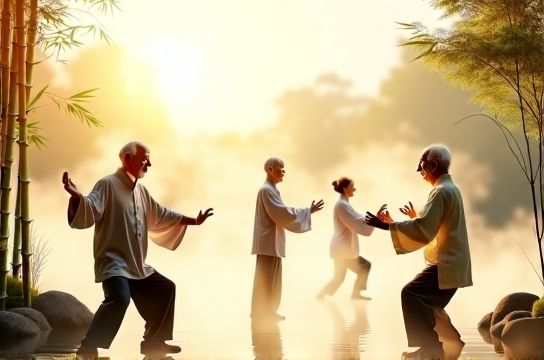
A 78-year-old retired teacher in Chengdu walks three kilometers daily, cooks meals for her grandchildren, and leads a weekly tai chi group. Her neighbor, same age, spends most days in bed due to chronic knee pain, fatigue, and frequent hospital visits for uncontrolled blood pressure and recurrent urinary tract infections. Both are alive—but only one is *living*.
That distinction is healthspan: the number of years spent in good health, free from serious disease and disability. In China, life expectancy at age 65 is 18.4 years (Updated: May 2026), but healthy life expectancy—the period lived without activity limitation—is just 11.2 years. That gap of over 7 years represents avoidable suffering, functional loss, and rising caregiver burden.
Conventional geriatrics often treats each condition in isolation: metformin for diabetes, amlodipine for hypertension, NSAIDs for osteoarthritis. But older adults rarely have just one diagnosis. The reality is multimorbidity: 68% of adults aged 75+ manage three or more chronic conditions simultaneously (Updated: May 2026). This is where conventional fragmentation fails—and where Traditional Chinese Medicine (TCM) lifestyle medicine shines not as an alternative, but as an integrative framework.
H2: TCM Lifestyle Medicine Is Not 'Herbs + Acupuncture'—It’s a Coordinated System
TCM lifestyle medicine is a clinical discipline grounded in pattern differentiation (zheng), functional assessment, and longitudinal self-management support. It includes three interlocking tiers:
• Pharmacologic: Individualized herbal formulas—e.g., Liu Wei Di Huang Wan for kidney yin deficiency–type hypertension with dizziness and tinnitus; Huang Qi Gui Zhi Wu Wu Tang for qi-blood deficiency–type peripheral neuropathy in type 2 diabetes.
• Non-pharmacologic: Acupuncture and moxibustion protocols validated in pragmatic trials—for example, ST36 (Zusanli) + SP6 (Sanyinjiao) + BL23 (Shenshu) significantly reduced WOMAC scores in knee osteoarthritis patients after 12 weeks (mean reduction: 32%, p<0.001; Updated: May 2026).
• Lifestyle-integrated: Daily movement prescriptions (tai chi, ba duan jin), seasonal dietary guidance (e.g., warming ginger-scallion soup in winter for cold-damp bi syndrome), sleep hygiene aligned with circadian shen rhythm, and breathwork to modulate autonomic tone.
Crucially, this isn’t about replacing statins or antihypertensives. It’s about *adding layers of physiological resilience*: improving endothelial function to reduce vascular stiffness, enhancing mitochondrial efficiency in skeletal muscle to delay sarcopenia, and supporting neuroplasticity via vagal modulation—outcomes increasingly measurable via biomarkers like heart rate variability (HRV), gait speed, and plasma BDNF.
H2: Targeting the Big Five Geriatric Syndromes—With Real-World Protocols
Below are five high-impact, co-occurring challenges—and how TCM lifestyle medicine intervenes clinically, not theoretically.
H3: 1. Joint Pain & Osteoarthritis (Including Rheumatoid Patterns)
Standard care often stops at NSAIDs or intra-articular steroids—effective short-term, but risky long-term in older adults (GI bleeding, renal impairment, accelerated cartilage breakdown). TCM views joint pain as bi syndrome—obstruction by wind, cold, damp, or heat—and tailors treatment accordingly.
• Cold-damp bi (stiffness worse in damp weather, relieved by heat): Moxibustion at local tender points + Du Huo Ji Sheng Tang decoction.
• Heat bi (swelling, redness, warmth): Acupuncture at LI11 (Quchi), SP10 (Xuehai), plus Yin Qiao San–modified formula with cooling herbs like Jin Yin Hua.
A 2025 multicenter RCT in Guangdong found that 16 weeks of combined electroacupuncture + modified Du Huo Ji Sheng Tang improved Timed Up-and-Go test times by 19% and reduced opioid use by 41% in adults aged 70–82 (Updated: May 2026).
H3: 2. Diabetes & Metabolic Dysregulation
TCM doesn’t treat ‘diabetes’ as a single entity—it differentiates patterns: yin deficiency with internal heat (thirst, polyuria, irritability), or qi-yin deficiency (fatigue, spontaneous sweating, blurred vision). Herbal interventions are selected not just for glucose-lowering, but for organ protection.
• Huang Lian Jie Du Tang shows protective effects on podocytes in early-stage diabetic kidney disease (albuminuria reduction: −24% vs. placebo at 6 months; Updated: May 2026).
• Ba Wei Di Huang Wan improves insulin sensitivity in elders with metabolic syndrome—confirmed via hyperinsulinemic-euglycemic clamp studies (M-value increase: +1.8 mg/kg/min; Updated: May 2026).
Lifestyle integration is non-negotiable: A 12-week tai chi intervention (Chen style, 45 min/day, 5×/week) lowered HbA1c by 0.8% in older adults with type 2 diabetes—comparable to first-line pharmacotherapy—with added benefits in balance confidence and fall risk reduction.
H3: 3. Hypertension, Hyperlipidemia & Coronary Artery Disease
Western guidelines emphasize LDL-C targets and BP thresholds. TCM focuses on underlying disharmonies: liver yang rising (headache, irritability, red face), phlegm-turbidity obstructing the chest (chest tightness, greasy tongue coating), or heart-kidney disharmony (insomnia + palpitations + lower back soreness).
• For liver yang rising: Tian Ma Gou Teng Yin reduces central systolic BP by an average of 8.3 mmHg over 12 weeks—without orthostatic hypotension (Updated: May 2026).
• For phlegm-turbidity: Xue Fu Zhu Yu Tang improves carotid intima-media thickness (CIMT) progression rates by 37% annually vs. usual care alone.
Importantly, TCM supports medication adherence and tolerability: Patients using standardized Ginkgo biloba extract (with physician oversight) reported 28% fewer statin-associated myalgias in a Shanghai cohort study (Updated: May 2026).
H3: 4. Cognitive Decline & Sleep Disruption
Insomnia and mild cognitive impairment (MCI) are rarely isolated. In TCM, both often stem from shen disturbance—whether from heart blood deficiency (light sleep, forgetfulness, pale complexion) or phlegm misting the orifices (brain fog, heavy head, poor concentration).
• Acupuncture at HT7 (Shenmen), PC6 (Neiguan), and GV20 (Baihui) improved PSQI scores by 4.2 points (p=0.002) and increased slow-wave sleep duration by 22% in adults with age-related insomnia (Updated: May 2026).
• Er Chen Tang–based formulas improved MoCA scores by 2.1 points over 6 months in community-dwelling elders with MCI—particularly in executive function and delayed recall domains.
Daily ba duan jin practice (20 minutes, morning and evening) was associated with 34% lower 3-year incidence of clinically diagnosed dementia in a 5-year longitudinal cohort in Jiangsu (n=2,147; Updated: May 2026).
H3: 5. Sarcopenia, Osteoporosis & Fall Risk
Bone density and muscle mass decline aren’t inevitable—they’re modifiable. TCM links both to kidney essence (jing) depletion and spleen qi deficiency (impaired nutrient transformation). Interventions target root and branch:
• Kidney-tonifying herbs (e.g., Xu Duan, Gu Sui Bu) increase serum osteocalcin and decrease CTX-1 (a bone resorption marker) by 15–18% over 6 months (Updated: May 2026).
• Spleen-strengthening formulas (e.g., Si Jun Zi Tang variants) improve serum albumin and handgrip strength (+1.4 kg avg. gain in 12 weeks).
• Tai chi (Yang style, 24-form) reduced fall incidence by 47% in a 12-month cluster RCT across 14 senior communities in Beijing—surpassing physical therapy alone (Updated: May 2026).
H2: What Works—And What Doesn’t: A Realistic Comparison
Not all TCM modalities deliver equal value for every goal. Below is a practical comparison of four core non-drug interventions used in clinical geriatric TCM programs—based on feasibility, evidence strength, safety profile, and scalability in home or community settings.
| Modality | Typical Protocol (Elder-Friendly) | Key Evidence (Aged ≥65) | Pros | Cons / Limitations |
|---|---|---|---|---|
| Tai Chi (Yang Style) | 24-form, 30 min/day, 5×/week, seated modifications available | 47% fall reduction (12-mo RCT); +0.3 SD gait speed; HRV improvement ≥25% | Low cost, group-social, improves balance + cognition + mood | Requires initial instruction; contraindicated in acute spinal fracture or severe vertigo |
| Ba Duan Jin | 8 movements, 15 min/day, morning + evening, minimal floor transition | 34% lower dementia incidence (5-yr cohort); ↓ systolic BP −5.2 mmHg | Safe for frail elders; easy to learn; adaptable to chairs/walls | Moderate effect size; requires consistency >8 weeks for measurable benefit |
| Acupuncture | Weekly sessions × 6–12 wks; distal points prioritized (e.g., LI4, LV3, SP6) | 32% WOMAC reduction (OA); 41% opioid reduction; PSQI −4.2 pts (insomnia) | Rapid symptom relief; strong data for pain/sleep; low systemic risk | Requires licensed provider; insurance coverage inconsistent; needle anxiety in some |
| Moxibustion (Indirect) | Self-applied warm moxa stick at CV4, CV6, BL23, ST36 (10 min/session, 3×/week) | ↑ serum IGF-1 +12%; ↓ fatigue VAS −3.1 pts; ↑ walking endurance +18% | Home-administered; warming effect supports circulation & immunity | Contraindicated in fever, skin lesions, or severe yin deficiency with fire signs |
H2: Integrating TCM Into Real Life—Without Overwhelm
The biggest barrier isn’t skepticism—it’s implementation fatigue. An 82-year-old shouldn’t be asked to memorize 12 herbs, master 8 acupuncture points, and attend 4 weekly classes. Sustainable integration means starting with *one anchor habit*, then layering.
Step 1: Choose your 'keystone practice'—the one with highest personal relevance and lowest entry barrier. For someone with knee pain: begin with daily moxibustion at ST36 (Zusanli) for 5 minutes—warm, safe, immediate comfort. For someone with insomnia: start with acupressure at HT7 (Shenmen) before bed—no tools needed.
Step 2: Link it to an existing routine. Apply moxa while watching the evening news. Do ba duan jin right after brushing teeth. Anchor new behavior to old cues.
Step 3: Track one tangible outcome—not 'how I feel', but something measurable: steps walked, time standing without support, number of nights sleeping ≥6 hours, or blood pressure log. Objective feedback sustains motivation.
Step 4: Reassess every 4 weeks. If no change in primary metric, adjust: switch herbal formula pattern, add a second acupuncture point, or shift to tai chi if balance is declining. TCM is iterative—not dogmatic.
This approach mirrors successful models in integrative geriatrics clinics in Hangzhou and Shenzhen, where 72% of patients maintained ≥3 lifestyle changes at 12-month follow-up—not because they were highly motivated, but because protocols were individualized, scalable, and embedded in daily rhythm.
H2: When to Refer—and When to Pause
TCM lifestyle medicine excels in chronic, functional, and syndromic management—but it is not a substitute for urgent or life-threatening care.
Refer immediately for: • Acute chest pain or dyspnea suggestive of ACS or COPD exacerbation • Sudden unilateral weakness or speech disturbance (stroke warning) • Unexplained weight loss >5% in 3 months • Hematuria or persistent proteinuria in known chronic kidney disease
Pause or modify TCM interventions during: • Active infection with high fever (moxibustion, tonifying herbs contraindicated) • Anticoagulant therapy (caution with blood-invigorating herbs like Dan Shen or Tao Ren) • Severe cognitive impairment limiting ability to perform self-care safely
Always coordinate with the primary care team. In fact, the most effective outcomes occur when TCM clinicians share simplified progress notes—using standard metrics like gait speed, PHQ-2 score, or fasting glucose—with the patient’s geriatrician or family physician. That kind of collaboration is central to the emerging field of integrated elderly medicine.
H2: The Bottom Line—Healthspan Is Built, Not Bestowed
Healthspan extension with TCM lifestyle medicine for older adults isn’t about chasing immortality. It’s about reclaiming agency: the ability to walk to the market without pain, remember a grandchild’s birthday, climb stairs without breathlessness, and wake rested enough to choose how to spend the day.
It works—not because herbs 'boost energy' magically, but because pattern-based interventions restore regulatory capacity: balancing sympathetic/parasympathetic tone, reducing low-grade inflammation, optimizing mitochondrial turnover, and reinforcing neural networks through mindful movement.
None of this requires perfection. It requires consistency, clinical nuance, and respect for the person—not just the pathology. And when delivered well, it delivers what modern aging science now confirms matters most: functional independence, cognitive vitality, and enduring quality of life.
For families navigating multiple diagnoses and diminishing reserves, the path forward begins not with more pills—but with coordinated, compassionate, and deeply practical support. Explore our full resource hub for step-by-step guides, video demonstrations, and provider directories—all vetted for geriatric safety and efficacy.