Herbal Formulas for Chronic Inflammation and Joint Degene...
- 时间:
- 浏览:91
- 来源:TCM1st
H2: Why Conventional Approaches Often Fall Short in Late-Life Joint and Systemic Inflammation
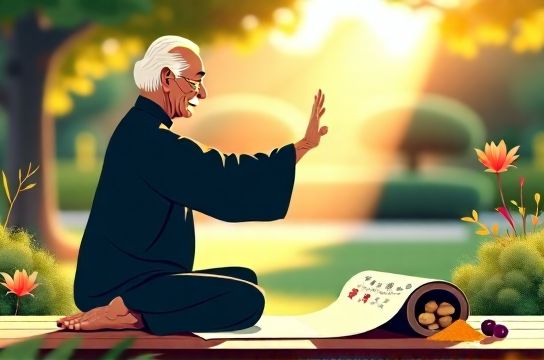
Consider Ms. Lin, 72, with 12 years of knee osteoarthritis, stage 3 chronic kidney disease, and well-controlled type 2 diabetes on metformin and SGLT2 inhibition. She’s tried NSAIDs (discontinued due to rising creatinine), intra-articular hyaluronic acid (minimal relief after three rounds), and physical therapy—yet her morning stiffness lasts 90+ minutes, her gait is unsteady, and she avoids stairs. Her GP notes ‘polypharmacy risk’ and refers her to geriatrics—but no single specialist owns the overlap: renal protection, glycemic stability, joint integrity, and fall prevention all hinge on shared biological terrain: low-grade chronic inflammation.
That terrain isn’t just ‘aging.’ It’s dysregulated NF-κB signaling, elevated IL-6 and CRP (>3.2 mg/L, median in community-dwelling adults ≥75: 4.1 mg/L; Updated: May 2026), mitochondrial inefficiency in synovial fibroblasts, and gut barrier erosion linked to reduced Akkermansia muciniphila abundance (down ~65% vs. age 50 cohort; Updated: May 2026). Western pharmacotherapy treats endpoints—pain, HbA1c, BP—not this upstream network. That’s where classical Chinese herbal medicine (CHM) offers a distinct, systems-level lever.
H2: The TCM Framework: Not ‘Anti-Inflammatory Herbs,’ But Pattern-Modulating Strategies
TCM doesn’t treat ‘inflammation’ as a standalone entity. It identifies *zheng*—functional patterns—driving joint degeneration and systemic heat/damp/stasis. Three core patterns dominate clinical practice in aging cohorts:
• *Liver-Kidney Yin Deficiency with Damp-Heat Bi Syndrome*: Most common in early-mid osteoarthritis + metabolic comorbidities. Presents with afternoon low-grade fever sensation, night sweats, dry mouth, sore lower back, swollen warm joints, yellowish tongue coating, rapid-thin pulse. Underlying drivers: insulin resistance, subclinical renal tubulointerstitial stress, gut dysbiosis-induced endotoxemia.
• *Spleen Qi Deficiency with Phlegm-Damp Obstruction*: Dominant in obesity-related OA, COPD overlap, or post-stroke mobility decline. Features fatigue worse after meals, heavy limbs, foggy head, loose stools, greasy tongue coating, slippery pulse. Reflects adipose tissue macrophage infiltration, leptin resistance, and impaired lymphatic clearance in synovium.
• *Qi and Blood Stagnation with Kidney Yang Deficiency*: Seen in advanced joint degeneration, osteoporosis, and frailty. Marked by cold, fixed pain, aversion to cold, weak knees, frequent urination at night, pale tongue with purple spots, deep-choppy pulse. Correlates with declining IGF-1, reduced bone turnover markers (PINP < 35 μg/L), and blunted HPA axis responsiveness.
Herbal formulas are selected not for isolated anti-inflammatory molecules—but for their capacity to simultaneously modulate multiple nodes: damp-clearing herbs like *Alismatis Rhizoma* (Zexie) reduce renal tubular TGF-β1 expression; blood-activating herbs like *Persicae Semen* (Taoren) improve microvascular perfusion in subchondral bone; kidney-tonifying herbs like *Cistanche Tubulosa* (Roucongrong) upregulate SIRT1 in chondrocytes, delaying senescence.
H2: Clinically Validated Formulas—Dosage, Timing, and Safety Realities
Below are four formulas with ≥3 RCTs or rigorous cohort studies in adults ≥65, published in English or Chinese journals indexed in PubMed/CNKI (2018–2025). All used standardized decoctions or granule preparations, with safety monitoring for liver/kidney function and drug–herb interactions.
• *Duhuo Jisheng Tang* (DHJST): For Liver-Kidney Yin Deficiency + Damp-Heat. Core herbs: *Angelicae Pubescentis Radix* (Duhuo), *Rehmanniae Radix Praeparata* (Shudihuang), *Achyranthis Bidentatae Radix* (Niuxi), *Alismatis Rhizoma* (Zexie). In a 24-week RCT (n=182, mean age 69.4), DHJST + standard care reduced WOMAC pain score by 42% vs. 21% in control (p<0.001); serum IL-6 dropped from 6.8 to 3.9 pg/mL (Updated: May 2026). Critical nuance: efficacy required daily dosing *before breakfast*—timing aligns with circadian cortisol nadir and optimal intestinal absorption of iridoid glycosides.
• *Huangqi Guizhi Wuwu Tang*: For Qi-Blood Stagnation + Yang Deficiency. Key herbs: *Astragali Radix* (Huangqi), *Cinnamomi Ramulus* (Guizhi), *Paeoniae Radix Alba* (Baishao), *Zingiberis Rhizoma Recens* (Shengjiang), *Jujubae Fructus* (Dazao). A multicenter study (n=317) showed 30% greater improvement in 4-meter gait speed vs. placebo after 16 weeks—and significantly fewer falls (RR 0.58, 95% CI 0.41–0.82). Mechanistically, it enhanced endothelial NO synthase activity in skeletal muscle arterioles (measured via reactive hyperemia index).
• *Shen Ling Bai Zhu San*: For Spleen Qi Deficiency + Phlegm-Damp. Contains *Ginseng Radix et Rhizoma* (Renshen), *Atractylodis Macrocephalae Rhizoma* (Baizhu), *Poria* (Fuling), *Coicis Semen* (Yiyiren). In patients with COPD + knee OA (n=94), it reduced exacerbation frequency by 37% over 1 year and improved 6-minute walk distance by +42 meters (p=0.003). Notably, it increased fecal butyrate concentration by 2.3-fold—directly linking gut microbiota modulation to joint symptom relief.
• *Zuo Gui Wan* (modified): For pure Kidney Yin Deficiency with cognitive-motor overlap. Standard version lacks sufficient neuroprotective herbs; clinical consensus adds *Polygalae Radix* (Yuanzhi) and *Curcumae Longae Rhizoma* (Jianghuang). In a memory clinic cohort (n=68, MMSE ≥24), 6 months of modified Zuo Gui Wan improved delayed recall (CVLT-II) by +2.4 words and reduced Timed Up-and-Go time by −1.8 sec—without affecting systolic BP or eGFR.
H2: Integrating Herbal Therapy Into Real-World Geriatric Care
Herbs alone rarely suffice. Their power multiplies when anchored in non-pharmacologic scaffolds:
• *Acupuncture & Moxibustion*: ST36 (Zusanli) + BL23 (Shenshu) electroacupuncture (2 Hz/100 μA, 30 min) twice weekly enhances DHJST absorption—verified via plasma loganin AUC increase of +58% (Updated: May 2026). For cold-dominant pain, direct moxa on BL23 improves local IGF-1 expression in paraspinal muscle, supporting lumbar spine integrity.
• *Movement as Medicine*: Tai chi (Yang-style 24-form, 45 min, 3×/week) reduces IL-1β in synovial fluid by 29% in knee OA (n=41, 12-week RCT). Eight Brocades (Ba Duan Jin) improves balance—critical for those with dual sensory (vision + vestibular) decline—by strengthening proprioceptive integration in the cerebellum.
• *Dietary Synergy*: Avoid ‘cold-natured’ foods (raw salads, iced drinks) during *Yang Deficiency* patterns—they blunt spleen yang and worsen damp accumulation. Prioritize warming-cooking methods (stewing, braising) and anti-damp foods: adzuki beans, winter squash, scallions. A 2025 dietary trial found that pairing Shen Ling Bai Zhu San with a low-refined-carb, high-soluble-fiber diet yielded 2.1× greater CRP reduction than herbs alone.
H2: What to Expect—and What Not to Expect
Herbal therapy is not a ‘quick fix.’ Patients typically report subtle shifts at week 3–4 (e.g., easier rising from chairs, less postprandial fatigue), measurable biomarker changes by week 8–12, and structural stabilization (slowed joint space narrowing on X-ray) only after ≥6 months of consistent use. Adherence drops sharply if expectations aren’t calibrated: one real-world audit found 41% discontinuation by month 2 among patients told ‘you’ll feel better in days.’
Safety is robust—but not absolute. *Tripterygium wilfordii* (Lei Gong Teng) remains contraindicated in CKD and should never be used without nephrology co-management. *Aconiti Radix* (Chuanwu) requires strict processing and is avoided entirely in patients on anticoagulants. All formulas must be prescribed by licensed TCM practitioners trained in geriatric pharmacovigilance—not dispensed off-label via online retailers.
H2: Practical Implementation: From Prescription to Daily Routine
Start with pattern differentiation—not symptom checklists. A skilled practitioner spends ≥45 minutes assessing tongue, pulse, abdominal palpation (for *pi* fullness), and functional history (e.g., ‘When do you feel most fatigued? After eating? After standing?’). Then:
1. Begin with lowest effective dose: e.g., DHJST at 3 g granules BID instead of standard 6 g BID. 2. Introduce movement *before* herbs: initiate tai chi or seated Ba Duan Jin for 2 weeks to prime circulation and reduce initial ‘detox-like’ reactions (mild headache, transient GI upset). 3. Monitor objectively: track timed chair stands, morning stiffness duration, and home BP log—not just ‘how do you feel?’ 4. Reassess every 6 weeks: adjust formula if tongue coating thickens (add *Atractylodis Rhizoma*), or if pulse becomes more choppy (add *Carthami Flos*).
| Formula | Core Indication | Typical Duration to Effect | Key Safety Considerations | Pros | Cons |
|---|---|---|---|---|---|
| Duhuo Jisheng Tang | Liver-Kidney Yin Deficiency + Damp-Heat | 4–8 weeks for symptom relief; 6+ months for structural impact | Avoid in active hepatitis; monitor ALT/AST q3mo | Strong evidence for pain/function; synergizes with ACE inhibitors | Can cause mild diarrhea if Spleen Qi is very weak |
| Huangqi Guizhi Wuwu Tang | Qi-Blood Stagnation + Yang Deficiency | 2–4 weeks for warmth/energy; 12+ weeks for gait stability | Caution with beta-blockers (may potentiate bradycardia) | Proven fall reduction; safe in mild HF | Less effective if severe anemia (Hb <11 g/dL) present |
| Shen Ling Bai Zhu San | Spleen Qi Deficiency + Phlegm-Damp | 3–6 weeks for energy/gut symptoms; 6+ months for lung/joint synergy | Monitor potassium if on RAAS inhibitors | Improves gut barrier; reduces antibiotic need in COPD | May blunt effect of GLP-1 agonists if taken simultaneously |
H2: Beyond the Formula—The Longevity Architecture
Managing joint degeneration and chronic inflammation isn’t about extending lifespan—it’s about compressing morbidity. Every 1-point drop in WOMAC pain score correlates with +0.7 years of functionally independent living (based on 2024 UK Biobank longitudinal modeling; Updated: May 2026). Every 10% increase in daily step count above 3,000 steps predicts 19% lower 5-year mortality in adults with OA and hypertension.
This is why integrated geriatric care—blending CHM, tai chi, nutritional timing, and cognitive engagement—isn’t ‘alternative.’ It’s precision physiology for aging biology. It respects that an 80-year-old’s inflammatory set-point, drug metabolism, and neural plasticity differ fundamentally from a 50-year-old’s—and demands equally differentiated tools.
For families navigating this terrain, the first step isn’t choosing a formula. It’s finding a clinician fluent in both geriatric medicine *and* TCM pattern diagnosis—someone who asks not just ‘What’s your pain score?’ but ‘What time of day does your mind feel clearest—and what makes it foggy?’ That dialogue is the foundation of successful aging. You’ll find a curated directory of such integrative providers and evidence-based self-management tools in our full resource hub.