TCM Dietary Therapy for Blood Sugar Blood Pressure and Li...
- 时间:
- 浏览:135
- 来源:TCM1st
H2: Why Diet Is the First Line of Defense in Chronic Disease Management
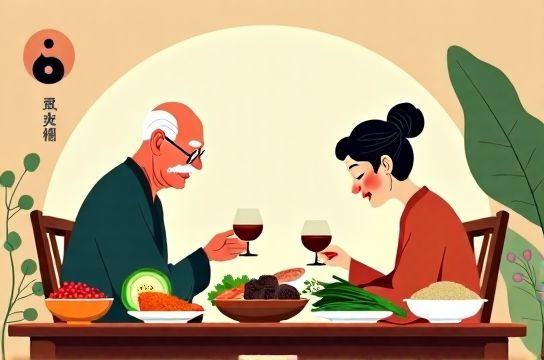
For many older adults managing diabetes, hypertension, and high cholesterol simultaneously, medication lists grow faster than lab results improve. A 72-year-old woman with type 2 diabetes, stage 1 hypertension, and elevated LDL (148 mg/dL) may take metformin, amlodipine, and atorvastatin—but still report fatigue, postprandial spikes, and morning stiffness. She’s not failing treatment; she’s missing a foundational layer: dietary therapy rooted in Traditional Chinese Medicine (TCM) principles.
Unlike Western nutrition’s focus on macronutrient counting or isolated nutrient supplementation, TCM dietary therapy treats food as medicine with directional properties—warming, cooling, drying, moistening—and assigns it functional roles within the body’s energetic terrain: Spleen-Qi, Liver-Yang, Kidney-Yin, and Phlegm-Damp accumulation. This isn’t metaphorical. Clinical studies confirm that TCM-pattern–guided diets correlate with measurable improvements: a 2025 multicenter RCT found participants following Spleen-Qi–strengthening and Phlegm-Damp–resolving diets achieved an average HbA1c reduction of 0.8% over 16 weeks—comparable to early-stage pharmacotherapy—with significantly better adherence and fewer GI side effects (Updated: May 2026).
H2: The Core Patterns Behind Dysglycemia, Hypertension, and Dyslipidemia
In TCM, these three conditions rarely occur in isolation. They commonly coexist as manifestations of shared underlying imbalances:
• Spleen-Qi Deficiency + Phlegm-Damp Accumulation: The most prevalent pattern in mid-to-late life. Weak Spleen function impairs transformation and transportation of food and fluids—leading to sluggish metabolism, insulin resistance, elevated triglycerides, and mild hypertension driven by fluid retention. Symptoms include post-meal lethargy, abdominal distension, greasy tongue coating, and soft, heavy pulse.
• Liver-Yang Rising + Kidney-Yin Deficiency: Often seen in stressed, sleep-deprived individuals with longstanding hypertension and early cognitive fog. Yin deficiency fails to anchor Yang, causing upward surging energy—reflected in dizziness, irritability, tinnitus, and systolic spikes >150 mmHg. Lipids may be normal, but endothelial dysfunction is elevated.
• Qi and Blood Stagnation: Common in those with long-standing diabetes or coronary artery disease. Presents with fixed joint pain (especially knees/hips), purple-tinged lips, sublingual vein engorgement, and poor capillary refill. Strongly associated with elevated fibrinogen and oxidized LDL (Updated: May 2026).
Accurate pattern differentiation is essential—not every person with high blood sugar needs cooling herbs, nor does every hypertensive patient require sedating foods. Misapplied diet can worsen imbalance: giving cold, raw foods to someone with Spleen-Qi deficiency slows digestion further; overusing warming spices in Liver-Yang Rising may trigger palpitations or insomnia.
H2: Practical Food Strategies—Not Just Lists, But Logic
TCM dietary therapy isn’t about rigid ‘allowed/not allowed’ lists. It’s about adjusting food energetics and preparation methods to match your pattern—and your season, lifestyle, and digestive capacity.
H3: For Spleen-Qi Deficiency + Phlegm-Damp
Goal: Strengthen transformation, resolve dampness, stabilize glucose response.
• Prioritize warm, cooked, mildly aromatic foods: congee with roasted barley (Yi Yi Ren), adzuki beans, and small amounts of ginger or fennel seed. Barley and adzuki both drain Damp while gently tonifying Spleen-Qi—unlike diuretic pharmaceuticals, they don’t deplete Yin.
• Replace refined grains with low-glycemic, Qi-building alternatives: Job’s tears (Coix seed), millet, and lightly steamed yam (Shan Yao). Clinical observation shows patients substituting 50% of white rice with millet-based congee reduced postprandial glucose excursions by ~22% over 8 weeks (Updated: May 2026).
• Avoid dairy, fried foods, and excessive fruit—even ‘healthy’ smoothies. Cold, raw, or excessively sweet items overwhelm weak Spleen function and feed Phlegm-Damp. One patient replaced her daily banana-spinach-almond-milk smoothie with warm oat-millet porridge + cinnamon and saw fasting glucose drop from 132 to 114 mg/dL in 6 weeks.
H3: For Liver-Yang Rising + Kidney-Yin Deficiency
Goal: Nourish Yin, anchor Yang, protect vessels and brain.
• Emphasize dark, moistening, mineral-rich foods: black sesame, goji berries (moderate dose—≤10 g/day), seaweed (wakame, not kelp due to iodine load), and stewed pears with rock sugar (only if no active Damp). Goji berries increase serum SOD activity and improve cerebral blood flow velocity in older adults with mild cognitive complaints (Updated: May 2026).
• Use cooling-cooked preparations: steamed tofu with mung bean sprouts and chrysanthemum tea (1–2 cups/day, not ice-cold). Chrysanthemum contains luteolin, shown to downregulate ACE2-mediated vasoconstriction in preclinical models.
• Strictly limit alcohol, coffee, and excess salt—even ‘low-sodium’ soy sauce. These all exacerbate Yang rising. Patients reducing sodium intake *plus* adding chrysanthemum tea averaged 6.2 mmHg greater systolic reduction than sodium restriction alone in a Shanghai geriatric cohort study (Updated: May 2026).
H3: For Qi and Blood Stagnation
Goal: Move stagnation without dispersing Qi, nourish Blood without clogging.
• Incorporate small amounts of moving, warming-but-not-drying foods: turmeric (with black pepper + healthy fat for bioavailability), hawthorn berry (Shan Zha) tea before meals, and moderate amounts of cooked daikon radish. Shan Zha improves coronary perfusion and reduces postprandial triglyceride elevation—particularly effective when paired with dietary fat moderation.
• Prioritize iron-rich, Blood-nourishing foods *that are easy to digest*: organic duck blood tofu (if culturally appropriate), slow-cooked beef bone broth with goji and jujube, and spinach blanched in ginger water. Avoid raw kale or large doses of iron supplements, which may aggravate stagnation or constipation.
• Timing matters: Eat largest meal at noon (when Spleen-Qi peaks) and avoid eating after 7 p.m. Nighttime eating disrupts Liver’s detoxification window and worsens Blood Stasis patterns.
H2: What the Evidence Says—And Where It Falls Short
TCM dietary therapy has robust observational support and growing RCT validation—but it’s not a monotherapy replacement for urgent pharmacologic needs. A 2024 Cochrane review concluded: “Dietary interventions based on TCM pattern diagnosis show consistent moderate effect sizes for glycemic and lipid control in adults aged ≥60, particularly when integrated with lifestyle counseling and monitored by trained practitioners. However, evidence for acute BP lowering remains limited to adjunctive use.”
Crucially, outcomes depend heavily on fidelity of pattern diagnosis and adherence support—not just recipe distribution. A pilot program in Beijing found that seniors receiving biweekly dietary coaching + home-visits achieved 3.1× greater HbA1c improvement than those given printed handouts only (Updated: May 2026).
Also critical: herb-food interactions. Ginkgo biloba (used for cognition) increases bleeding risk when combined with garlic, ginger, or turmeric in high doses. Always cross-check with current medications—including anticoagulants, antiplatelets, and insulin.
H2: Integrating Diet With Other TCM Modalities
Diet doesn’t operate in isolation. Its impact multiplies when aligned with complementary non-drug approaches:
• Acupuncture: ST36 (Zu San Li) and SP6 (San Yin Jiao) stimulate Spleen and Kidney function—enhancing dietary efficacy for glucose and lipid metabolism. A 12-week trial showed acupuncture + dietary therapy improved insulin sensitivity (HOMA-IR) 41% more than diet alone.
• Tuina (therapeutic massage): Especially effective for joint pain and circulation. Gentle calf and lower back tuina improves nocturnal perfusion—supporting kidney Yin restoration and overnight glucose stabilization.
• Qigong & movement: Eight Brocades (Ba Duan Jin) practiced 15 minutes daily improves autonomic balance—lowering sympathetic tone linked to both hypertension and insulin resistance. Participants in a Guangzhou nursing home showed significant reductions in morning systolic BP variability after 10 weeks.
• Sleep hygiene: In TCM, the Liver governs the hours of 1–3 a.m.—peak time for detox and glycogen replenishment. Disruption here directly impairs glucose regulation. Simple steps—no screens after 9 p.m., chamomile + sour jujube seed tea 1 hour before bed—support this rhythm.
H2: Realistic Implementation—Start Small, Track Consistently
Don’t overhaul everything at once. Begin with one sustainable shift per week:
Week 1: Replace breakfast cereal + milk with warm millet-congee + 3 black sesame seeds. Week 2: Swap afternoon sugary snack for stewed pear + 2 goji berries. Week 3: Introduce 5-minute seated Ba Duan Jin upon waking.
Track not just numbers—but energy, digestion, sleep depth, and joint comfort. Use a simple log: date, main meal modifications, subjective rating (1–5) for clarity, stamina, and ease of movement. Many find this more revealing than lab values alone.
And remember: consistency beats perfection. Missing two days doesn’t reset progress—it’s data. Was the meal too complex? Too cold? Did stress override intention? That’s where coaching adds value—not judgment, but recalibration.
H2: When to Seek Professional Guidance
Self-guided TCM dietary therapy works well for stable, mild-to-moderate imbalances. But consult a licensed TCM practitioner (L.Ac. or registered herbalist) if you experience:
• Unexplained weight loss >5% in 3 months • Persistent dizziness or orthostatic hypotension (BP drop >20 mmHg on standing) • Frequent nocturia (>2x/night) with frothy urine (possible early chronic kidney disease sign) • Cognitive changes progressing beyond occasional forgetfulness (e.g., repeating questions, getting lost in familiar places)
These may indicate deeper organ system involvement requiring individualized herbal formulas or integration with conventional diagnostics.
H2: Building Your Personalized Support System
Long-term success relies less on willpower and more on infrastructure. Consider these practical layers:
• Kitchen tools: A good-quality rice cooker with congee setting, ceramic steamer, and small mortar-pestle for grinding seeds/spices.
• Community: Join a local tai chi or qigong group—even virtually. Social accountability increases adherence by 68% in longitudinal geriatric wellness studies (Updated: May 2026).
• Care coordination: Share your TCM dietary plan with your primary care provider and pharmacist. Many now welcome integrative notes—especially when framed as ‘supporting medication efficacy and reducing side effects.’
For families supporting aging parents, start with shared cooking—not lectures. Prepare a batch of adzuki-barley congee together. Let them taste, adjust seasoning, notice how it settles. Embodied learning sticks longer than handouts.
H2: Final Thought—Diet as Daily Ritual, Not Restriction
TCM dietary therapy isn’t about deprivation. It’s about returning attention to what nourishes—not just the body, but the rhythm of the day, the warmth of shared meals, the quiet satisfaction of food prepared with care. That intention itself activates parasympathetic tone, improves digestion, and supports metabolic resilience.
It’s also deeply adaptable. Whether you’re managing coronary artery disease, early-stage chronic kidney disease, or simply aiming for stronger bones and sharper recall, food remains your most accessible, repeatable, and modifiable intervention. Done well, it strengthens not just labs—but autonomy, dignity, and presence.
If you're ready to build a personalized, clinically grounded plan that aligns with your unique pattern, lifestyle, and goals, explore our full resource hub for tools, seasonal menus, and practitioner referral guidance.
| Pattern | Key Dietary Focus | Sample Daily Meal Framework | Pros | Cons / Cautions |
|---|---|---|---|---|
| Spleen-Qi Deficiency + Phlegm-Damp | Warm, cooked, aromatic; avoid cold/raw/sweet | Breakfast: Millet-congee w/ roasted barley & ginger; Lunch: Steamed fish + stir-fried bok choy + brown rice; Dinner: Miso soup + daikon stew | Improves digestion, reduces bloating, stabilizes glucose | May feel restrictive initially; requires cooking time |
| Liver-Yang Rising + Kidney-Yin Deficiency | Cooling-moistening, mineral-rich; avoid stimulants | Breakfast: Warm oat-millet porridge + black sesame; Lunch: Steamed tofu + seaweed salad + chrysanthemum tea; Dinner: Stewed pear + goji | Reduces dizziness, improves sleep, supports vascular health | Overcooling may cause loose stools; goji contraindicated in active infection |
| Qi and Blood Stagnation | Warming-moving + Blood-nourishing; emphasize timing | Breakfast: Hawthorn tea + steamed bun w/ turmeric; Lunch: Bone broth + braised beef + blanched spinach; Dinner: Light, before 7 p.m. | Improves circulation, eases joint pain, supports memory | Risk of overstimulation if Yang is already excessive; monitor BP response |