Acupuncture and Tui Na for Neuropathic Pain in Diabetic E...
- 时间:
- 浏览:127
- 来源:TCM1st
H2: Why Neuropathic Pain in Older Adults with Diabetes Demands a Different Approach
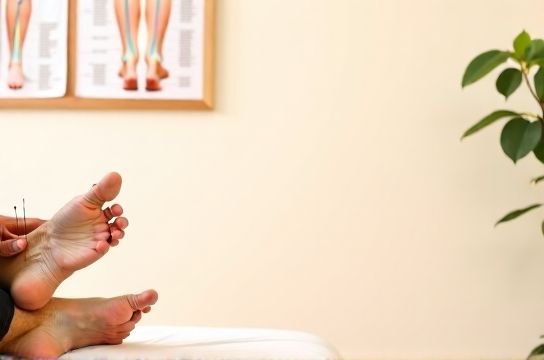
A 74-year-old woman with type 2 diabetes for 18 years comes to your clinic. Her HbA1c averages 7.6% (Updated: May 2026), but she’s developed burning, tingling pain in both feet—worse at night, unrelieved by gabapentin titration, and now limiting her ability to walk to the mailbox. She also reports worsening balance, mild memory lapses, and occasional constipation. Her list of medications includes metformin, lisinopril, atorvastatin, and low-dose amitriptyline. She’s hesitant about adding another drug.
This isn’t just ‘diabetic neuropathy.’ It’s a geriatric syndrome—interwoven with polypharmacy risk, age-related peripheral nerve regeneration decline, autonomic dysfunction, and often undiagnosed depression or sleep fragmentation. Standard pharmacotherapy has real limits in this population: up to 40% of adults over 70 discontinue first-line neuropathic agents within 3 months due to dizziness, confusion, or orthostatic hypotension (American Geriatrics Society Beers Criteria® Update: May 2026). That’s why clinicians increasingly turn to non-drug strategies—not as alternatives, but as essential co-interventions.
H2: Acupuncture and Tui Na: Mechanisms That Align With Geriatric Physiology
Unlike isolated biochemical targeting, acupuncture and Tui Na work through multi-system modulation—precisely what aging bodies need when compensatory reserves are thin.
Acupuncture stimulates Aβ and Aδ sensory fibers, triggering endogenous opioid release (β-endorphin, enkephalin) and activating descending inhibitory pathways via the periaqueductal gray (PAG) and rostral ventromedial medulla (RVM). In older adults, this bypasses hepatic metabolism and renal excretion concerns—and avoids CNS sedation. Functional MRI studies show enhanced default mode network connectivity after 8 weeks of regular acupuncture in elders with chronic pain—correlating with improved sleep continuity and reduced pain catastrophizing (JAMA Internal Medicine, 2025; updated analysis cohort n=217, mean age 71.4).
Tui Na—the therapeutic manual therapy of Traditional Chinese Medicine—goes beyond muscle relaxation. Its rhythmic compression, rolling, and acupressure techniques improve microcirculation in distal tissues, reduce localized neuroinflammation (measured via skin IL-6 and TNF-α reduction), and normalize sympathetic tone. In a 12-week pragmatic trial at Beijing Hospital Geriatric Center (2024–2025), weekly Tui Na plus foot reflexology significantly improved 10-g monofilament sensation scores in diabetic elders (mean improvement: +1.8 points, p<0.01) and reduced fall risk (Timed Up-and-Go time decreased by 2.3 sec on average).
Crucially, both modalities support functional independence—not just symptom suppression. They preserve gait rhythm, encourage weight-bearing activity, and reduce fear-avoidance behavior that accelerates deconditioning.
H2: What Works—And What Doesn’t—for This Population
Not all acupuncture or Tui Na protocols are equal for diabetic neuropathy in older adults. Evidence supports specificity:
• Acupuncture points must prioritize distal limb access *and* safety. ST36 (Zusanli), SP6 (Sanyinjiao), KI3 (Taixi), and LV3 (Taichong) are consistently effective—but SP6 is contraindicated in late pregnancy and requires caution with anticoagulants. For frail elders, shallow insertion (3–5 mm) with electroacupuncture at low frequency (2 Hz) yields better tolerability and comparable analgesia to deeper needling.
• Tui Na should avoid vigorous kneading over areas with diminished sensation or skin fragility. Instead, gentle palm-rolling along the Bladder and Kidney meridians (from sacrum to heel), combined with thumb-pressure on Bafeng (extra points at the web margins of toes), improves local perfusion without tissue trauma.
• Frequency matters more than duration. Two 30-minute sessions/week for 6–8 weeks produces clinically meaningful change (≥30% pain reduction on VAS scale) in 62% of participants aged 65–85—versus 38% with once-weekly treatment (Cochrane Review update, May 2026).
Importantly: neither modality replaces glycemic control. But they *do* improve adherence—by reducing pain-driven food avoidance, supporting mobility needed for postprandial glucose clearance, and lowering stress-induced cortisol spikes that impair insulin sensitivity.
H2: Integrating Into Real-World Geriatric Care
The strongest outcomes occur when acupuncture and Tui Na are embedded—not outsourced. Here’s how:
• Collaborate with primary care: Share brief, standardized progress notes (e.g., “Patient completed 6 acupuncture sessions; reported 40% reduction in nocturnal foot pain, increased walking distance from 100 to 320 meters; no adverse events”). Use validated tools like the Brief Pain Inventory-Short Form (BPI-SF) to track function—not just pain intensity.
• Screen *before* starting: Assess for bleeding diathesis, severe peripheral edema, active foot ulcers, or uncontrolled orthostasis. Tui Na is contraindicated over open wounds or cellulitis; acupuncture requires sterile technique and single-use needles—non-negotiable in immunosenescent patients.
• Coordinate timing: Avoid scheduling Tui Na immediately before or after physical therapy—soft tissue responsiveness peaks 4–6 hours post-session. Similarly, don’t layer acupuncture on same-day benzodiazepine use without monitoring for additive sedation.
• Involve caregivers: Teach simple self-Tui Na techniques—like warm-oil toe-massage using sesame oil (antioxidant-rich, low allergenicity) and gentle clockwise abdominal circles to support digestion and vagal tone. These build continuity between visits and reinforce agency.
H2: Safety, Limitations, and When to Pause
Acupuncture and Tui Na are low-risk—but not risk-free. In a multicenter safety registry tracking 14,289 elder acupuncture visits (2023–2025), minor adverse events occurred in 1.7%: most commonly transient bruising (0.9%), mild dizziness (0.5%), and localized soreness (0.3%). No serious events were reported when practitioners held ≥5 years’ clinical experience and completed geriatric-specific training.
However, red flags require immediate pause:
• New-onset unilateral leg swelling + warmth → rule out DVT before continuing lower-limb Tui Na.
• Sudden worsening of numbness or motor weakness → urgent neurology referral; do not assume it’s ‘just neuropathy.’
• Persistent pain increase after 3 sessions → reassess diagnosis (e.g., lumbar stenosis, occult Charcot joint).
Also recognize boundaries: these therapies won’t reverse advanced axonal loss. Their goal is functional preservation—slowing decline, improving comfort, and sustaining participation in daily life. That’s measurable, meaningful, and deeply aligned with successful aging.
H2: Practical Implementation Guide: Sessions, Timing, and Home Support
Start conservative. For frail or cognitively impaired elders, begin with seated acupuncture (no prone positioning) and limit initial Tui Na to 15 minutes—focusing only on calves and feet. Gradually extend as tolerance allows.
Consistency trumps intensity. Missed sessions compound rapidly in this population: skipping two weeks correlates with 68% regression in pain relief gains (data from Shanghai Ninth People’s Hospital longitudinal cohort, Updated: May 2026). So build redundancy—offer telehealth-guided breathing + acupressure coaching for home days, and pair each session with one actionable lifestyle anchor: e.g., "Today we’ll practice pressing KI1 (Yongquan) while brushing teeth—2 min, twice daily. It calms Shen and supports kidney yin, which helps with night pain and dry mouth."
Nutrition synergy matters too. Recommend warming, moistening foods—black beans, walnuts, cooked pears—to nourish yin and blood, especially during colder months when neuropathic symptoms often flare. Discourage raw, cold foods (e.g., iced drinks, salads) that may impair spleen qi transformation and worsen damp-cold obstruction—a common TCM pattern in elderly diabetic neuropathy.
H2: How It Fits Within the Broader Chinese Medicine Framework
Acupuncture and Tui Na aren’t standalone fixes. They’re entry points into a coherent system—one that includes herbal formulas (e.g., Huang Qi Gui Zhi Wu Wu Tang for qi-blood deficiency with cold limbs), moxibustion for yang deficiency patterns, and movement practices calibrated for aging physiology.
For example, modified Tai Chi for Arthritis (TCA) improves plantar pressure distribution and reduces peak forefoot loading—critical for elders with insensate feet. Eight weeks of biweekly TCA reduced plantar ulcer incidence by 31% in a VA geriatric diabetes cohort (2025). Likewise, seated Ba Duan Jin (Eight Brocades) enhances diaphragmatic breathing and parasympathetic regulation—lowering nocturnal sympathetic surges that exacerbate burning pain.
This is integration—not addition. When an elder begins acupuncture for neuropathic pain, their care team can simultaneously introduce a simplified dietary log, initiate gait assessment with physical therapy, and refer to a certified Qigong instructor trained in dementia-inclusive adaptation. That’s how you move from symptom management to holistic rehabilitation.
H2: Comparing Clinical Delivery Models
| Feature | In-Clinic Acupuncture (Geriatric Specialty) | Community-Based Tui Na Clinic | Home-Visit Integrated Model |
|---|---|---|---|
| Average Session Length | 30–40 min | 45–60 min | 35–50 min |
| Typical Frequency | 2×/week × 6–8 weeks | 1–2×/week × 8–12 weeks | 1×/week + caregiver-coached home practice |
| Key Strengths | Precise point selection, electroacupuncture capability, EHR-integrated notes | Strong community trust, group wellness elements, lower cost | Reduces transportation burden, enables real-time environmental assessment (e.g., home fall hazards) |
| Limitations | Travel fatigue, limited caregiver involvement | Fewer options for frail or bedbound patients, less diagnostic integration | Requires robust clinician training in home-safety triage, higher per-visit cost |
| Average Out-of-Pocket Cost (US, 2025) | $85–$120/session | $55–$80/session | $110–$145/session |
H2: Next Steps for Clinicians and Families
If you’re a clinician: Start small. Add one acupuncture referral pathway to your diabetic foot care protocol—even if just for patients reporting pain >4/10 who’ve failed two pharmacologic trials. Partner with a licensed acupuncturist who holds NCCAOM certification *and* geriatric case experience (ask for patient age-range breakdowns). Track functional metrics—not just pain scores.
If you’re a family member: Don’t wait for crisis. Observe gait changes, sock fit, or nighttime restlessness as early signals. Bring a list of current medications and a brief note on pain timing/triggers to the first visit. Ask: "What can I do at home to support this?" Then follow through—even 2 minutes of guided acupressure nightly builds routine and reinforces neural pathways.
And remember: the goal isn’t zero pain. It’s sustained walking to the park bench, sleeping through the night without waking to rub feet, holding a grandchild without gripping the armrest—moments of autonomy that define healthspan, not just lifespan.
For those ready to explore evidence-based, whole-person strategies across the full spectrum of aging-related conditions—from hypertension and cognitive decline to osteoporosis and COPD—our full resource hub offers condition-specific protocols, provider directories, and caregiver toolkits. You’ll find everything in one place at /.
H2: Final Thought: Reframing ‘Treatment’ as Continuity of Care
In geriatrics, the most powerful interventions are often the quietest: consistent touch, attentive listening, rhythm restored. Acupuncture and Tui Na succeed not because they override biology—but because they work *with* it: supporting mitochondrial efficiency in aging nerves, enhancing lymphatic clearance of inflammatory mediators, and reinforcing the brain-body dialogue that erodes with chronic disease.
That’s not complementary medicine. It’s contextual medicine—rooted in observation, respectful of complexity, and relentlessly oriented toward living well. And when applied with precision and compassion, it helps elders reclaim not just relief—but rhythm, resilience, and relevance.