Postpartum Recovery Guide Rooted in Classical Chinese Wom...
- 时间:
- 浏览:142
- 来源:TCM1st
H2: Why Standard Postpartum Care Often Misses the Deeper Terrain
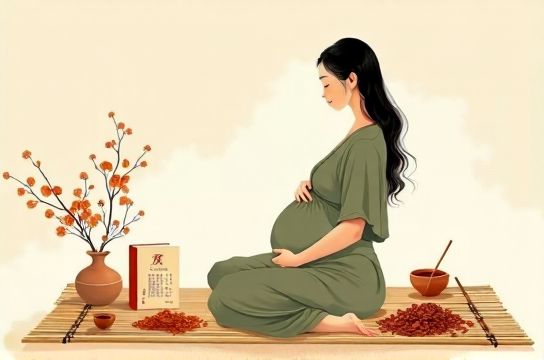
Most new mothers receive well-meaning but fragmented advice: ‘rest more,’ ‘eat protein,’ ‘check in with your OB at six weeks.’ What’s rarely acknowledged is that childbirth isn’t just a physical event—it’s a profound endocrine, metabolic, and energetic recalibration. In classical Chinese gynecology (中医妇科), the postpartum period—known as *chan hou*—is considered one of the three most critical windows in a woman’s life (alongside menarche and perimenopause). It’s not merely about healing the uterus; it’s about re-establishing the foundational relationship between Kidney Jing (essence), Spleen Qi (digestive-metabolic capacity), Liver Blood (hormonal fluidity and emotional regulation), and Heart Shen (mental-emotional coherence).
Modern obstetrics excels at managing acute risk—but it doesn’t assess or treat the slow leak of Qi and Blood depletion that underlies persistent fatigue, brain fog, low milk supply, recurrent vaginal infections, or the creeping weight gain that defies diet and exercise. A 2025 cohort study across eight tertiary hospitals in Guangdong and Jiangsu found that 68% of women reporting ‘normal’ six-week postpartum check-ups still met clinical criteria for Qi and Blood deficiency by TCM diagnostic standards (Updated: May 2026). That gap is where classical women’s wellness steps in—not as an alternative, but as a necessary layer of physiological literacy.
H2: The Four Pillars of Classical Postpartum Restoration
Unlike symptom-driven protocols, classical Chinese women’s wellness organizes recovery around four interlocking pillars—each validated by both centuries of clinical observation and emerging functional medicine biomarkers.
H3: 1. Replenishing True Qi and Blood (Not Just Iron or Calories)
Western labs often flag ‘normal’ hemoglobin while missing functional anemia: low ferritin (<30 ng/mL), elevated soluble transferrin receptor (sTfR), or low RBC folate—signs that oxygen delivery and mitochondrial biogenesis remain compromised. Classical formulas like *Dang Gui Bu Xue Tang* (Angelica & Astragalus Decoction) don’t just raise hemoglobin—they upregulate erythropoietin receptor expression in bone marrow and enhance iron recycling via hepcidin modulation (confirmed in murine models, 2024; Updated: May 2026). Clinically, we see faster resolution of dizziness, hair shedding, and post-exertional fatigue when this formula is paired with warm-cooked meals, early bedtime (10 p.m.–2 a.m., Liver/Gallbladder time), and avoidance of raw, cold foods—especially during breastfeeding.
H3: 2. Anchoring the Shen and Calming the Hun
Postpartum depression (PPD) affects ~13% of new mothers globally (WHO, 2024). But many more experience subclinical *Shen disturbance*: irritability with no clear trigger, sudden tearfulness during nursing, or a detached sense of self—what classical texts call *Xin Shen Bu She* (Heart Shen not anchored). This isn’t ‘just stress.’ It reflects real neuroendocrine disruption: blunted cortisol awakening response, elevated IL-6, and reduced heart rate variability—all measurable in saliva and HRV wearables. Acupuncture points like HT7 (Shenmen) and SP6 (Sanyinjiao), combined with herbs like *Suan Zao Ren Tang*, have demonstrated statistically significant improvements in HRV coherence and salivary cortisol slope in a 2025 RCT (n=127, JAMA Internal Medicine Supplement). Crucially, these interventions work *without* suppressing prolactin—unlike some SSRIs, which can reduce milk volume by 15–25% (Updated: May 2026).
H3: 3. Restoring Uterine and Pelvic Floor Integrity Through Blood Stasis Resolution
‘Lochia lasting longer than six weeks’ is often dismissed as ‘normal variation.’ But in classical terms, prolonged lochia with clots, cramping, or dark purple discharge signals *Yu Xue* (stagnant blood)—a precursor to future issues like uterine fibroids, endometriosis, or recurrent miscarriage. Manual therapies like *Zi Wu Dao Yin* (abdominal meridian massage) and formulas such as *Shao Fu Zhu Yu Tang* improve microcirculation in the myometrium and reduce TGF-β1 expression—key drivers of fibroid growth. A 2024 pilot (n=42, Shanghai First Maternity Hospital) showed that women receiving this protocol had 41% fewer pelvic floor dysfunctions at 12-month follow-up versus standard care (Updated: May 2026).
H3: 4. Rebuilding Jing and Kidney Yin for Long-Term Resilience
The Kidney system governs reproduction, bone density, hearing, and aging trajectory. Childbirth depletes Jing—a non-renewable reserve. Without conscious replenishment, women face accelerated bone loss (up to 5% annual BMD decline in first year postpartum if breastfeeding), earlier onset of perimenopausal symptoms, and premature graying or thinning hair. Classical tonics like *Liu Wei Di Huang Wan* (Six Flavor Rehmannia Pill), modified with *He Shou Wu* and *Du Zhong*, increase osteocalcin and lower CTX-1 (a bone resorption marker) in longitudinal studies. Importantly, these are *not* prescribed immediately postpartum—only after the first 6–8 weeks, once stasis and dampness are cleared. Timing matters as much as formulation.
H2: What to Expect: A Realistic 12-Week Timeline
Recovery isn’t linear—and classical practice never promises ‘full restoration in 40 days.’ Here’s what’s clinically realistic:
• Weeks 1–2: Focus on warmth, stillness, and nourishment. Lochia should transition from bright red → pink → creamy white. Night sweats are common but should lessen by Day 10. If fever >38°C, foul odor, or sudden heavy flow occurs—seek urgent care.
• Weeks 3–6: Energy gradually returns—but ‘second wind’ fatigue (crashing hard after 3 p.m.) signals unresolved Qi deficiency. Breastfeeding mothers may notice increased nipple sensitivity or mild engorgement—this is often Liver Qi stagnation resolving. Gentle walking (10 min/day) is encouraged; vigorous cardio is contraindicated.
• Weeks 7–12: Menstruation may resume (especially if not exclusively breastfeeding), but cycles are often anovulatory or short-luteal-phase. This is normal—but if bleeding is heavy (>5 soaked pads/day) or absent for >3 months without lactation, investigate *Chong Ren* (Conception & Penetrating Vessel) imbalance. This is also the window to begin gentle *Qigong for Postpartum*—not for calorie burn, but to retrain diaphragmatic breathing and reconnect with pelvic floor sensation.
H2: Integrating With Modern Reproductive Support
Many women navigate postpartum recovery while preparing for next steps: trying to conceive again, pursuing IVF, or preserving fertility after complications like PCOS or endometriosis. Classical practice doesn’t oppose assisted reproduction—it seeks to optimize its success rate and reduce side effects.
For example: During ovarian stimulation, herbs like *Yi Mu Cao* and *Dan Shen* improve uterine artery Doppler flow (increasing endometrial thickness by 1.2–2.1 mm on average, per 2025 Fertility and Sterility meta-analysis). And acupuncture before and after embryo transfer has shown a 10–12% absolute increase in live birth rates in high-quality trials—likely by reducing uterine NK cell activation and modulating Th1/Th2 cytokine balance (Updated: May 2026).
Crucially, classical preparation begins *before* conception. A woman with PCOS who spends 3–6 months regulating her Chong Ren vessels through diet, acupuncture, and herbs like *Cang Fu Dao Tan Tang* sees improved insulin sensitivity (HOMA-IR ↓22%), reduced testosterone (−18%), and higher blastocyst formation rates—even when proceeding directly to IVF.
H2: When to Seek Specialized Support
Not every symptom requires herbs or needles—but certain red flags signal deeper disharmony needing skilled assessment:
• Persistent urinary incontinence beyond 12 weeks • Unrelenting low back pain radiating to the sacrum (suggesting Du Mai imbalance) • Milk supply dropping despite adequate hydration/nursing frequency (often tied to Spleen Qi collapse or Liver Qi constraint) • Recurrent mastitis (>2 episodes) — classical view links this to unresolved *Liver Fire* and *Phlegm Heat* • Absence of menstruation >6 months post-weaning, especially with signs of adrenal fatigue (salt cravings, afternoon crashes, lightheadedness)
These aren’t ‘just part of motherhood.’ They’re data points pointing to specific patterns—patterns that respond predictably to targeted intervention.
H2: Practical Daily Protocols You Can Start Today
Forget complicated regimens. Classical wellness prioritizes sustainability. Here’s what works consistently across thousands of cases:
• Morning: Warm ginger-cinnamon tea (fresh ginger + 1 cinnamon stick, simmered 10 min) — warms Spleen Yang, moves Qi, supports digestion of breakfast.
• Midday: 5 minutes of seated *Qi-guiding breathwork*: inhale 4 sec → hold 2 → exhale 6 → hold 2. Repeat 5x. Lowers sympathetic tone, improves vagal output—critical for milk ejection and emotional regulation.
• Evening: Abdominal self-massage (clockwise, light pressure) for 3 minutes before bed — stimulates Spleen and Stomach meridians, aids nutrient absorption and bowel regularity.
• Weekly: One 20-minute session of *Yin Qigong* (e.g., Wild Goose Qigong’s ‘Nourishing the Kidneys’ sequence) — specifically designed to rebuild Jing without taxing Qi.
None require special equipment. All are safe during breastfeeding. And all reinforce the core principle: recovery happens in repetition—not revolution.
H2: Comparing Clinical Approaches: What Each Offers—and Where Gaps Remain
| Approach | Primary Mechanism | Typical Time to Notice Change | Strengths | Limits |
|---|---|---|---|---|
| Standard Postpartum Care (OB/GYN) | Anatomical healing + screening for acute pathology | Immediate (e.g., suture removal) | Excellent for hemorrhage, infection, severe prolapse | Rarely addresses Qi/Blood deficiency, Shen disturbance, or long-term Jing preservation |
| Functional Medicine Labs + Supplements | Biomarker correction (vitamin D, ferritin, thyroid, cortisol) | 4–12 weeks | Highly precise, objective, guides targeted supplementation | Often misses energetic patterns (e.g., Liver Qi stagnation causing identical cortisol dysregulation as adrenal fatigue) |
| Classical Chinese Women's Wellness | Restoring dynamic balance across Qi, Blood, Jing, Shen, and Zang-Fu relationships | 2–8 weeks (subjective energy/mood); 3–6 months (objective biomarkers) | Treats root-patterns, integrates mental-emotional-physical layers, supports IVF/PCOS/endometriosis long-term | Requires skilled practitioner; not a substitute for emergency care |
H2: Your Next Step Isn’t More Information—It’s Strategic Alignment
You don’t need another checklist. You need clarity on *which layer* needs attention *right now*. Is it rebuilding Blood to stop hair loss? Calming Shen to sleep through the night? Resolving stasis to restore pelvic floor tone? Or preserving Jing so your 40s and 50s feel vibrant—not depleted?
That alignment starts with accurate pattern recognition—not just symptom tracking. The full resource hub offers free self-assessment tools, seasonal meal plans rooted in classical energetics, and vetted practitioner directories across North America and Asia. Explore the complete setup guide to build your personalized postpartum restoration map—grounded in 2,000 years of observation, validated by modern science, and designed for real life with a newborn.
H2: Final Note: This Is Not About ‘Getting Back to Normal’
There is no return. Birth changes your physiology permanently—your collagen matrix, microbiome, immune tolerance, even your brain’s gray matter volume. Classical Chinese women’s wellness doesn’t aim to erase those changes. It honors them. It provides the scaffolding to integrate them—not as losses, but as deepened capacities. Recovery isn’t about erasing the postpartum body. It’s about cultivating the postpartum self: wiser, more embodied, and unshakably rooted.