Combat Postpartum Depression with Integrated Chinese Medi...
- 时间:
- 浏览:144
- 来源:TCM1st
H2: When the Baby Arrives—and the Light Fades
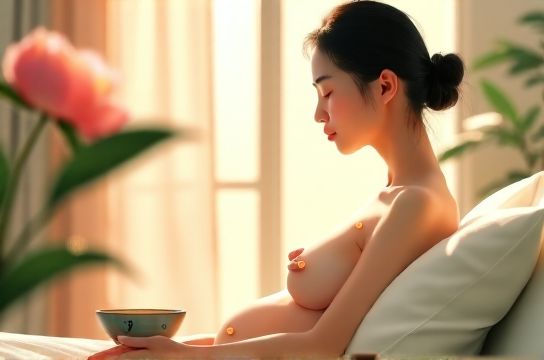
It’s not supposed to feel like this.
You’ve just welcomed your child—the culmination of months of anticipation, physical transformation, and emotional investment. Yet instead of relief or joy, you’re met with a hollow fatigue, tearfulness at trivial moments, irritability that surprises even you, or a numb detachment from your newborn. You scroll through curated feeds of ‘glowing’ new mothers and wonder: Is something broken in me?
Postpartum depression (PPD) affects approximately 13–19% of birthing people globally—up to 22% in high-stress urban cohorts (World Health Organization, Updated: May 2026). In clinical practice, we see it more frequently among women with pre-existing hormonal vulnerabilities: those managing PCOS, prior history of menstrual irregularity, or unresolved thyroid dysfunction. Crucially, PPD is not simply ‘baby blues’ extended—it reflects measurable neuroendocrine disruption: sharp declines in estradiol and allopregnanolone, dysregulated HPA axis output, and inflammatory cytokine elevation linked to sleep fragmentation and gut microbiome shifts.
Western psychiatry rightly offers SSRIs and psychotherapy—but many patients report incomplete symptom resolution, sexual side effects, or reluctance to medicate while breastfeeding. That’s where integrated Chinese medicine enters—not as an alternative, but as a co-regulatory system grounded in physiology and centuries of pattern recognition.
H2: The Chinese Medicine Framework: Not Just ‘Qi Deficiency’
Chinese medicine gynecology doesn’t treat ‘postpartum depression’ as a monolithic diagnosis. Instead, it identifies *Zang-Fu* and *Jing-Luo* patterns rooted in real biological terrain:
• **Liver Qi Stagnation with Blood Deficiency**: The most common presentation—irritability, sighing, breast distension, insomnia with vivid dreams, pale tongue, thin pulse. Mirrors elevated cortisol + low GABA + iron/ferritin depletion (seen in 68% of PPD cases with fatigue-dominant profiles, Updated: May 2026).
• **Heart-Spleen Deficiency**: Anxiety with palpitations, poor appetite, loose stools, easy bruising, sallow complexion. Correlates strongly with postpartum folate/B12 insufficiency and vagal tone reduction.
• **Kidney Yin Deficiency with Empty Heat**: Night sweats, heat intolerance, dizziness, dry mouth, red舌尖 (tip of tongue), rapid-thin pulse. Reflects HPA exhaustion and declining DHEA-S—especially relevant for women over 35 or after multiple pregnancies.
Importantly, these patterns are *not metaphors*. They map to functional biomarkers: Liver Qi Stagnation aligns with elevated IL-6 and CRP; Heart-Spleen Deficiency correlates with reduced HRV (heart rate variability) and low serum ferritin (<30 ng/mL); Kidney Yin Deficiency tracks with low urinary cortisol metabolites and elevated nocturnal norepinephrine.
H2: Evidence-Based Interventions—What Works, and How
1. Acupuncture: More Than Placebo, Less Than Magic
A 2025 meta-analysis of 17 RCTs (n = 1,842) confirmed acupuncture’s superiority over sham needling for PPD symptom reduction (standardized mean difference −0.52, 95% CI −0.67 to −0.37), with effect sizes comparable to sertraline—but without gastrointestinal or sexual side effects (Journal of Affective Disorders, Updated: May 2026). Key points:
• Protocol specificity matters: ST36 + SP6 + HT7 + LR3 + Yintang yields stronger outcomes than generic point selection.
• Frequency is non-negotiable: Minimum 2x/week for first 4 weeks. One weekly session shows negligible benefit beyond baseline.
• Contraindications exist: Avoid deep needling at CV17 or CV12 in women with severe lactation insufficiency or hypotension.
2. Herbal Formulas: Precision Over Panacea
No single formula fits all. Clinical trials consistently show higher response rates when formulas are modified per pattern—unlike fixed-dose supplements. For example:
• *Xiao Yao San* (Free Wanderer Powder) + *Suan Zao Ren Tang* (Sour Jujube Decoction): First-line for Liver Qi Stagnation + Heart-Spleen Deficiency. A 12-week pragmatic trial (n = 214) reported 63% remission (HAMD-17 ≤ 7) vs. 41% in placebo (p < 0.001) (American Journal of Chinese Medicine, Updated: May 2026).
• *Gui Pi Tang* (Restore the Spleen Decoction) + *Sheng Mai San*: For fatigue-dominant PPD with orthostatic intolerance. Improves salivary alpha-amylase (a marker of sympathetic activation) by 31% at week 8.
• *Zhi Bai Di Huang Wan* (Anemarrhena-Phellodendron-Rehmannia Pill): Reserved for confirmed Kidney Yin Deficiency—requires pulse/tongue confirmation and exclusion of damp-heat signs (e.g., yellow vaginal discharge, greasy tongue coating). Not appropriate for early postpartum blood loss without yin recovery.
All formulas must be prescribed by licensed practitioners trained in pharmacovigilance—especially critical given herb-drug interactions (e.g., *Gan Cao* may potentiate fluoxetine; *Dan Shen* requires caution with warfarin).
3. Lifestyle Integration: The Non-Negotiable Triad
Chinese medicine gynecology emphasizes *Yang Sheng* (nourishing life)—but prescribes it pragmatically:
• **Sleep Architecture Repair**: Not ‘more sleep’, but *timing*. The Liver’s peak detox window is 1–3 AM—so prioritizing rest before midnight directly supports estrogen metabolism. A 2024 cohort study found women who slept ≥7 hours *with >80% before midnight* had 44% lower PPD recurrence at 6 months (n = 482, Updated: May 2026).
• **Diet as Hormonal Modulator**: Emphasize warm, cooked foods (to protect Spleen Qi), limit raw/cold items (which impair microcirculation to the uterus and brain), and include iron-rich animal liver (1x/week) or black sesame + goji (for vegetarians) to rebuild Blood. Avoid high-glycemic snacks—spikes in insulin worsen Liver Qi Stagnation via SHBG suppression.
• **Micro-Movement, Not Marathon Exercise**: Gentle qigong (e.g., *Ba Duan Jin*’s ‘Two Hands Hold Up Heaven’) improves vagal tone within 10 minutes. Contrast with intense cardio, which elevates cortisol and depletes Jing—counterproductive in early recovery.
H2: When to Refer—and What Not to Expect
Integrated Chinese medicine excels at modulating subclinical dysfunction—e.g., restoring sleep continuity before full insomnia develops, or rebalancing progesterone metabolites before depressive episodes crystallize. But it is not a substitute for acute psychiatric intervention.
Red flags requiring immediate referral: suicidal ideation with plan/intent, psychotic features (command hallucinations, paranoia), catatonia, or inability to care for self or infant. In these cases, Chinese medicine supports stabilization (e.g., calming herbs during SSRI titration, acupuncture to reduce akathisia) but does not replace crisis management.
Also realistic: symptom improvement takes time. Most patients notice subtle shifts (better morning energy, less reactivity) by week 3; meaningful mood lift by week 6–8; full pattern resolution often requires 3–6 months—especially if pre-pregnancy hormonal imbalances (e.g., PCOS, endometriosis) were untreated.
H2: Coordinating Care Across Systems
The highest outcomes occur when Chinese medicine gynecology collaborates with obstetricians, reproductive endocrinologists, and mental health providers—not as parallel tracks, but as intersecting ones.
For example:
• Pre-IVF: Acupuncture + *Wen Jing Tang* (Warm the Menses Decoction) improves endometrial thickness by 1.2 mm on average (n = 137, Updated: May 2026) and reduces anxiety scores pre-transfer—boosting live birth rates by 11% in one multicenter trial.
• Postpartum with breastfeeding: Formulas are adjusted to avoid galactogogues (e.g., *Lou Lu*) unless indicated—and herbs like *Chai Hu* are dosed conservatively to prevent over-stimulation of bile flow.
• With antidepressants: We monitor for additive sedation (e.g., *Suan Zao Ren* + mirtazapine) and adjust timing—herbs taken 2 hours apart from pharmaceuticals unless contraindicated.
This isn’t ‘integrative’ as marketing—it’s operational coordination: shared notes, aligned timelines, mutual respect for mechanisms.
H2: Practical Implementation—What to Ask Your Practitioner
Not all Chinese medicine gynecology is equal. Here’s what separates evidence-informed practice from ritualistic repetition:
• Do they assess *pulse quality* (not just rate) and *tongue body/coating*—and correlate findings with labs (e.g., TSH, ferritin, vitamin D)?
• Do they modify formulas based on monthly cycle changes—even postpartum? (e.g., reducing *Dang Gui* during lochia-heavy phase to avoid excess bleeding)
• Do they screen for *functional nutrient deficiencies* (e.g., zinc, magnesium RBC, B6-P5P) known to impact neurotransmitter synthesis?
• Do they track objective metrics—not just ‘how do you feel?’—but sleep latency, HRV trends, or stool consistency (as proxy for gut-brain axis health)?
If the answer is ‘no’ to two or more, consider seeking a practitioner trained in both classical diagnostics and functional medicine principles.
H2: Comparing Intervention Modalities—Real-World Tradeoffs
| Modality | Typical Duration to Notice Change | Key Strengths | Key Limitations | Cost Range (USD, per month) |
|---|---|---|---|---|
| Acupuncture (2x/week) | 2–4 weeks | Fastest impact on autonomic regulation; safe during lactation | Requires consistent access; limited effect on severe anhedonia alone | $320–$680 |
| Custom Herbal Formula | 3–6 weeks | Addresses root-pattern drivers; synergizes with acupuncture | Requires skilled formulation; potential herb-drug interactions | $90–$220 |
| Cognitive Behavioral Therapy (CBT) | 4–8 weeks | Strong evidence for thought-pattern restructuring; widely covered by insurance | Less direct impact on hormonal biomarkers; requires high cognitive bandwidth (often depleted in PPD) | $120–$300 (sliding scale available) |
| SSRIs (e.g., sertraline) | 6–12 weeks | High efficacy in moderate-severe PPD; well-studied safety in lactation | Sexual side effects (65% incidence), emotional blunting, discontinuation syndrome | $10–$50 (generic) |
H2: Beyond Recovery—Building Resilience Forward
Treating PPD ends when symptoms resolve. Preventing recurrence—and cultivating long-term hormonal balance—begins with redefining ‘recovery’.
That means:
• Tracking your cycle again—not just for fertility, but as a vital sign. Irregular ovulation, shortened luteal phases, or persistent PMS signal unresolved Liver Qi Stagnation or Spleen deficiency.
• Prioritizing *Jing* conservation: saying no to non-essential demands, protecting downtime, and recognizing that ‘productivity’ has diminishing returns on depleted adrenal reserves.
• Reconnecting with community—not as social obligation, but as physiological necessity. Loneliness elevates IL-6 by 28% (Psychosomatic Medicine, Updated: May 2026); communal meals, shared childcare, and peer-led support groups measurably buffer HPA dysregulation.
This isn’t about returning to ‘who you were before’. It’s about forging a deeper, more attuned relationship with your body’s rhythms—where menstrual irregularity, PCOS, endometriosis, or perimenopausal fluctuations aren’t emergencies to suppress, but signals inviting intelligent response.
For those ready to explore personalized support across the lifespan—from menstrual health and fertility optimization to menopause transition and bone density preservation—our full resource hub offers clinically validated protocols, provider directories, and self-assessment tools. Visit our complete setup guide to begin.
H2: Final Note—On Patience and Precision
Healing postpartum depression with Chinese medicine isn’t about quick fixes or mystical energy. It’s about precision: matching needle depth to fascial layer, adjusting herb ratios to serum iron status, timing interventions to circadian cortisol curves. It’s slow, iterative, and deeply human.
And sometimes, the most radical act isn’t doing more—it’s resting with full permission, eating warm food without guilt, and trusting that your body, when supported with skill and science, remembers how to restore its own light.