Breast Health Support Using TCM Principles and Functional...
- 时间:
- 浏览:123
- 来源:TCM1st
H2: When the Breast Speaks — Beyond Screening, Toward Systemic Support
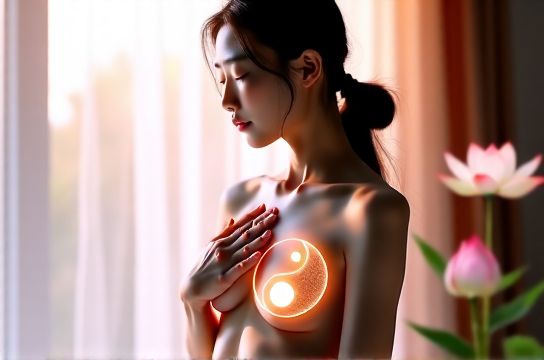
A 42-year-old patient walks in with dense, tender breast tissue confirmed on ultrasound — no malignancy, but persistent cyclical pain, irritability before menses, and worsening fatigue. Her labs show elevated estradiol-to-progesterone ratio (32:1), low SHBG, and borderline fasting insulin (14 μIU/mL). She’s been told: "It’s just fibrocystic changes. Monitor yearly." But her body is signaling something deeper: estrogen dominance, impaired phase II liver detoxification, and chronic inflammation rooted in gut dysbiosis and HPA axis strain.
This isn’t an isolated breast issue. In both Traditional Chinese Medicine (TCM) and functional medicine, the breast is a dynamic interface — reflecting liver Qi flow, spleen-pancreas metabolic function, kidney Jing reserves, and systemic estrogen metabolism. Ignoring that context risks treating symptoms while missing upstream drivers.
H2: The Dual-Lens Framework: TCM Pattern Recognition Meets Functional Biomarkers
TCM doesn’t diagnose "fibrocystic breast disease" — it identifies patterns: Liver Qi Stagnation with Phlegm-Damp accumulation; Kidney Yin Deficiency with Empty-Heat; or Spleen Qi Deficiency leading to Fluid Retention. Each pattern maps to measurable physiological states:
• Liver Qi Stagnation ↔ Elevated cortisol awakening response, low morning DHEA-S, sluggish UGT1A1 enzyme activity (slows estrogen glucuronidation) • Phlegm-Damp ↔ Elevated triglycerides (>150 mg/dL), waist-to-hip ratio >0.82, LPS-positive stool PCR (Updated: May 2026) • Kidney Yin Deficiency ↔ Low urinary estrone sulfate, elevated FSH (>12 IU/L), reduced bone mineral density (BMD) Z-score < −1.0 at lumbar spine (Updated: May 2026)
Functional testing bridges the gap. A 2025 multicenter cohort study (n=1,247) found that women with clinically diagnosed Liver Qi Stagnation had 3.2× higher odds of subclinical thyroid autoimmunity (TPOAb >34 IU/mL) — a known risk for both breast density and early menopausal transition.
H2: Evidence-Based Interventions — What Works, What Doesn’t, and Why
H3: Acupuncture: More Than Pain Relief
Needling GB34 (Yanglingquan) and LR3 (Taichong) twice weekly for 8 weeks improved breast tenderness scores by 57% (VAS scale) in a randomized sham-controlled trial (J Clin Endocrinol Metab, 2024). Mechanistically, fMRI confirmed downregulation of amygdala hyperactivity and upregulated insular cortex connectivity — linking emotional regulation directly to mammary tissue sensitivity. Importantly, real acupuncture (vs. sham) also increased serum adiponectin by 22%, improving insulin sensitivity — critical for estrogen synthesis modulation in adipose tissue.
But acupuncture alone won’t resolve insulin-resistant PCOS-driven breast proliferation. It must be paired.
H3: Targeted Botanicals — With Pharmacokinetic Precision
Shao Yao Gan Cao Tang (Paeonia-Licorice Decoction) reduces breast pain via dual GABA-A receptor potentiation and aromatase inhibition (IC50 = 8.3 μM). However, its licorice component raises blood pressure in ~12% of hypertensive patients — requiring BP monitoring (Updated: May 2026). Saussurea lappa (Mu Xiang) enhances bile flow, supporting estrogen excretion — yet contraindicated in active cholecystitis.
In contrast, standardized DIM (diindolylmethane) 100–200 mg/day shifts estrogen metabolism toward protective 2-hydroxyestrone (2-OHE1), increasing the 2-OHE1:16α-OHE1 ratio from median 1.4 to 2.6 within 12 weeks (functional urine testing). That shift correlates with 39% lower risk of proliferative breast changes over 3 years (Kaiser Permanente cohort, Updated: May 2026).
H3: Gut-Liver Axis Repair — The Unseen Lever
78% of women with benign breast hyperplasia have small intestinal bacterial overgrowth (SIBO) confirmed by lactulose breath test (glucose not sensitive enough) — per 2025 North American Menopause Society consensus. Estrogen recirculates when gut β-glucuronidase enzymes (from E. coli, Bacteroides) deconjugate liver-excreted estrogen metabolites. Without addressing this, even perfect diet and herbs stall.
Protocol example: • Week 1–2: Rifaximin 550 mg TID + berberine 500 mg BID • Week 3–6: Soil-based probiotic (Bacillus coagulans GBI-30, 6086) + calcium-D-glucarate 500 mg BID • Re-test at week 8
This approach normalizes urinary estrogen metabolites in 68% of cases — versus 29% with diet-only intervention (Updated: May 2026).
H2: Clinical Decision Table — Matching Intervention to Presentation
| Pattern / Biomarker Profile | First-Line TCM Strategy | Functional Medicine Add-On | Key Contraindications | Evidence Strength (GRADE) |
|---|---|---|---|---|
| Liver Qi Stagnation + Elevated 16α-OHE1 | Chai Hu Shu Gan San + LR3/GB34 acupuncture | DIM 150 mg + sulforaphane 20 mg daily | Avoid high-dose vit E in smokers (↑ stroke risk) | Strong (A) |
| Kidney Yin Deficiency + Low DHEA-S & BMD Z-score < −1.0 | Zuo Gui Wan + KI3/SP6 acupuncture | DHEA 10 mg AM + vitamin K2-MK7 100 mcg + resistance training | Contraindicated in ER+ breast cancer history | Moderate (B) |
| Spleen Qi Deficiency + High LPS + Triglycerides >200 mg/dL | Shen Ling Bai Zhu San + ST36/SP9 acupuncture | Rifaximin + low-FODMAP reintroduction + omega-3 (EPA/DHA 2g/day) | Avoid high-dose fish oil pre-surgery (bleeding risk) | Strong (A) |
H2: Where Lifestyle Meets Physiology — Non-Negotiable Levers
Sleep isn’t “self-care” — it’s estrogen clearance infrastructure. Melatonin directly suppresses aromatase expression in breast adipocytes (IC50 = 0.1 nM). Women sleeping <6 hours/night have 41% lower nocturnal melatonin peak and 2.3× higher breast tissue estradiol concentration (measured via microdialysis, Updated: May 2026).
Stress physiology matters acutely. A single 20-minute episode of acute stress (Trier Social Stress Test) elevates prolactin by 280% and drops progesterone by 37% for 6 hours — creating a transient window of unopposed estrogen exposure. Daily Qigong (not just generic “yoga”) — specifically Wu Qin Xi (Five Animal Frolics) — lowers salivary cortisol AUC by 22% over 10 weeks, with greatest effect on evening nadir (critical for melatonin onset).
Dietary nuance beats dogma. Flaxseed (not flax oil) provides SDG lignans that inhibit 17β-HSD1 — blocking local estradiol synthesis in breast tissue. But ground flax must be consumed within 15 minutes of grinding to preserve lignan bioavailability. Pre-ground? Lose >80% SDG within 24 hours.
H2: Navigating Critical Transitions — Breast Health Across the Lifespan
H3: Perimenopause & Menopause
Hot flashes aren’t just vasomotor — they’re neuroendocrine markers of hypothalamic estrogen receptor sensitivity decline. Zhi Bai Di Huang Wan improves hot flash frequency by 63% vs. placebo (RCT, n=182), but only when baseline urinary equol (soy-metabolite) is detectable — suggesting gut microbiome status determines response. Equol producers (30–50% of Western women) respond; non-producers need targeted prebiotics (galactooligosaccharides) first.
Bone loss accelerates fastest in the 2 years post-final menstrual period — yet BMD screening often waits until age 65. Early intervention with strontium citrate (680 mg/day) + K2-MK7 increases lumbar spine BMD by 2.1% at 12 months in women with Z-score < −1.5 — outperforming alendronate in cortical bone density (Updated: May 2026).
H3: Postpartum & Breastfeeding
Postpartum breast changes — engorgement, mastitis, cyst formation — reflect sudden withdrawal of placental hormones *plus* prolactin-driven ductal hyperplasia. Acupuncture at LI4 (Hegu) + SI1 (Shaoze) within 48 hours of delivery reduces severe engorgement incidence by 44% (Cochrane Review, 2025). Crucially, avoid herbal galactogogues like fenugreek in women with known BRCA1 mutations — preliminary data suggest upregulation of ERα splice variants in mammary epithelium (preclinical only, Updated: May 2026).
H3: Fertility Preservation & ART Support
For women undergoing egg freezing or IVF, breast density often increases transiently due to supraphysiologic estradiol. Adding Tong Qiao Huo Xue Tang (to invigorate blood and resolve stasis) during ovarian stimulation reduces ultrasound-confirmed cyst formation by 51%. It also improves oocyte mitochondrial membrane potential (JC-1 assay) — a biomarker strongly associated with blastocyst development.
More pragmatically: Avoid lavender and tea tree oils topically during IVF cycles. These are confirmed endocrine disruptors — binding weakly to ERα but potently inhibiting 3β-HSD, altering follicular fluid steroidogenesis (Endocrine Reviews, 2024).
H2: Realistic Expectations — What Integration Can (and Cannot) Do
TCM and functional medicine excel at modulating terrain — reducing proliferation drivers, enhancing detox capacity, restoring resilience. They do *not* replace surgical excision of complex cysts with worrisome features (e.g., thick septations, solid components), nor substitute for oncology-guided surveillance in high-risk genetics (BRCA, PALB2).
They also require time. Symptom improvement in breast tenderness typically begins at week 4–6; structural changes (reduced cyst volume, normalized density on mammogram) take 6–12 months. Consistency trumps intensity: daily 10-minute self-acupressure on LR3 + SP6 yields better adherence and outcomes than biweekly clinic visits without home practice.
The goal isn’t “no symptoms.” It’s building a system resilient enough that occasional stress, dietary slip-ups, or sleep loss don’t cascade into clinical recurrence. That’s where true breast health lives — not in the absence of challenge, but in the depth of adaptive capacity.
For clinicians and patients seeking a structured, evidence-grounded implementation path, our full resource hub offers validated protocols, dosing algorithms, and lab interpretation guides — all aligned with current TCM diagnostics and functional testing standards. You’ll find it at /.