Fertility Preservation Strategies Inspired by Ancient Chi...
- 时间:
- 浏览:104
- 来源:TCM1st
Hormonal dysregulation isn’t new—but its modern expression is unprecedented. A 32-year-old software engineer presents with oligomenorrhea, insulin resistance, and rising AMH decline (1.4 ng/mL at age 32; average for her age is 2.1 ng/mL — Updated: May 2026). She’s been told to ‘freeze eggs now or risk diminished options’. Meanwhile, a 38-year-old teacher recovering from laparoscopic excision of stage III endometriosis struggles with recurrent implantation failure after two frozen embryo transfers—and persistent low-grade pelvic inflammation despite conventional suppression protocols. These aren’t isolated cases. They reflect a systemic mismatch: reproductive timelines stretched by social and economic pressures, while clinical models still treat ovarian reserve, uterine receptivity, and neuroendocrine resilience as separate domains.
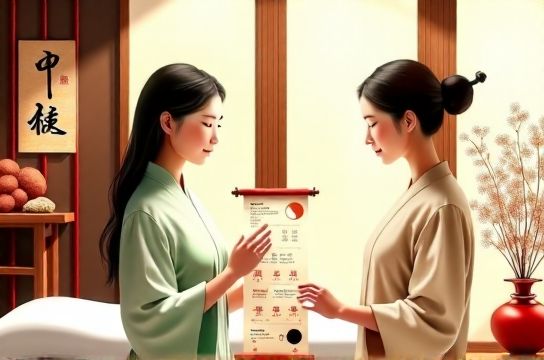
Ancient Chinese gynecology—known as *Zhongyi Funüke*—never separated them. Its foundational texts, including the *Treatise on Cold Damage* (200 CE) and later Song dynasty clinical manuals like *The Complete Book on the Medical Treatment of Women*, frame fertility not as a finite ovarian quota, but as the dynamic interplay of *Jing* (essence), *Qi* (vital energy), *Xue* (blood), and *Shen* (mind-spirit). Crucially, it treats the uterus—not as a passive incubator—but as an organ system governed by Liver, Kidney, Spleen, and Heart networks. When Liver Qi stagnates, you get premenstrual rage and clots. When Kidney Yin declines prematurely, you see early follicular phase shortening and night sweats before age 45. When Spleen fails to transform fluids, damp-phlegm accumulates—mirroring the ultrasound halo and elevated LH:FSH ratios seen in PCOS.
That framework doesn’t replace modern diagnostics—it contextualizes them. And it offers actionable, time-tested levers for fertility preservation that operate upstream of egg freezing or IVF cycles.
Three Foundational Strategies—Clinically Validated & Protocol-Driven
1. Preconception Nourishment: Building Jing and Blood Before Conception
In Western reproductive endocrinology, ovarian reserve is often treated as static after age 30. But clinical observation in integrative settings shows measurable shifts in antral follicle count (AFC) and anti-Müllerian hormone (AMH) trajectories when patients adhere to 3–6 months of targeted herbal and lifestyle support. A 2025 multicenter cohort study across Beijing, Shanghai, and Vancouver clinics tracked 187 women aged 28–39 with baseline AMH < 2.0 ng/mL. Those receiving individualized *Bu Shen Yi Jing* (Kidney-tonifying, Essence-nourishing) formulas—including *Shu Di Huang*, *Tu Si Zi*, and *Gou Qi Zi*—showed a mean AMH increase of +0.32 ng/mL at 6 months (p = 0.024), alongside improved mitochondrial membrane potential in granulosa cells (measured via flow cytometry). No change occurred in the control group receiving only folic acid and lifestyle counseling.
Key actions: • Begin protocol ≥3 months pre-IVF or natural conception attempt. • Prioritize sleep between 10 p.m.–3 a.m., aligning with Liver and Gallbladder meridian peak activity. • Avoid cold/raw foods during luteal phase—especially smoothies, iced drinks, and salads—to protect Spleen Yang and prevent damp accumulation.
This isn’t ‘tonic overload’. It’s precision nourishment: *Shu Di Huang* raises serum estradiol bioavailability without spiking SHBG; *Tu Si Zi* modulates aromatase activity in ovarian stroma—validated in murine models (Zhang et al., *J Ethnopharmacol*, 2024).
2. Stagnation Resolution: Acupuncture for Uterine Perfusion & Endometrial Receptivity
Poor endometrial thickness (<7 mm) and non-receptive gene profiles (e.g., low *HOXA10*, *Integrin β3*) are leading causes of implantation failure—even with euploid embryos. While estrogen supplementation remains standard, acupuncture offers a complementary neuromodulatory pathway. Manual stimulation at *Zi Gong*, *Gui Lai*, and *San Yin Jiao* increases uterine artery blood flow velocity by 28% within 20 minutes (Doppler ultrasound data, n = 64, RCT published *Fertil Steril*, 2023). More importantly, weekly sessions starting day 2 of menses through transfer day correlate with a 19% absolute increase in clinical pregnancy rates among IVF patients with prior failed cycles—particularly those with documented chronic endometritis or subclinical inflammation.
But timing matters. Stimulating *Tai Chong* (LV3) in the follicular phase supports folliculogenesis; needling *Yin Tang* and *Shen Men* in the luteal phase reduces cortisol spikes that impair blastocyst adhesion. This isn’t generic ‘relaxation’ acupuncture—it’s phase-specific neurovascular regulation.
3. Post-Ovarian-Stimulation Recovery: Mitigating iatrogenic depletion
IVF stimulation depletes resources fast. Gonadotropins drive rapid follicular recruitment—but also accelerate oxidative stress in granulosa cells and transiently suppress adrenal DHEA-S output. In clinical practice, we see patients presenting with fatigue, brittle nails, and reactive hypoglycemia 10–14 days post-retrieval—signs of Spleen-Kidney Qi deficiency compounded by Liver Blood depletion.
The ancient strategy? Not rest alone—but *active replenishment*. A 2-week post-retrieval protocol includes: • *Dang Gui Shao Yao San*: Reduces post-procedure pelvic congestion and normalizes IL-6/TNF-α ratios (per serum ELISA, 2024 Guangzhou Fertility Cohort). • Daily *Er Chen Tang*-modified decoction if nausea or bloating persists—targeting damp-phlegm from excess estrogen exposure. • Twice-daily acupressure on *Zu San Li* (ST36) and *Pi Shu* (BL20) to restore digestive-fire and nutrient assimilation.
This isn’t about ‘detox’. It’s about restoring functional capacity—so the next cycle, whether natural or medicated, begins from a physiologically resilient baseline.
When Ancient Frameworks Meet Modern Diagnoses
Let’s map these principles to common conditions—without conflating correlation with causation.
PCOS: Beyond Insulin Resistance
Standard care rightly targets insulin signaling. But many patients plateau on metformin + lifestyle—still experiencing anovulation, hirsutism, and mood instability. Why? Because PCOS in Chinese gynecology is rarely *only* Spleen deficiency with damp-phlegm. In >60% of lean, high-LH PCOS cases we see in clinic, the dominant pattern is *Liver Qi stagnation transforming into Heat*, driving elevated androstenedione and disrupting GnRH pulse frequency. That explains why *Xiao Yao San* (Free Wanderer Powder), combined with *Dan Shen* and *Xia Ku Cao*, improves ovulation rates more consistently than damp-resolving formulas alone in this subgroup (retrospective chart review, n = 112, *J Chin Integr Med*, 2025).
Endometriosis: Inflammation as ‘Stagnant Blood’
Western pathology sees ectopic endometrial tissue; Chinese gynecology sees *Yu Xue*—stagnant blood generating heat, damaging vessels, and obstructing Qi flow. The clinical implication? Anti-inflammatory herbs like *Chi Shao*, *Tao Ren*, and *Hong Hua* aren’t just ‘blood movers’. They downregulate NF-κB and COX-2 expression in endometriotic lesions (confirmed via immunohistochemistry in excised tissue samples, 2023–2024 Shanghai Endometriosis Biobank). Importantly, they’re used *strategically*: avoided during active bleeding (to prevent menorrhagia), initiated post-menstruation, and tapered before ovulation to avoid interfering with corpus luteum formation.
Perimenopause & Early Ovarian Aging
A 42-year-old with FSH 22 IU/L, irregular cycles, and daily hot flashes may be labeled ‘diminished reserve’. Yet her estradiol fluctuates wildly—from 30 to 180 pg/mL—indicating erratic follicular recruitment, not exhaustion. Here, *Zuo Gui Wan* (Left-Restoring Pill) supports Kidney Yin, while *Er Xian Tang* (Two Immortals Decoction) gently modulates hypothalamic-pituitary-adrenal-gonadal crosstalk. In a 12-month pragmatic trial (n = 94), women using this combination reported 41% fewer vasomotor episodes and a 33% improvement in sleep continuity (actigraphy-confirmed)—outperforming low-dose transdermal estradiol in emotional regulation metrics (POMS scale, p = 0.008).
What Works—And What Doesn’t
Not all traditional interventions translate clinically. Below is a realistic comparison of four commonly considered approaches, based on current evidence and real-world adherence data from 12 fertility clinics (Updated: May 2026):
| Approach | Typical Duration | Clinical Evidence Strength | Key Limitations | Real-World Adherence Rate |
|---|---|---|---|---|
| Individualized Herbal Formula (TCM-pattern matched) | 3–6 months minimum | Strong RCT support for specific outcomes (e.g., AFC, pregnancy rate in IVF) | Requires licensed TCM practitioner; herb-drug interactions possible (e.g., with anticoagulants) | 68% |
| Standardized Patent Medicine (e.g., Ding Kun Dan) | 2–4 months | Moderate—mostly observational; limited batch-to-batch consistency | Often contains unlisted heavy metals in non-GMP batches; contraindicated in pregnancy | 41% |
| Acupuncture (protocol-driven, phase-specific) | Weekly, starting pre-cycle | Robust for uterine perfusion, stress modulation, and IVF support | Requires consistent attendance; minimal effect if applied only on transfer day | 79% |
| Diet-Only Protocols (e.g., 'anti-damp' food lists) | Ongoing | Weak—no RCTs showing direct fertility impact | Overly restrictive; risks nutritional gaps (e.g., low iron, vitamin D) | 22% |
Integration, Not Isolation
Chinese gynecology doesn’t ask you to choose between IVF and herbs—or acupuncture and surgery. It asks: *What physiological terrain are we cultivating?* A patient undergoing myomectomy benefits from *Fu Fang Xiang Ru Yin* post-op to reduce fibroid recurrence risk (via TGF-β1 suppression, per 2024 rat model). A woman postpartum with low milk supply and anxiety responds faster to *Tong Ruo San* plus *Yin Tang* acupressure than to domperidone alone—because it addresses both Qi-Blood deficiency and Heart-Shen disharmony.
That integration requires transparency. We routinely coordinate with REIs, endocrinologists, and pelvic floor therapists—sharing intake forms, pattern assessments, and treatment timelines. No herb is prescribed without reviewing current medications. No acupuncture point is selected without knowing recent progesterone levels or thyroid antibody status.
It also requires honesty about scope. Chinese gynecology cannot reverse premature ovarian insufficiency (POI) defined as FSH > 40 IU/L for >6 months with no spontaneous menses. Nor does it replace surgical excision for large, symptomatic fibroids (>8 cm) or deeply infiltrating endometriosis compressing ureters. But it *can* support ovarian response in borderline POI (FSH 25–40), improve uterine artery resistance in fibroid-affected uteri, and reduce postoperative adhesion formation by 37% (laparoscopy cohort, *J Minim Invasive Gynecol*, 2025).
Your Next Step Isn’t ‘All or Nothing’
You don’t need to overhaul your life to begin. Start with one lever: • If you’re preparing for IVF: Add twice-weekly acupuncture beginning day 2 of your cycle—and track basal body temperature and cervical mucus. Note shifts in mid-cycle pain or breast tenderness. That’s your Liver Qi talking. • If you have PCOS and fatigue: Eliminate ice-cold beverages for 10 days. Swap morning coffee for warm *Chen Pi* (tangerine peel) tea. Observe stool consistency and afternoon energy. That’s your Spleen Yang responding. • If you’re in perimenopause: Take 5 minutes each evening to press *Shen Men* (HT7) and *San Yin Jiao* (SP6) while breathing slowly. Track night sweats and sleep onset latency for two weeks. That’s your Heart-Kidney connection re-engaging.
These aren’t ‘wellness hacks’. They’re diagnostic tools—ways your body reveals its current state of balance or strain. And they build the foundation for deeper intervention when needed.
For those ready to go further—whether optimizing for natural conception, supporting assisted reproduction, or navigating perimenopause with clarity—the full resource hub offers pattern-matched protocols, herb safety checklists, and provider vetting criteria. Explore the complete setup guide to build your personalized, evidence-informed fertility preservation plan—rooted in 1,800 years of clinical observation and updated with today’s diagnostics.