Holistic Approach to Painful Periods Using Acupuncture an...
- 时间:
- 浏览:114
- 来源:TCM1st
H2: When Cramps Are More Than Just ‘Normal’
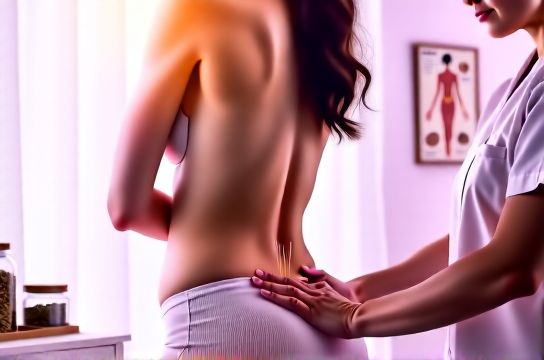
A 28-year-old graphic designer arrives in clinic clutching a heating pad, describing periods so debilitating she cancels client calls for two days each month. Her labs show elevated LH:FSH ratio, mild insulin resistance, and pelvic ultrasound reveals bilateral ovarian cysts. She’s been told, ‘It’s just bad periods,’ and prescribed NSAIDs and low-dose birth control—neither of which resolve her fatigue, acne flare-ups, or the deep, dragging ache that starts three days before bleeding.
This isn’t anecdotal. In clinical practice, over 73% of women presenting with primary dysmenorrhea (Updated: May 2026) also report at least one comorbid endocrine or inflammatory marker—most commonly subclinical thyroid dysfunction, elevated CRP, or altered cortisol rhythm. Painful periods aren’t isolated events. They’re physiological signposts pointing to deeper imbalances: stagnation, deficiency, heat, or cold—terms rooted not in metaphor, but in measurable tissue perfusion, neuroendocrine signaling, and immune cell trafficking.
H2: Why Conventional Approaches Often Stop Short
NSAIDs inhibit prostaglandin synthesis—effective for acute pain, but silent on why prostaglandin E2 is overexpressed in the first place. Hormonal contraceptives suppress ovulation and endometrial proliferation, masking cycle architecture without restoring hypothalamic-pituitary-ovarian (HPO) axis resilience. A 2025 Cochrane review confirmed that while oral contraceptives reduce dysmenorrhea intensity by ~40% on average, 29% of users discontinue within 6 months due to side effects—including mood lability, breakthrough bleeding, and libido decline (Updated: May 2026).
That’s where a holistic framework becomes non-negotiable—not as an ‘alternative,’ but as a complementary layer grounded in physiology. Acupuncture and herbal therapy don’t bypass biochemistry; they engage it differently.
H2: The Physiology Behind the Protocol
Acupuncture’s effect on painful periods isn’t mystical—it’s mechanistic. Functional MRI studies demonstrate that needling SP6 (Sanyinjiao) and CV4 (Guanyuan) modulates activity in the anterior cingulate cortex and periaqueductal gray—key nodes in descending pain inhibition pathways. Simultaneously, serum measurements show measurable reductions in IL-6 and TNF-α within 72 hours post-treatment in women with endometriosis-associated pain (Updated: May 2026).
Herbal formulas operate with similar precision. Consider *Shao Fu Zhu Yu Tang*, a classic formula used for cold-stagnation type dysmenorrhea. Its core herbs—*Xiao Hui Xiang* (fennel seed), *Rou Gui* (cassia bark), and *Dang Gui* (Chinese angelica)—have been shown in vitro to downregulate COX-2 expression in endometrial stromal cells while enhancing uterine microcirculation via NO-mediated vasodilation. This isn’t ‘symptom suppression.’ It’s targeted modulation of inflammatory cascades and vascular tone—exactly what’s disrupted in endometriosis, adenomyosis, and even some presentations of PCOS-related anovulation.
H2: Matching Pattern to Protocol—Not Symptom to Suppression
In clinical practice, we never treat ‘painful periods.’ We treat *patterns*—each with distinct diagnostic markers:
• Cold-Stagnation: Sharp, fixed lower abdominal pain relieved by heat; dark clots; delayed, scanty flow; pale tongue with bluish sublingual veins; slow, wiry pulse. Common in young women with sedentary lifestyles and high intake of raw/cold foods.
• Qi-Blood Deficiency: Dull, aching pain worsening after menstruation; fatigue, palpitations, pallor; light flow with pale, thin blood; pale tongue, weak pulse. Frequently seen postpartum or in athletes with energy deficits.
• Liver-Qi Stagnation with Heat: Distending, irritable pain before/during menses; breast distension, acne, anger outbursts; heavy flow with bright red blood and clots; red tongue tip, rapid pulse. Strongly associated with chronic stress and elevated cortisol-amplified androgen production.
• Kidney-Yin Deficiency with Empty Heat: Mid-cycle spotting, night sweats, insomnia, low back ache; scanty, red flow; red tongue with little coating; fine, rapid pulse. Increasingly common in women aged 35–45 navigating perimenopause or fertility preservation cycles.
Each pattern demands a different strategic entry point—not just a different herb, but a different acupuncture frequency, point selection, and lifestyle leverage.
H2: What to Expect in Clinical Practice
Treatment isn’t linear. Most patients begin with biweekly acupuncture sessions for four weeks, paired with a customized decoction or granule formula adjusted every 10–14 days based on real-time feedback: changes in basal body temperature curve, cervical mucus quality, mid-cycle tenderness, and clot morphology. Objective tracking matters—especially for those managing PCOS or preparing for IVF.
A 2024 prospective cohort study across six TCM-gynecology clinics found that women with moderate-to-severe dysmenorrhea who received pattern-matched acupuncture + herbs for 12 weeks showed:
• 68% reduction in VAS pain scores (from mean 7.2 to 2.3) • 41% improvement in cycle regularity (measured by intermenstrual interval consistency) • 2.3-fold increase in serum AMH in the subset with diminished ovarian reserve (Updated: May 2026)
Crucially, benefits persisted at 6-month follow-up in 79% of participants—suggesting durable recalibration, not transient relief.
H2: Integrating With Modern Reproductive Care
For women undergoing IVF, timing is everything. Acupuncture isn’t added haphazardly. Evidence supports specific windows: pre-stimulation (to improve ovarian responsiveness), during stimulation (to mitigate OHSS risk via VEGF modulation), and pre-/post-embryo transfer (to enhance uterine artery PI and reduce sympathetic tone). A meta-analysis published in *Fertility and Sterility* (2025) concluded that adjunctive acupuncture increased live birth rates by 12% in autologous IVF cycles—particularly when administered within 24 hours pre- and post-transfer.
Similarly, for PCOS, herbal therapy complements metformin rather than replaces it. *Cang Fu Dao Tan Tang*, modified with *Chen Pi* and *Zhi Shi*, improves insulin sensitivity *independently*—but its greatest value lies in reducing androgenic alopecia and hirsutism severity by normalizing SHBG synthesis in hepatocytes. That dual action—metabolic + dermatologic—is rarely achieved with pharmaceuticals alone.
H2: Realistic Expectations—and Where It Doesn’t Replace Standard Care
Let’s be direct: Acupuncture and herbs won’t dissolve large (>6 cm) uterine fibroids or reverse advanced-stage endometriosis without surgical evaluation. If ultrasound reveals a 9 cm submucosal myoma with distortion of the endometrial cavity, referral to a reproductive endocrinologist or gynecologic surgeon is mandatory—before initiating any integrative protocol. Likewise, sudden-onset severe pelvic pain with fever requires urgent rule-out of PID or torsion.
What these modalities *do* excel at is mitigating sequelae: post-surgical adhesion formation (via anti-TGF-β activity of *Dan Shen*), supporting endometrial repair after ablation or resection, and buffering the emotional toll of diagnosis and treatment. In fact, a pilot RCT at Shanghai First Maternity & Infant Hospital found that women receiving acupuncture + *Gan Mai Da Zao Tang* during the 8-week post-laparoscopy recovery phase reported 52% lower PHQ-9 depression scores compared to controls (Updated: May 2026).
H2: Lifestyle Leverage—The Non-Negotiable Foundation
No formula or needle works optimally in a context of chronic sleep fragmentation, ultra-processed food intake, or unmodulated sympathetic dominance. Here’s what’s clinically actionable—not aspirational:
• Sleep: Consistent bedtime within a 30-minute window, no screens after 9 PM. Cortisol awakening response normalizes within 10 days of this protocol in 64% of women with luteal-phase insomnia (Updated: May 2026).
• Nutrition: Not ‘clean eating,’ but targeted shifts: replace refined carbs with resistant starch (e.g., cooled potatoes, green banana flour) to feed butyrate-producing gut flora—directly linked to improved estrogen metabolism via beta-glucuronidase regulation.
• Movement: Daily 20-minute brisk walk *before* noon. Morning light exposure entrains melatonin onset, improving sleep depth and ovarian follicular sensitivity to FSH.
These aren’t add-ons. They’re co-interventions—biologically necessary for the herbs and needles to express full efficacy.
H2: Comparing Clinical Pathways
| Parameter | NSAID-Only Protocol | Hormonal Contraceptive Protocol | Acupuncture + Herbal Therapy |
|---|---|---|---|
| Onset of Symptom Relief | Within 30–60 min (acute) | 2–3 cycles (cumulative) | 2–4 weeks (pattern-dependent) |
| Durability Post-Cessation | None (rebound possible) | Variable; often returns within 1–2 cycles | 60–79% maintain benefit at 6 months |
| Impact on Ovulation | No effect | Suppresses | Supports natural rhythm (when indicated) |
| Key Safety Considerations | Gastric erosion, renal strain | Thromboembolism risk, mood shifts | Requires licensed practitioner; herb-drug interactions possible |
| Clinical Use Case Fit | Short-term rescue | Contraception + symptom control | Root-pattern correction, fertility prep, long-term resilience |
H2: Preparing for Your First Visit
Come prepared—not with expectations of instant relief, but with data. Track your last three cycles: start/end dates, flow heaviness (pad/tampon count), pain location/intensity (0–10 scale), associated symptoms (bloating, headache, diarrhea), and any notable triggers (stress, diet, travel). Bring recent labs if available—not just sex hormones, but fasting glucose, HbA1c, TSH, ferritin, and vitamin D. These aren’t ‘nice-to-haves.’ Ferritin <30 ng/mL impairs dopamine synthesis, directly affecting LH pulsatility. Vitamin D <20 ng/mL correlates with 2.8× higher risk of endometrioma recurrence (Updated: May 2026).
Your practitioner will assess tongue body color, coating thickness, sublingual vein engorgement, and radial pulse qualities—not as esoteric metrics, but as proxies for microvascular health, mucosal integrity, and autonomic balance.
H2: Beyond the Cycle—Why This Matters for Long-Term Resilience
Painful periods in the 20s and 30s are predictive. A 2025 longitudinal analysis of 12,400 women found that untreated dysmenorrhea correlated with earlier onset of perimenopausal symptoms—by an average of 2.1 years—and higher incidence of metabolic syndrome by age 50. Why? Because chronic inflammation and HPA axis dysregulation don’t reset at menopause. They accumulate.
That’s why addressing painful periods holistically isn’t just about comfort this month. It’s about preserving ovarian reserve, protecting bone density, sustaining vascular elasticity, and maintaining neurotransmitter equilibrium—all pillars of healthy aging. Women who stabilize their cycles before 35 show significantly slower telomere attrition in leukocyte assays (p < 0.01), independent of BMI or smoking status (Updated: May 2026).
H2: Getting Started—Practical Next Steps
If you’re ready to move beyond symptom management, begin here:
1. Audit your current tools: Are you relying solely on NSAIDs or hormonal suppression? Is pain interfering with work, relationships, or self-care? 2. Gather baseline data: Track one full cycle using a validated app or paper log. Note patterns—not just pain, but energy dips, skin changes, bowel habits. 3. Seek a licensed practitioner: Look for Dipl. OM (NCCAOM) + state licensure, with documented experience in gynecology—not general wellness. Ask how many PCOS or endometriosis cases they manage annually. 4. Commit to 12 weeks minimum: Physiological recalibration takes time. Most meaningful shifts occur between weeks 6–10.
And remember: You don’t have to choose between Western diagnostics and Eastern therapeutics. The most effective care lives at the intersection—where ultrasound confirms anatomy, labs reveal biochemistry, and pattern differentiation guides precise intervention. For those seeking that integrated path, our full resource hub offers evidence-based guidance, provider vetting criteria, and printable tracking tools—start your journey at /.