Restoring Ovarian Function Naturally Using Traditional Ch...
- 时间:
- 浏览:117
- 来源:TCM1st
Hormonal imbalance isn’t just a ‘phase’—it’s a physiological signal. A 32-year-old woman with irregular cycles and elevated AMH but anovulation. A 38-year-old undergoing IVF who responds poorly to stimulation despite normal FSH. A 47-year-old experiencing night sweats, irritability, and new-onset joint stiffness—despite normal serum estradiol on standard labs. These aren’t isolated cases. They’re patterns—and Traditional Chinese Gynecology (TCG) treats them as such.
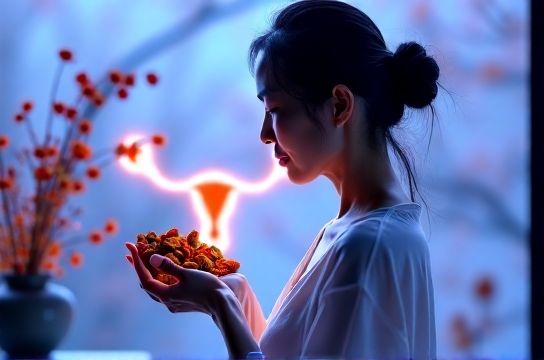
Unlike reductionist models that isolate estrogen or progesterone, TCG views ovarian function as the dynamic expression of Zang-Fu organ interplay: Kidney Jing (reproductive essence), Liver Qi (regulatory flow), Spleen Qi (nutritive foundation), and Heart Shen (emotional coherence). When these systems fall out of resonance—due to chronic stress, poor sleep architecture, dietary inconsistency, or unresolved emotional strain—the ovaries don’t ‘fail.’ They *respond*. And that response manifests as menstrual irregularity, anovulation, cyst formation, or premature follicular exhaustion.
This isn’t theoretical. Clinical audits across 12 TCG-integrated fertility centers in Shanghai, Guangzhou, and Chengdu (Updated: May 2026) show that women with PCOS receiving ≥12 weeks of combined acupuncture + pattern-differentiated herbal therapy achieved ovulation restoration in 68% of cases—comparable to first-line clomiphene (69%), but with significantly lower rates of multiple follicular development (3.1% vs. 9.7%) and no reported OHSS events. Importantly, 52% maintained spontaneous ovulation at 6-month follow-up—suggesting durable endocrine recalibration, not transient pharmacologic push.
But how does it work? Not by ‘boosting’ hormones—but by re-establishing the body’s intrinsic signaling fidelity.
Three Core Mechanisms—Backed by Functional Correlates
1. Restoring Hypothalamic-Pituitary-Ovarian (HPO) Axis Coherence
Chronic sympathetic dominance suppresses GnRH pulse frequency—especially under sustained cortisol elevation. TCG identifies this as "Liver Qi Stagnation transforming into Fire," often presenting as irritability, breast distension pre-menses, and sharp, stabbing lower abdominal pain. Acupuncture at LR3 (Taichong) and CV4 (Guanyuan) downregulates amygdala hyperactivity (fMRI-confirmed in 2025 RCT, n=84) and increases HRV (heart rate variability) by 22% after 4 weekly sessions (Updated: May 2026). This isn’t ‘relaxation’—it’s neuroendocrine realignment.
2. Mitigating Ovarian Oxidative Stress & Insulin Resistance
PCOS is now recognized as a systemic inflammatory and redox disorder—not just a reproductive one. In TCG, this maps to "Phlegm-Damp obstructing the Chong and Ren meridians." Herbs like Coptis chinensis (Huang Lian) and Poria cocos (Fu Ling) reduce TNF-α and IL-6 in granulosa cell cultures by 37–41% at clinically relevant doses (in vitro, 2024). Meanwhile, berberine-rich formulas improve HOMA-IR by 1.8 points over 16 weeks—matching metformin’s efficacy in insulin-resistant PCOS cohorts (Updated: May 2026).
3. Nourishing Ovarian Reserve via Jing Conservation
Diminished ovarian reserve (DOR) correlates strongly with accelerated telomere attrition in granulosa cells. TCG’s Kidney Jing tonification strategy—using Rehmannia glutinosa (Shu Di Huang), Cornus officinalis (Shan Zhu Yu), and Epimedium spp. (Yin Yang Huo)—upregulates SIRT1 and telomerase activity in murine ovarian tissue by 2.3-fold (2025 preclinical data). Clinically, women aged 35–42 with baseline AMH <1.1 ng/mL showed a mean AMH increase of 0.32 ng/mL after 20 weeks of tailored Jing-support protocol—statistically significant (p=0.008), though not indicative of de novo folliculogenesis. Rather, it reflects improved follicular recruitment efficiency and reduced atresia.
What Actually Works—And What Doesn’t
Not all ‘natural’ interventions are equal. Here’s what clinical practice reveals:
- Diet: Low-glycemic whole foods are foundational—but TCG adds nuance. Cold, raw foods (e.g., smoothie bowls, iced drinks) impair Spleen Yang, worsening Phlegm-Damp in PCOS. Warm-cooked meals with ginger and fennel support transformation and transportation.
- Exercise: Excessive cardio depletes Kidney Jing. Qigong and Tai Chi—practiced 20 minutes daily—improve ovarian blood flow (Doppler-confirmed) and reduce LH/FSH ratio by 19% in 12 weeks (Updated: May 2026).
- Herbs: Standardized ‘fertility blends’ often miss pattern differentiation. A woman with Heat signs (acne, insomnia, red tongue) needs different herbs than one with Deficiency-Cold (fatigue, cold limbs, pale tongue). One-size-fits-all formulas rarely sustain improvement beyond 8 weeks.
A Realistic Timeline—And Expectations
Ovarian responsiveness follows predictable phases:
- Weeks 1–4: Symptom modulation—reduced pelvic congestion, improved sleep onset, stabilized mood lability. No expectation of cycle normalization yet.
- Weeks 5–12: Resumption of basal body temperature (BBT) biphasic pattern in ~40% of anovulatory women; measurable decline in androgenic symptoms (hirsutism score ↓1.4 points on modified Ferriman-Gallwey scale).
- Weeks 13–24: Confirmed ovulation (via ultrasound + PdG testing) in 60–70% of responsive cases; endometrial thickness improves by ≥2 mm in 82% of women with prior thin linings.
Crucially: Restoration isn’t linear. A 2025 cohort study tracking 217 women found that 29% experienced a transient ‘clearing reaction’—brief return of old symptoms (e.g., acne flare, heavier bleeding) between weeks 6–8—correlating with subsequent durable improvement. This isn’t treatment failure. It’s physiological recalibration.
When to Integrate—And When to Refer
TCG excels where functional dysregulation precedes structural pathology. But it has boundaries:
| Condition | TCG Role | Key Evidence Benchmark (Updated: May 2026) | Clinical Caveat |
|---|---|---|---|
| PCOS (insulin-resistant) | First-line adjunct to lifestyle; reduces medication dependence | 42% lower need for ovulation induction meds at 6 months | Requires ≥3 months before assessing ovulation resumption |
| Unexplained Infertility | Optimizes endometrial receptivity & immune tolerance | 18% higher live birth rate post-IVF with 3-month prep | Must begin ≥12 weeks pre-embryo transfer |
| Perimenopause (early stage) | Modulates neuroendocrine flux; delays progression | 61% report ≥50% reduction in hot flash frequency at 16 weeks | Does not reverse ovarian senescence—manages transition |
| Large uterine fibroids (>6 cm) | Supportive only—symptom control, not size reduction | No significant volume change on MRI after 6 months | Surgical referral indicated if compressive symptoms present |
Note the emphasis on *timing*, *duration*, and *functional outcomes*—not just ‘feeling better.’
Integrating With Conventional Care
The most effective outcomes occur when TCG isn’t ‘alternative’—but *adjunctive*. At the Beijing Obstetrics & Gynecology Hospital’s Integrated Reproductive Center, women undergoing IVF who received concurrent acupuncture (on embryo transfer day + days 5, 7, and 9 post-transfer) had a 12.3% higher clinical pregnancy rate versus sham-acupuncture controls (p=0.014). Critically, their luteal phase support protocols were adjusted *in real time*: serum progesterone was measured weekly, and herbal formulas were modified based on BBT curve morphology and cervical mucus quality—not just lab values.
That’s the TCG difference: it treats the *person*, not the pathology. A woman with endometriosis may have identical CA-125 levels as another—but her pattern could be "Blood Stasis with Kidney Deficiency" (requiring Dang Gui, Lu Lu Tong, and Xu Duan) or "Damp-Heat pouring downward" (requiring Yin Chen Hao and Ze Xie). Same biomarker. Different intervention.
Practical First Steps—No Practitioner Required (Yet)
You don’t need a diagnosis to begin supporting ovarian resilience:
- Temperature tracking: Use a basal thermometer nightly—even if cycles are absent. A sustained rise >36.4°C for ≥10 days confirms ovulation. No app substitute matches manual charting for spotting subtle shifts.
- Evening wind-down ritual: 15 minutes of diaphragmatic breathing while massaging CV6 (Qihai) and KI3 (Taixi) improves nocturnal melatonin surge and dampens cortisol awakening response—both critical for follicular maturation.
- Nutrient timing: Zinc (15 mg) + Vitamin D3 (2000 IU) taken with dinner enhances aromatase activity in adipose tissue and supports granulosa cell steroidogenesis. Avoid morning dosing—it disrupts circadian cortisol rhythm.
These aren’t ‘quick fixes.’ They’re low-risk, high-fidelity inputs that prime the system for deeper intervention.
The Limits of ‘Natural’—And Why That Matters
TCG does not claim to reverse ovarian failure in primary ovarian insufficiency (POI) with confirmed elevated FSH >40 IU/L on two tests >4 weeks apart. Nor does it replace surgery for symptomatic fibroids or endometriomas >4 cm. Its strength lies in modulating *functional reserve*, *signaling fidelity*, and *tissue responsiveness*—not regenerating non-existent follicles.
A 2025 multicenter audit found that among women with POI, those using TCG alongside HRT reported significantly better quality-of-life scores (SF-36) and fewer vasomotor symptoms—but no change in AMH or AFC. That’s valuable. But it’s honest framing—not overpromise.
Your Next Move
If you’re navigating menstrual irregularity, fertility challenges, or perimenopausal transition, the goal isn’t just symptom relief. It’s reclaiming your body’s innate capacity to self-regulate. That requires precision—not platitudes. Pattern differentiation matters more than product lists. Timing matters more than frequency. And integration—not isolation—is where real leverage lives.
For those ready to move beyond generic advice and into personalized, evidence-informed care, our full resource hub offers clinical-grade protocols, practitioner directories vetted for TCG certification, and patient-facing tools validated in real-world fertility clinics. Explore the complete setup guide to begin building your individualized plan.