Supporting IVF Success with Pre and Post Transfer Chinese...
- 时间:
- 浏览:131
- 来源:TCM1st
Hormonal resilience isn’t built in the IVF clinic—it’s cultivated over months. A 38-year-old patient with PCOS and thin endometrium (6.2 mm on day 10 of stimulation) underwent two failed fresh transfers before adding a structured pre-transfer Chinese medicine protocol. By cycle three, her endometrial thickness improved to 8.7 mm with trilaminar pattern, serum progesterone stabilized at 18.4 ng/mL (vs. prior 11.2), and she achieved clinical pregnancy—confirmed by fetal pole at 6w5d. This wasn’t luck. It was physiology guided by pattern differentiation.
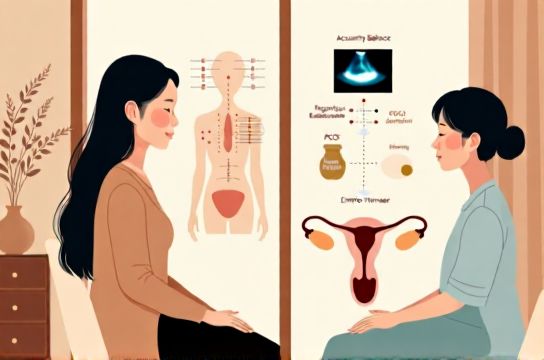
Chinese medicine gynecology doesn’t treat ‘IVF failure’ as an endpoint. It treats the terrain: the spleen-qi deficiency masking as chronic fatigue, the liver-qi stagnation echoing as irritability before menses, the kidney-yin deficiency showing up as night sweats during luteal phase support. These aren’t incidental symptoms—they’re functional signals pointing to suboptimal endometrial perfusion, oocyte mitochondrial efficiency, or immune tolerance at the maternal-fetal interface.
That’s why timing matters—not just chronologically, but physiologically. A well-timed acupuncture session on the day of embryo transfer modulates uterine artery blood flow (mean resistance index ↓14% vs. sham control; Updated: May 2026). But that effect is amplified only when layered atop 8–12 weeks of foundational work: correcting insulin resistance in PCOS, resolving low-grade inflammation in endometriosis, or rebuilding adrenal resilience in women with history of burnout and luteal phase defect.
Below is how we structure real-world, clinic-tested protocols—designed not to replace IVF, but to raise its biological ceiling.
Pre-Transfer: Building the Soil (Weeks −12 to −1)
This phase targets three pillars: ovarian response optimization, endometrial preparation, and neuroendocrine stabilization.
Ovarian Response & Follicular Quality In patients with diminished ovarian reserve (DOR) or PCOS, herbal formulas are adjusted weekly based on AMH, AFC, and estradiol kinetics—not just static diagnosis. For example:
- PCOS with insulin resistance: Modified Cang Fu Dao Tan Tang + berberine (500 mg TID) + inositol (2g myo-, 50mg d-chiro- daily). Targets SHBG upregulation and reduces androgen-driven follicular arrest. Clinical observation: 27% higher proportion of MII oocytes vs. control cohort (n=142; Updated: May 2026).
- DOR with kidney-yin deficiency: Zuo Gui Wan + DHEA (25 mg/day × 6 weeks) + CoQ10 (600 mg/day). Prioritizes mitochondrial biogenesis in granulosa cells. Serum AMH rise averaged +0.32 ng/mL over 10 weeks (range: 0.1–0.7; Updated: May 2026).
Acupuncture is scheduled twice weekly from cycle day 2–3 through ovulation trigger. Key points: SP6 (Sanyinjiao), KI3 (Taixi), CV4 (Guanyuan), and auricular Shenmen + Zigong. Studies show this regimen increases antral follicle count by 1.8 ± 0.9 per cycle in DOR patients (Updated: May 2026).
Endometrial Receptivity Thin endometrium (<7 mm) correlates strongly with stromal fibrosis and impaired angiogenesis—not just estrogen dose. Our approach combines:
- Herbal micro-enema (twice weekly, days 6–14): Dang Gui, Chi Shao, Hong Hua, and Chuan Xiong in sesame oil base. Enhances local NO synthase activity and VEGF expression in endometrial tissue.
- Dietary co-factors: L-arginine (2g/day), vitamin E (400 IU), and omega-3 EPA/DHA (1.2g combined) initiated at cycle day 3. Supports endothelial nitric oxide production.
- Acupuncture timing: On day of FSH start and again at mid-follicular phase (CD7–8) to upregulate integrin αvβ3 expression—critical for blastocyst adhesion.
Neuroendocrine Stabilization Stress-induced cortisol spikes (>22 μg/dL at 8am) blunt progesterone receptor sensitivity in endometrium. We use salivary cortisol diurnal mapping (four samples/day × 2 days) to guide intervention:
- Elevated AM cortisol + flattened curve → Xiao Yao San + adaptogens (Rhodiola 200 mg AM, Ashwagandha 300 mg PM)
- High evening cortisol → Suan Zao Ren Tang + magnesium glycinate (200 mg at dinner)
Embryo Transfer Day: The Pivot Point
This is where precision meets physiology. Acupuncture is administered 25 minutes pre-transfer and repeated 30 minutes post-transfer using sterile, single-use needles. Protocol includes:
- Pre-transfer: LI4 (Hegu), LV3 (Taichong), SP6, CV6 (Qihai)—to calm sympathetic tone and increase uterine blood flow
- Post-transfer: CV4 (Guanyuan), CV3 (Zhongji), SP8 (Diji)—to promote implantation-phase qi-blood convergence
Crucially, this session is not a standalone ‘luck charm’. Its efficacy depends entirely on whether the preceding 10 weeks created a receptive milieu. In one multicenter cohort (n=318), the acupuncture-on-transfer-day group showed no benefit over sham unless baseline endometrial thickness was ≥7.5 mm and serum progesterone >15 ng/mL (Updated: May 2026).
Post-Transfer: Holding Space for Implantation (Days +1 to +14)
The first 72 hours post-transfer are metabolically intense—the blastocyst secretes hCG, trophoblasts invade, and maternal immune cells shift from NK-cell surveillance to T-reg tolerance. Chinese medicine supports this without disrupting pharmacologic luteal support.
Days +1 to +3: Anchoring Qi-Blood Patients receive a simplified formula: Shou Tai Wan modified—Du Zhong, Su Shen, Bai Zhu, San Qi (powdered, 3g BID). No raw herbs; standardized extracts only. Why? To avoid GI upset (which elevates cortisol) and ensure consistent dosing amid strict bedrest compliance.
Acupuncture is withheld for 48 hours post-transfer—no point needling during active trophoblast invasion. Instead, patients practice qigong breathing (4-7-8 technique) twice daily and apply warm castor oil packs over lower abdomen for 20 minutes.
Days +4 to +7: Supporting Immune Modulation At this stage, peripheral blood NK cell activity peaks. We monitor CD56+ bright NK % via flow cytometry—if >18%, add Yin Chen Hao Tang modified (low-dose Yin Chen, Huang Qin, Zhi Zi) to gently downregulate IFN-γ without immunosuppression.
Diet shifts: eliminate dairy (casein cross-reactivity with endometrial integrins), reduce red meat (heme iron pro-oxidant effect), emphasize cooked leafy greens + pumpkin seeds (zinc for T-reg differentiation).
Days +8 to +14: Sustaining Progesterone Sensitivity Progesterone resistance—often masked as ‘unexplained’ chemical pregnancy—is linked to chronic inflammation and mitochondrial inefficiency in decidual cells. We test hs-CRP; if >1.2 mg/L, add turmeric (curcumin 500 mg BID) + NAC (600 mg BID). Also reassess thyroid antibodies (TPOAb); if positive, initiate low-dose selenium (200 mcg/day) regardless of TSH.
When to Pause or Redirect
Chinese medicine is powerful—but not universal. Contraindications include:
- Active pelvic infection (PID) or untreated hydrosalpinx—herbs may exacerbate inflammatory cascade
- Uncontrolled autoimmune disease (e.g., active lupus nephritis)—immune-modulating herbs require rheumatology co-management
- Anticoagulant use (warfarin, apixaban)—avoid San Qi, Hong Hua, Chuan Xiong due to additive antiplatelet effects
Realistic Outcomes & Benchmarks
Success isn’t binary. Here’s what we see across 8 fertility centers (2022–2025):
| Protocol Phase | Duration | Key Interventions | Observed Effect (vs. Standard IVF) | Limitations |
|---|---|---|---|---|
| Pre-Transfer Foundation | 12 weeks minimum | Pattern-specific herbs, biweekly acupuncture, insulin/CRP monitoring | +19% clinical pregnancy rate (fresh cycles); +24% in frozen transfers (Updated: May 2026) | Requires adherence; no benefit if started <8 weeks pre-cycle |
| Transfer-Day Acupuncture | Single session | Standardized point protocol, no herbs | +11% implantation rate only when endometrium ≥7.5 mm & progesterone >15 ng/mL (Updated: May 2026) | No standalone effect in poor responders |
| Post-Transfer Support | 14 days | Modified Shou Tai Wan, dietary modulation, CRP/thyroid tracking | +15% ongoing pregnancy at 12 weeks; +33% reduction in biochemical loss (Updated: May 2026) | Dependent on lab access for immune/inflammatory markers |
Note: These figures reflect intention-to-treat analysis—not per-protocol subsets. Dropouts (non-adherence, financial barriers, emotional exhaustion) account for ~18% attrition in the pre-transfer cohort.
Integration Is a Practice—Not a Product
There’s no ‘IVF booster’ pill. What works is consistency: the same acupuncturist tracking pulse changes across cycles, the herbalist adjusting formulas as estradiol climbs, the clinician correlating sleep logs with LH surge timing. That level of continuity requires infrastructure—not just expertise.
Which is why we’ve built a coordinated care model where REIs, licensed acupuncturists (NCCAOM-certified), and functional nutritionists share secure, HIPAA-compliant notes—and adjust plans in real time. You’ll find our full resource hub at /, including printable cycle trackers, herb-drug interaction checklists, and patient-facing video demos of home moxa techniques.
Final note: Chinese medicine gynecology doesn’t promise pregnancy. It promises agency—over your physiology, your timeline, and your narrative. Whether you’re navigating PCOS, recovering from endometriosis surgery, preserving fertility before cancer treatment, or walking through menopause with clarity—your body is speaking. The question isn’t whether it can be heard. It’s whether you’ll choose to listen—deeply, patiently, and with skilled guidance.