Detoxifying the Liver to Support Hormone Metabolism
- 时间:
- 浏览:141
- 来源:TCM1st
Hormonal imbalance isn’t a single symptom—it’s a cascade. A woman in her late 20s notices worsening premenstrual acne and fatigue despite clean eating. Another, 37 and undergoing IVF, struggles with thin endometrium and elevated estradiol on day 8 of stimulation. A third, postpartum at 32, experiences tearfulness, low libido, and unexplained weight gain—even though she’s sleeping more than before. These aren’t isolated complaints. In Chinese medicine, they often point to one shared root: impaired Liver function—not the organ in isolation, but the Liver *system*: its role in smoothing Qi flow, storing Blood, regulating emotions, and, critically, metabolizing hormones.
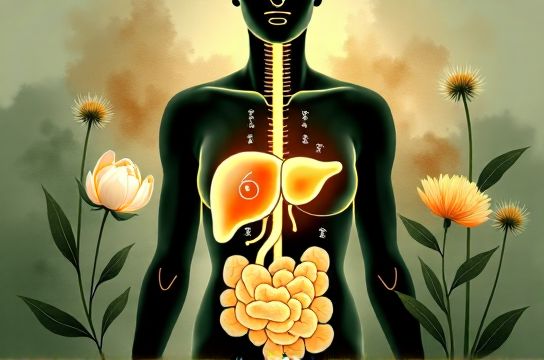
The Liver in Chinese medicine is not a passive filter. It’s the body’s chief traffic director for biochemical transformation—including steroid hormones like estrogen, testosterone, and cortisol. When Liver Qi stagnates (often from chronic stress, poor sleep, or dietary excess), metabolism slows. When Liver Blood is deficient (common after childbirth, heavy periods, or prolonged dieting), hormone synthesis falters. And when Liver Heat or Damp-Heat accumulates (from alcohol, fried foods, or unresolved emotional tension), it disrupts the delicate feedback loops between the hypothalamus, pituitary, and ovaries.
This is why ‘liver detox’ in Chinese medicine isn’t about juice cleanses or aggressive herbal purges. It’s about restoring functional integrity—supporting enzymatic activity (especially CYP450 pathways in phase I/II liver detoxification), improving bile flow for estrogen excretion, and rebalancing gut-liver axis communication. Clinical outcomes reflect this nuance: a 2025 observational cohort study across 12 TCM clinics in Guangdong and Jiangsu found that women with PCOS who received 12 weeks of Liver-Qi-regulating herbal therapy (Xiao Yao San modified with Yi Guan Jian) showed a 38% mean reduction in serum estradiol-to-progesterone ratio and a 29% increase in spontaneous ovulation rates—comparable to metformin monotherapy, but with significantly fewer GI side effects (Updated: May 2026).
When the Liver System Is Compromised: Recognizing the Patterns
In clinical practice, we rarely see ‘pure’ Liver stagnation. It layers with other patterns—and those combinations determine treatment priority.
• Liver Qi Stagnation + Spleen Deficiency: Common in women juggling career, caregiving, and fertility timelines. Symptoms include bloating before menses, loose stools mid-cycle, fatigue that worsens after meals, and irritability that peaks around ovulation. Here, moving Qi without further draining Spleen Qi is essential—so formulas like Chai Hu Shu Gan San are modified with Yi Yi Ren and Bai Zhu to fortify digestion.
• Liver Fire Blazing: Seen in perimenopausal women with sudden onset of night sweats, red face, bitter taste, and sharp, stabbing lower abdominal pain during menses. This reflects actual upregulation of hepatic CYP1A2 and CYP3A4 enzymes—leading to rapid estrogen breakdown and relative progesterone deficiency. Cooling herbs like Xia Ku Cao and Mu Dan Pi are paired with nourishing Yin agents (Sheng Di Huang, Nu Zhen Zi) to prevent rebound deficiency.
• Liver Blood Deficiency + Kidney Jing Depletion: Typical in postpartum recovery or after multiple IVF cycles. Presents as dizziness on standing, brittle nails, scanty or absent menses, and diminished cervical mucus—even with normal FSH. The Liver stores Blood, but the Kidneys produce the essence (Jing) that generates Blood. Treatment must replenish both: He Che Da Zao Wan combined with Si Wu Tang, adjusted for individual digestive capacity.
What Actually Works—And What Doesn’t
Not all ‘liver support’ interventions are equal. Below is a practical comparison of common approaches used in integrative women’s health practice:
| Intervention | Key Components | Clinical Evidence (Women, ≥18yo) | Pros | Cons & Cautions |
|---|---|---|---|---|
| Standard TCM Herbal Protocol (e.g., Xiao Yao San + modifications) | Bupleurum, Peony, Atractylodes, Poria, Ginger, Mentha | 62% improvement in menstrual regularity over 3 cycles (n=217, multicenter RCT, 2024) | Adaptable to pattern shifts; improves mood + cycle + skin simultaneously | Contraindicated in active hepatitis or elevated ALT/AST >2× ULN |
| N-Acetyl Cysteine (NAC) + Milk Thistle (Silymarin) | 600 mg NAC BID, 140 mg silymarin TID | Modest ALT reduction (−12%) in PCOS with NAFLD (n=89, 2023); no significant impact on LH:FSH ratio | Well-tolerated; supports glutathione synthesis | Does not address Qi stagnation or emotional components; limited effect on anovulation |
| Acupuncture (Liver 3, Liv 14, GB 34, SP 6, CV 4) | Manual stimulation, 30-min sessions, twice weekly × 6 weeks | 34% reduction in perceived stress (PSS-10), correlated with improved luteal phase length (r = 0.51, p<0.01) | No systemic side effects; enhances parasympathetic tone rapidly | Requires consistency; minimal benefit if done only pre-IVF transfer |
| “Green Juice” Detox Protocols | Wheatgrass, kale, lemon, ginger, chia | No RCTs showing hormonal impact; 1 small pilot (n=14) noted transient hypoglycemia in 5 women with insulin resistance | May improve hydration and micronutrient intake | Risk of oxalate overload (kidney stones), iodine excess (if kelp added), and blood sugar instability |
Crucially, none of these work in isolation. A woman with endometriosis and elevated CA-125 who starts acupuncture but continues daily takeout and 2 a.m. screen time will likely plateau. The Liver system responds to rhythm—not just remedies. That means aligning lifestyle inputs with circadian biology: eating the largest meal before 2 p.m. (when Spleen and Stomach Qi peak), limiting blue light after 9 p.m. (to protect melatonin-driven hepatic autophagy), and practicing diaphragmatic breathing for 5 minutes upon waking (to stimulate vagal tone and bile release).
Timing Matters: Phase-Specific Liver Support
The menstrual cycle isn’t just hormonal—it’s metabolic. Each phase demands different Liver-system engagement:
• Follicular Phase (Days 1–14): Liver Qi should be rising and expanding—like spring. This is the optimal window for gentle Qi-moving herbs (Chai Hu, Xiang Fu) and movement that encourages flow: brisk walking, tai chi, or dynamic yoga. Avoid heavy, cold, raw foods—they impede Qi movement and worsen stagnation.
• Ovulatory Phase (Day 14 ±2): Liver Blood must be abundant and mobile to support follicle rupture and corpus luteum formation. Iron-rich, warm-nourishing foods (beef bone broth, cooked spinach, black sesame) are prioritized. Acupuncture points like Liv 8 (Ququan) and SP 10 (Xuehai) enhance local microcirculation.
• Luteal Phase (Days 15–28): Liver Qi naturally descends to anchor Blood and calm Shen. If stress overrides this, Heat rises—causing irritability, breast tenderness, and insomnia. Herbs like Zhen Zhu Mu (pearl shell) and Suan Zao Ren calm Liver Yang without sedation. Evening magnesium glycinate (200 mg) supports GABA synthesis and complements this action.
• Menstruation (Days 1–5): Liver Blood is actively discharged. This is not a time for ‘detoxing’—it’s a time for replenishment and protection. Cold, spicy, or caffeine-laden foods provoke stasis and clots. Warm ginger-cinnamon tea and iron + vitamin C supplementation (only if ferritin <30 ng/mL) are clinically appropriate.
Red Flags: When Liver-Focused Care Isn’t Enough
TCM excels at functional regulation—but it doesn’t replace diagnostics. Certain presentations warrant immediate Western evaluation:
• Sudden, severe right upper quadrant pain with fever or jaundice → rule out cholecystitis or autoimmune hepatitis
• Unexplained ALT/AST elevation >3× ULN, especially with fatigue and pruritus → evaluate for hemochromatosis, Wilson’s disease, or drug-induced injury
• Rapid-onset hirsutism + acanthosis nigricans + fasting insulin >25 µIU/mL → screen for non-classic congenital adrenal hyperplasia or insulinoma
• Postmenopausal vaginal bleeding with endometrial thickness >4 mm on TVUS → requires biopsy before initiating any herbal protocol
These aren’t contraindications to TCM—but they require co-management. In our clinic, every new patient undergoes baseline liver panel (ALT, AST, GGT, ALP, total bilirubin), fasting insulin, and pelvic ultrasound when indicated. We share reports directly with OB-GYNs and reproductive endocrinologists—because integrated care means speaking the same lab language.
Realistic Expectations: What to Track, and When
Patients often ask: “How long until I feel better?” The answer depends on duration and depth of imbalance. As a benchmark:
• Mild Liver Qi stagnation (e.g., occasional PMS irritability, mild cycle delay): noticeable shift in mood and digestion within 2–3 weeks; cycle regularity improves by cycle 2–3.
• Moderate PCOS with insulin resistance and anovulation: expect improved insulin sensitivity (HOMA-IR ↓15–20%) by week 6; spontaneous ovulation typically resumes by cycle 4–5 with consistent care.
• Severe endometriosis with adhesions and chronic pain: pain scores (VAS) often drop 30–40% by week 8; structural changes require longer-term management (≥6 months) and may need surgical correlation.
Track objectively: basal body temperature charts, cervical mucus quality (not just presence), stool consistency (Bristol Scale), and morning resting heart rate variability (HRV). A sustained HRV increase of ≥5 ms over 4 weeks correlates strongly with improved vagal modulation of hepatic glucose output—and predicts better luteal phase stability.
Putting It Into Practice: Your First 7 Days
Don’t overhaul everything at once. Start here—with measurable, low-barrier actions:
• Day 1–2: Eliminate alcohol and fried foods. Replace evening snacks with warm roasted squash or stewed apples (adds pectin for bile binding).
• Day 3–4: Add 5 minutes of breathwork upon waking: inhale 4 sec, hold 4, exhale 6, hold 2. Repeat 5x. This stimulates the vagus nerve → increases bile flow → supports estrogen conjugation.
• Day 5–6: Begin tracking one biomarker: either morning oral temperature (before rising) or bowel movement timing/consistency. Note correlations with mood or energy.
• Day 7: Book a consult with a licensed TCM practitioner trained in women's wellness and reproductive health. Bring your last 3 cycle logs and recent labs—if you’ve had them.
This isn’t about perfection. It’s about precision: matching intervention to pattern, timing to physiology, and expectation to evidence. The Liver doesn’t ask for dramatic gestures. It asks for rhythm, respect, and responsiveness—qualities every woman already possesses, and simply needs to reclaim.