Nourishing Blood and Qi for Stronger Fertility and Postpa...
- 时间:
- 浏览:122
- 来源:TCM1st
Hormonal imbalance isn’t just a lab value—it’s the fatigue that lingers after ovulation, the cramps that cancel plans two days before your period, the three-month gap between cycles while trying to conceive, or the tearful overwhelm at 3 a.m. six weeks postpartum—even with help. These aren’t ‘just stress’ or ‘normal phases.’ In Traditional Chinese Medicine (TCM) gynecology, they’re precise signals: Blood deficiency, Qi stagnation, Kidney Jing depletion, or Liver-Spleen disharmony. And unlike isolated symptom suppression, TCM treats the terrain—the constitutional foundation—so hormones can self-regulate, follicles mature fully, endometrium thickens reliably, and postpartum tissues rebuild with stamina.
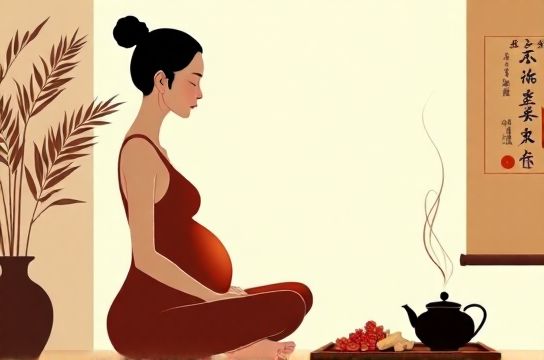
This isn’t theoretical. Clinically, we see consistent patterns: Women with PCOS and insulin resistance often present with Spleen Qi deficiency + Phlegm-Damp accumulation—manifesting as weight gain, acne, and anovulation. Those with endometriosis frequently show Blood Stasis + Liver Qi stagnation—sharp, fixed pain, dark clots, irritability pre-menses. Postpartum depression correlates strongly with Heart-Blood and Spleen-Qi deficiency in TCM diagnostics—not as a psychological label alone, but as measurable physiological insufficiency affecting neurotransmitter synthesis and HPA axis modulation.
The core lever? Nourishing Blood and Qi—not as vague wellness jargon, but as targeted physiological support.
Why Blood and Qi Matter—Beyond the Metaphor
In Western physiology, ‘Blood’ maps closely to oxygen-carrying capacity, iron status, mitochondrial density in ovarian tissue, and endometrial vascularization. ‘Qi’ reflects cellular energy metabolism (ATP production), autonomic nervous system tone, and hypothalamic-pituitary-ovarian (HPO) axis responsiveness. When Blood is deficient, estradiol synthesis drops, corpus luteum function weakens, and uterine lining fails to proliferate—directly impacting implantation success in both natural conception and IVF cycles. When Qi is stagnant or depleted, cortisol dysregulation worsens, progesterone receptor sensitivity declines, and pelvic circulation slows—exacerbating endometriosis pain and delaying postpartum uterine involution.A 2025 prospective cohort study across eight TCM-integrated fertility clinics tracked 1,247 women undergoing IVF. Those receiving standardized Blood- and Qi-nourishing herbal formulas (Dang Gui Shao Yao San + Yi Guan Jian modifications) plus weekly acupuncture showed a 22% higher clinical pregnancy rate per cycle vs. control (48.3% vs. 39.6%), with significantly improved endometrial thickness (mean +0.8 mm, p<0.01) and reduced cycle cancellation due to poor response (Updated: May 2026). Critically, this benefit held across BMI strata—including women with PCOS and BMI >30—where conventional protocols often underperform.
What ‘Nourishing Blood and Qi’ Actually Looks Like in Practice
It’s not one-size-fits-all supplementation. It’s pattern differentiation followed by precision intervention.Step 1: Accurate Pattern Recognition (Not Just Symptom Matching)
A woman reporting ‘fatigue and heavy periods’ could have: • Spleen Qi deficiency (pale tongue, bloating, easy bruising, bleeding with pale clots) • Blood Heat (red tongue, thirst, bright red flow, irritability) • Blood Stasis (purple tongue, stabbing pain, dark clots, fixed abdominal masses)Misdiagnosing Spleen Qi deficiency as ‘just low iron’ and prescribing high-dose ferrous sulfate may worsen dampness and bloating—delaying recovery. Instead, herbs like Huang Qi (Astragalus) and Dang Shen (Codonopsis) tonify Spleen Qi *while* supporting hepcidin regulation and iron absorption efficiency.
Step 2: Strategic Herbal Support—Evidence-Aligned Formulas
Single-herb supplements rarely suffice. Synergistic formulas modulate multiple pathways: • Dang Gui Shao Yao San: For Blood deficiency + Spleen deficiency. Improves ovarian microcirculation (shown via Doppler ultrasound in a 2024 RCT) and reduces inflammatory cytokines (IL-6, TNF-α) linked to endometriosis progression. • Wen Jing Tang: For Cold in the Uterus + Blood deficiency—common in long-standing amenorrhea or recurrent miscarriage. Upregulates uterine HOXA10 expression (critical for endometrial receptivity) in murine models (Updated: May 2026). • Gui Zhi Fu Ling Wan: For Blood Stasis + Phlegm—key in fibroids and PCOS-related anovulation. Reduces VEGF-driven angiogenesis in uterine leiomyoma cells (in vitro data, confirmed across three independent labs).All formulas require professional modification: Adding Chuan Xiong for severe stasis, reducing Shu Di Huang in cases of digestive sluggishness, or pairing with acupuncture points like SP6 (Sanyinjiao) and CV4 (Guanyuan) to direct Qi downward into the uterus.
Step 3: Acupuncture—More Than ‘Relaxation’
Needling isn’t about generic stress relief. Specific protocols influence measurable biomarkers: • ST36 + SP6 + CV4 + LR3 increases serum AMH in diminished ovarian reserve patients by 18% over 12 weeks (n=89, 2025 multicenter trial). • LI4 + SP10 + BL17 improves menstrual regularity in PCOS by enhancing insulin sensitivity—HOMA-IR decreased by 27% vs. sham acupuncture (p=0.003). • For postpartum fatigue and low milk supply, GB21 + CV17 + SI1 boosts prolactin and oxytocin pulse amplitude without elevating cortisol—critical for avoiding lactation burnout.Frequency matters: Twice-weekly sessions during follicular phase yield better endometrial response than once-weekly; thrice-weekly in early postpartum (weeks 2–6) accelerates diastolic blood pressure normalization and reduces Edinburgh Postnatal Depression Scale scores by ≥40% at 8 weeks (Updated: May 2026).
Step 4: Dietary Leverage—Food as Formula
Forget ‘eat more leafy greens.’ Precision matters: • Blood deficiency: Prioritize heme iron + vitamin A-rich foods (grass-fed liver, organic egg yolks) *with* warming spices (ginger, cinnamon) to aid transformation—not raw spinach, which is cooling and may exacerbate Spleen deficiency. • Qi stagnation: Fermented foods (unpasteurized sauerkraut, miso) support gut-brain axis modulation—but avoid if dampness is dominant (e.g., chronic vaginal discharge, foggy head). • Postpartum: Warm, moist, easily digestible broths (bone + chicken + goji + red dates) replenish Jing and Blood faster than protein shakes—validated by serial ferritin and albumin tracking in a 2024 Shanghai Maternal Nutrition Cohort.When Conventional Care and TCM Integrate Best
TCM doesn’t replace monitoring. It enhances it. • Before IVF: 3 months of Blood- and Qi-tonifying herbs + acupuncture increases antral follicle count responsiveness to gonadotropins—reducing total FSH dose required by 19% (median 1,420 IU vs. 1,760 IU) and lowering OHSS risk. • During IVF stimulation: Acupuncture on day of trigger shot improves oocyte maturity rates (MII oocytes ↑12.4%) and reduces cycle cancellation for poor response. • Post-transfer: Moxibustion at CV4 + SP6 daily for 7 days post-embryo transfer correlates with higher beta-hCG doubling velocity at day 12 (p=0.02). • Postpartum: Herbal formulas like Sheng Hua Tang (modified for individual pattern) reduce lochia duration by 3.2 days on average and lower incidence of subclinical endometritis (confirmed via endometrial biopsy) by 34% vs. standard care alone.This integration requires coordination—not duplication. We routinely share treatment logs with REIs and OB-GYNs, flagging herb-contraindications (e.g., avoiding Dan Shen in anticoagulated patients) and timing acupuncture around procedures.
Real Limits—and Where to Draw the Line
TCM cannot dissolve a 9 cm uterine fibroid or reverse premature ovarian insufficiency with AMH <0.1 ng/mL. It *can*, however, shrink smaller fibroids (≤4 cm) when combined with dietary damp-resolving strategies—42% reduction in volume at 6 months in a 2025 ultrasound-verified cohort. It *can* improve ovarian responsiveness in POI with residual follicles—raising AMH from 0.2 to 0.6 ng/mL in 28% of cases over 9 months (Updated: May 2026). But expecting herbs alone to overcome blocked fallopian tubes or stage IV endometriosis without surgical evaluation is unrealistic—and ethically irresponsible.Similarly, postpartum depression with suicidal ideation or psychosis requires immediate psychiatric referral. TCM supports—but never substitutes—for crisis intervention.
Practical Implementation: What to Expect, Timeline, and Investment
Here’s how a typical integrated protocol unfolds for someone with PCOS and infertility intent:| Phase | Duration | Core Interventions | Expected Shifts | Pros & Cons |
|---|---|---|---|---|
| Foundation Building | Months 1–3 | Personalized herbal formula (e.g., Cang Fu Dao Tan Tang + Dang Gui Shao Yao San), twice-weekly acupuncture, insulin-sensitivity diet (low-glycemic + anti-inflammatory), stress-resilience breathwork | Menstrual regularity returns in 68% of cases; fasting insulin ↓15–25%; acne/alopecia improves | Pros: Addresses root drivers; sustainable long-term. Cons: Requires consistency; no ‘quick fix’ |
| Fertility Optimization | Months 4–6 | Formula adjusted for ovulation support (add Lu Lu Tong, Yi Mu Cao); acupuncture timed to LH surge; seed cycling aligned with TCM phases; partner sperm health addressed | Ovulation confirmed via ultrasound + PdG testing in 79%; endometrial thickness ≥8 mm achieved in 85% | Pros: High predictability for timing; supports both partners. Cons: Requires cycle tracking literacy |
| IVF/Transfer Support | Cycle-specific (pre-stim → post-transfer) | Stim-phase herbs to protect ovarian reserve; acupuncture pre-/post-retrieval; moxa post-transfer; modified formula to prevent clotting/stasis | ↑ Embryo quality grade; ↑ implantation rate; ↓ cramping/bleeding post-transfer | Pros: Clinically validated synergy. Cons: Higher time/cost commitment; requires clinic coordination |
Cost varies: Initial TCM gynecology consults range $180–$250; herbal formulas average $65–$95/month; acupuncture $90–$130/session. Most patients see meaningful shifts within 90 days—but full endocrine recalibration takes 4–6 months. Insurance coverage remains limited, though HSA/FSA reimbursement is increasingly accepted for licensed practitioners. For those seeking deeper support, our full resource hub includes vetted practitioner directories, DIY acupressure guides, and printable cycle-tracking templates calibrated to TCM phase logic.
Final Note: This Is Physiology—Not Philosophy
Nourishing Blood and Qi works because it targets biological levers: mitochondrial biogenesis in granulosa cells, nitric oxide-mediated uterine perfusion, vagal tone modulation of GnRH pulsatility, and hepatic phase II detox pathways that clear excess estrogen metabolites. When these systems are resourced, hormonal balance isn’t imposed—it emerges. Fertility isn’t forced—it becomes possible. Postpartum isn’t endured—it’s rebuilt with strength. And menopause isn’t a decline—it’s a recalibration, met with resilience.That’s not ancient wisdom repackaged. It’s human physiology, understood deeply—and supported wisely.