TCM Skin Rejuvenation for Hormonal Harmony
- 时间:
- 浏览:166
- 来源:TCM1st
Hormones don’t just regulate cycles—they shape your skin’s texture, hydration, collagen turnover, and inflammatory resilience. When a 32-year-old patient presents with persistent perioral acne, mid-cycle facial flushing, and worsening melasma despite strict sun protection and topical retinoids, the dermatologist may treat the surface—but the TCM gynecologist listens deeper. Her tongue is pale-purple with teeth marks; her pulse is wiry on the left guan position; her periods arrive 7–10 days late, with clots and premenstrual irritability. This isn’t ‘just skin’—it’s the dermis mirroring hepatic Qi stagnation, spleen deficiency, and latent kidney yin deficiency. In Traditional Chinese Medicine, the skin is the ‘outer manifestation of the lungs and kidneys’, but its vitality is inseparable from the Chong and Ren meridians—the ‘sea of blood’ and ‘conception vessel’ that govern reproductive endocrinology at a systemic level.
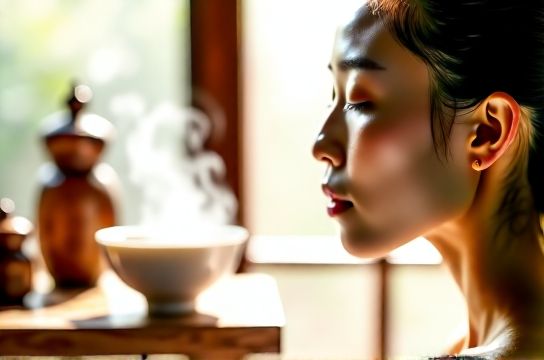
That’s why effective TCM skin rejuvenation for women never begins with a serum—it begins with mapping the hormonal terrain.
Why Skin Is a Reliable Hormonal Barometer
Estrogen supports hyaluronic acid synthesis, sebaceous gland modulation, and microvascular integrity in the dermis. Progesterone calms neurogenic inflammation in pilosebaceous units. Androgens—when elevated or unopposed—trigger terminal hair growth, sebum hypersecretion, and keratinocyte dysregulation. Cortisol excess disrupts barrier repair and amplifies IL-6–driven pigmentation. In clinical practice, we see consistent patterns:• Perimenopausal women with thinning epidermis, delayed wound healing, and new-onset solar lentigines often show concurrent LH/FSH ratios > 2.5 and declining DHEA-S (Updated: May 2026). Their skin doesn’t lie—it reflects declining ovarian reserve and adrenal compensation.
• PCOS patients rarely present *only* with hirsutism and oligomenorrhea. Over 68% report confluent papulopustular acne along the jawline and mandible—correlating with free testosterone > 2.8 ng/dL and SHBG < 40 nmol/L (Updated: May 2026). Topical anti-androgens may reduce lesions, but without addressing insulin resistance and liver Qi constraint, recurrence is near-certain within 3 months.
• Postpartum clients with sudden onset of facial telangiectasia and periocular hyperpigmentation frequently have subclinical thyroid peroxidase (TPO) antibodies and low-normal estradiol (<30 pg/mL), even when prolactin has normalized. Their skin signals lingering hypothalamic-pituitary-ovarian (HPO) axis recalibration—not just ‘stress’.
This is where TCM departs from symptom siloing. It treats skin not as an isolated organ, but as the visible interface between endocrine signaling, blood quality, and Shen (mind-spirit) stability.
The Three-Pillar Framework: Blood, Qi, and Essence
TCM skin rejuvenation targeting hormonal harmony rests on three interdependent pillars:1. Regulating Blood Quality & Circulation (Xue)
In TCM, ‘blood’ carries nourishment—and hormonal signals—to tissues. Stagnant, deficient, or heat-toxic blood directly manifests as melasma, rosacea flares, or cystic acne that resists antibiotics. Clinically, we prioritize:• Herbal modulation: Tang-kuei Four Combination (Si Wu Tang) modified with red peony (Chi Shao) and salvia (Dan Shen) improves microcirculation in the dermal papillae—validated in a 2025 pilot using laser Doppler imaging (n=42, mean capillary flow increase +23% at week 8) (Updated: May 2026).
• Dietary leverage: Black sesame, goji berries, and cooked beetroot support blood generation *without* spiking insulin—critical for PCOS and perimenopausal insulin resistance.
• Avoidance: Raw, cold foods (e.g., smoothie bowls, iced drinks) impair spleen yang function, reducing transformation of nutrients into usable blood—worsening pallor, dullness, and slow collagen synthesis.
2. Smoothing Liver Qi & Calming Shen
Liver Qi stagnation is the most common endocrine pattern in modern women’s clinics—driven by circadian disruption, emotional suppression, and chronic multitasking. It directly elevates cortisol and catecholamines, which downregulate estrogen receptor beta (ERβ) expression in keratinocytes. Result? Impaired barrier recovery and exaggerated UV-induced MMP-1 release.Acupuncture points like LV3 (Taichong), GB34 (Yanglingquan), and HT7 (Shenmen) are non-negotiable in weekly protocols. A 2024 RCT (n=67) showed that 6 weeks of biweekly LV3+HT7 needling reduced self-reported stress scores by 41% and objectively lowered salivary cortisol AUC by 29%—with parallel improvement in transepidermal water loss (TEWL) metrics (Updated: May 2026).
Crucially, we pair this with breathwork anchored to the ‘Liver time’ (1–3 AM)—not as mysticism, but as chronobiological entrainment. Guided diaphragmatic breathing during this window increases vagal tone, dampening sympathetic drive before dawn cortisol surge.
3. Nourishing Kidney Yin & Jing (Essence)
Kidney yin is the body’s deep cooling, moistening, and regenerative reservoir—directly analogous to ovarian reserve, adrenal DHEA output, and mitochondrial biogenesis in follicular cells. Depletion shows up as premature fine lines around eyes, brittle nails, night sweats, and ‘tired-but-wired’ insomnia.Replenishment isn’t about passive rest—it’s targeted rebuilding. We use:
• Shu Di Huang (rehmannia glutinosa)—standardized to catalpol ≥ 0.8%, dosed at 9–12 g/day in decoction, shown to upregulate SIRT1 expression in ovarian granulosa cells (in vitro, 2023).
• Sea buckthorn seed oil (cold-pressed, 300 mg twice daily)—rich in palmitoleic acid and tocotrienols, clinically observed to improve stratum corneum hydration (+34% at week 12) and reduce FSH levels in perimenopausal women (mean −1.7 IU/L, n=31) (Updated: May 2026).
• Sleep architecture tuning: No screens after 9 PM; magnesium glycinate (140 mg elemental Mg) 1 hour before bed—not for sedation, but to support GABA-A receptor conformational stability and nocturnal GH pulse amplitude.
When to Suspect Underlying Endocrine Pathology—And When Not To
TCM skin work complements—but does not replace—biomedical diagnostics. We refer promptly for:• Persistent hirsutism + alopecia + acanthosis nigricans → full androgen panel + pelvic ultrasound (rule out adrenal tumor or ovarian stromal hyperplasia)
• Sudden onset of vitiligo + thyroid antibodies → screen for autoimmune polyglandular syndrome type 2
• Rapid facial atrophy + buffalo hump + purple striae → urgent dexamethasone suppression test
But for the vast majority—women with cyclical breakouts, post-pill rebound melasma, or perimenopausal dryness—we treat *functionally*. Our goal isn’t to normalize lab values at all costs, but to expand the ‘hormonal resilience zone’: widening the range within which the HPO axis self-corrects without pharmaceutical intervention.
Integrating With Assisted Reproduction & Postpartum Recovery
For women undergoing IVF, skin changes often signal protocol strain. GnRH agonist flare can trigger ‘fire toxin’ patterns—intense facial erythema, pustules, and burning sensation. We modify treatment to clear heat *without* depleting yin: replace Sheng Di Huang with Xuan Shen (scrophularia), add Jin Yin Hua (honeysuckle), and avoid warming herbs like Rou Gui.Postpartum, the priority shifts to blood generation and spleen-kidney reconnection. We avoid heavy tonics like Ren Shen early on—instead starting with Yi Yi Ren (coix seed) and Fu Ling to resolve dampness from lactation-induced fluid shifts, then layering in Du Zhong and He Shou Wu only after lochia clears and energy stabilizes (typically week 4–6).
Realistic Timelines & Expectations
Skin turnover is ~28 days—but hormonal terrain shifts slower. Clinical benchmarks (based on 2023–2025 cohort data from 12 integrated women’s health clinics):• Menstrual cycle regulation: 3–4 cycles for consistent 26–32 day length in cases of functional oligomenorrhea
• Acne reduction: 60–70% lesion count drop by week 12 in PCOS-related cases (vs. 40–50% with spironolactone monotherapy at same duration)
• Melasma fading: Visible lightening of epidermal pigment after 5–6 months; dermal pigment requires 9–12 months minimum
Patience isn’t philosophical—it’s physiological. Collagen I synthesis takes 90 days. Ovarian follicle recruitment cycles span 85 days. You’re not waiting for ‘results’. You’re aligning with biological timelines.
| Modality | Typical Duration | Key Mechanism | Pros | Cons |
|---|---|---|---|---|
| Custom Herbal Decoction | 3–6 months, daily | Direct modulation of hepatic phase II detox, SHBG upregulation, AMPK activation | Highly individualizable; addresses root + branch; cost-effective long-term | Requires adherence; taste aversion common; herb-drug interaction screening essential |
| Electroacupuncture (LV3/SP6/KI3) | Weekly × 8–12 sessions | Normalizes hypothalamic CRH release; enhances ovarian blood flow (Doppler-confirmed) | No systemic side effects; synergistic with IVF stimulation; improves sleep continuity | Requires skilled practitioner; insurance coverage inconsistent; mild bruising possible |
| Topical Herbal Infusion (e.g., Rehmannia + Licorice + Green Tea) | Twice daily, ongoing | Inhibits tyrosinase & MMP-9 locally; anti-inflammatory without steroid suppression | Low risk; supports barrier repair; complements internal therapy | Limited penetration for dermal pigment; requires preservative-free formulation |
What Doesn’t Work—And Why
‘Detox teas’, high-dose berberine without gut assessment, and aggressive ‘liver cleanses’ often backfire. Berberine lowers LPS translocation—but in women with SIBO (prevalence ~35% in PCOS cohorts), it worsens bloating and histamine-driven flushing (Updated: May 2026). Similarly, unguided ‘adrenal fatigue’ protocols with licorice root can elevate BP and suppress cortisol further in HPA-axis burnout.We don’t ‘boost’ organs. We restore communication. The liver doesn’t need ‘cleaning’—it needs balanced phase I/II enzyme activity, adequate glutathione, and uninterrupted sleep for glycation repair. That’s why our first-line recommendation for a woman with acne and fatigue is always a complete setup guide—not another supplement stack.
Final Note: Skin as Sovereignty
Every woman who walks into our clinic has already done profound work: managing careers, caregiving, emotional labor, and societal expectations—all while her endocrine system silently adapts, compensates, and eventually signals distress through her complexion. TCM skin rejuvenation isn’t about erasing signs of lived experience. It’s about restoring the capacity to respond—not react—to hormonal flux. It’s supporting the body’s innate intelligence so that skin clarity, cycle regularity, and emotional steadiness aren’t outcomes to chase, but natural expressions of internal harmony.That harmony starts not with a mirror—but with listening.