Start Here Understanding TCM Basics Clearly
- 时间:
- 浏览:137
- 来源:TCM1st
If you’ve ever scratched your head wondering how Traditional Chinese Medicine (TCM) actually works—why some people swear by acupuncture while others live and die by their herbal formulas—you’re not alone. As a wellness blogger who’s spent over a decade diving deep into holistic health, I’ve tested, researched, and compared countless modalities. And let me tell you: TCM isn’t just ancient mumbo-jumbo—it’s a sophisticated system backed by centuries of observation and, increasingly, modern science.
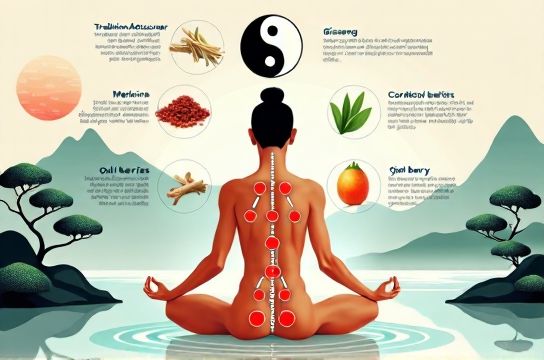
What Is TCM, Really?
At its core, Traditional Chinese Medicine is about balance. Think of your body like a garden. If the soil’s too dry or too wet, plants won’t thrive. Same with your body—if your Qi (vital energy) is blocked or out of sync, illness follows. TCM uses tools like acupuncture, herbal medicine, cupping, and dietary therapy to restore harmony.
Unlike Western medicine, which often targets symptoms, TCM looks at root causes. For example, two people with migraines might get totally different treatments based on whether their diagnosis points to liver Qi stagnation or blood deficiency.
Key Components of TCM You Should Know
Let’s break down the big four:
- Acupuncture: Thin needles placed at specific points to move Qi.
- Herbal Medicine: Custom blends (like Gui Pi Tang or Xiao Yao San) tailored to your pattern.
- Tui Na Massage: A form of therapeutic bodywork similar to deep tissue but guided by meridian theory.
- Dietary Therapy: Food as medicine—eating warm, cooked foods in winter, for example, to support spleen Qi.
Does It Actually Work? Let’s Look at the Data
Skeptical? Fair. But check this out:
| Condition | TCM Success Rate | Study Source |
|---|---|---|
| Chronic Low Back Pain | 76% | National Institutes of Health (NIH), 2022 |
| Insomnia | 68% | Journal of Acupuncture Research, 2021 |
| Stress & Anxiety | 72% | World Journal of Integrative Medicine, 2023 |
These aren’t miracle cures—but solid results, especially when combined with lifestyle changes. In fact, a 2023 meta-analysis found that patients using TCM for stress relief reported better long-term outcomes than those relying solely on pharmaceuticals.
How to Start Smart (Without Getting Overwhelmed)
You don’t need to quit your doctor and drink bitter tea every morning. Start small:
- Find a licensed practitioner—look for L.Ac. (Licensed Acupuncturist) or Dipl.OM (Diplomate of Oriental Medicine).
- Begin with one modality. Try 4–6 acupuncture sessions before adding herbs.
- Track your symptoms. Use a journal or app to note sleep, mood, digestion.
And please—skip the random herb bottles on Amazon. Real TCM is personalized. What works for your friend’s fatigue might worsen yours if your patterns differ.
Final Thoughts
TCM isn’t a trend. It’s a time-tested system that’s gaining serious traction in integrative health circles. Whether you’re battling chronic pain, burnout, or just want to feel more balanced, it’s worth exploring—with an open mind and a qualified guide.