Demystifying the Meridian System in Traditional Chinese Medicine
- 时间:
- 浏览:122
- 来源:TCM1st
If you've ever tried acupuncture or dabbled in Traditional Chinese Medicine (TCM), you’ve probably heard about meridians. But what exactly are they? And why do practitioners swear by them? Let’s cut through the mysticism and break down the meridian system with real insights, backed by both ancient wisdom and modern observations.
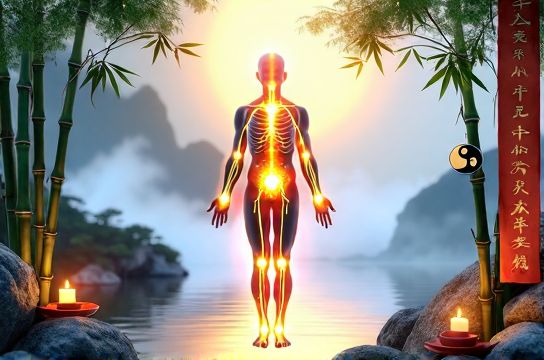
In TCM, meridians are invisible pathways that carry qi (vital energy) throughout the body. Think of them like highways for energy—12 primary routes, each linked to a major organ. When qi flows smoothly, you feel balanced. When it’s blocked? Hello, fatigue, pain, or illness.
Now, skeptics might say: “There’s no anatomical proof!” True—meridians don’t show up on MRIs. But here’s the twist: functional MRI studies have found that acupuncture points activate specific brain regions. Interesting, right?
Let’s look at some key meridians and their roles:
| Meridian | Associated Organ | Common Issues if Blocked | Peak Flow Time (TCM Clock) |
|---|---|---|---|
| Lung | Lungs | Respiratory issues, grief | 3–5 AM |
| Large Intestine | Colon | Constipation, emotional rigidity | 5–7 AM |
| Stomach | Stomach | Digestive trouble, anxiety | 7–9 AM |
| Spleen | Spleen/Pancreas | Low energy, poor focus | 9–11 AM |
| Heart | Heart | Insomnia, emotional imbalances | 11 AM–1 PM |
This circadian-like Chinese Body Clock suggests peak energy flow times—many acupuncturists use this to time treatments. For example, waking at 3 AM could signal Lung meridian imbalance, possibly tied to unresolved sadness.
How can you work with your meridians daily? Simple practices help:
• Massage along meridian lines (try the Liver meridian on inner legs)
• Practice qi gong or tai chi to move qi
• Eat according to digestive meridian peaks (big breakfast at 7–9 AM!)
Still curious? Explore how the energy pathways in TCM influence holistic health beyond just physical symptoms. It’s not magic—it’s a system refined over 2,000 years.
Bottom line: Whether you’re all-in on TCM or just meridian-curious, understanding these pathways adds depth to your wellness journey. No dogma—just options backed by centuries of observation.