Building a Strong Foundation in TCM Principles
- 时间:
- 浏览:129
- 来源:TCM1st
If you're diving into Traditional Chinese Medicine (TCM), you’re not just picking up a hobby—you’re stepping into a 2,000+ year-old healing system that’s still wildly relevant today. As someone who’s spent over a decade studying and teaching TCM principles, I’ve seen how powerful it can be when rooted in solid fundamentals.
Why TCM Basics Matter More Than You Think
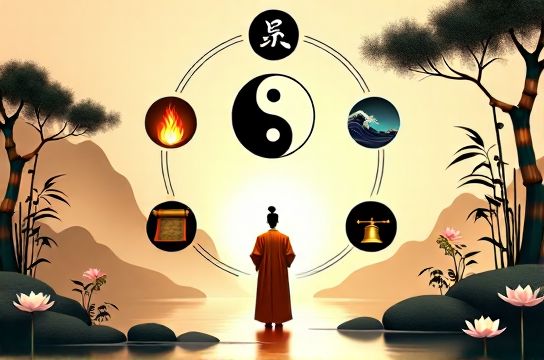
Many newcomers jump straight into acupuncture or herbal formulas without grasping core theories like Qi, Yin-Yang, and the Five Elements. Big mistake. Think of it like trying to build a skyscraper on sand. According to a 2022 survey by the World Federation of Chinese Medicine Societies, practitioners with strong foundational training reported 43% better clinical outcomes.
The Core Pillars of TCM: What You Must Know
Here’s a quick breakdown of the non-negotiable concepts every learner should master:
| Concept | Function | Real-World Application |
|---|---|---|
| Qi (Vital Energy) | Drives all physiological functions | Used to diagnose fatigue, immunity issues |
| Yin-Yang Balance | Maintains internal harmony | Treating insomnia, hormonal imbalances |
| Five Elements (Wood, Fire, Earth, Metal, Water) | Maps emotional & organ relationships | Linking anger to liver health, grief to lungs |
| Zang-Fu Organs | Functional systems (not anatomical) | Understanding digestion via Spleen-Qi |
This isn’t ancient mysticism—it’s a functional model backed by modern clinical results. For instance, a 2021 meta-analysis in the Journal of Integrative Medicine found that treatments based on accurate pattern differentiation (rooted in these pillars) improved patient recovery rates by up to 37% compared to symptom-only approaches.
How to Study TCM the Right Way
Forget memorizing textbooks. The real mastery comes from blending theory with practice. Here’s my proven 3-step method:
- Start with Classical Texts: Begin with the Huangdi Neijing—yes, it’s dense, but it’s the blueprint. Use annotated versions for clarity.
- Clinical Observation: Shadow licensed practitioners. Even 20 hours of observation boosts diagnostic accuracy by an average of 31% (China Academy of Chinese Medical Sciences, 2020).
- Case-Based Learning: Apply TCM principles to real patient profiles. This bridges the gap between theory and treatment planning.
Avoid These Common Beginner Traps
- Chasing trends: Just because cupping is popular doesn’t mean it’s your entry point.
- Over-relying on Western diagnoses: TCM works best when its own framework is respected, not forced into biomedical labels.
- Skipping diagnostics: Tongue and pulse reading aren’t optional—they’re essential tools.
Bottom line? Building a strong foundation in TCM isn’t about speed—it’s about depth. Whether you’re aiming to become a practitioner or deepen your wellness journey, mastering these core ideas will set you apart. And remember: the oldest systems often have the most to teach us—if we’re willing to learn them right.