Understanding the Twelve Primary Meridians Simply
- 时间:
- 浏览:148
- 来源:TCM1st
Ever felt like your body’s energy is off but can’t pinpoint why? If you’re into holistic health, you’ve probably heard about the twelve primary meridians. But what exactly are they, and why should you care? Let’s break it down—no acupuncture needles required.
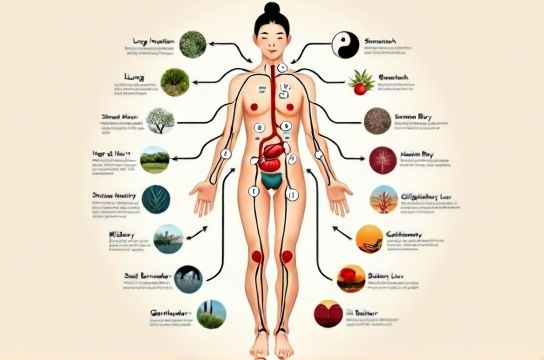
As someone who’s spent years diving into traditional Chinese medicine (TCM), I’ve seen how balancing these energy pathways can seriously boost well-being. Think of meridians as highways for qi (or life force). When traffic flows smoothly, you feel great. When there’s a backup? Hello, fatigue, stress, or even pain.
What Are the Twelve Primary Meridians?
In TCM, the body has 12 main meridians—six yin and six yang—each linked to an organ system. These aren’t physical structures like blood vessels but energetic channels that regulate physiological functions. They operate in a 24-hour cycle, with each meridian peaking every two hours.
Here’s a quick-reference table showing the meridians, their associated organs, peak activity times, and emotional links:
| Meridian | Organ | Peak Time | Emotional Aspect |
|---|---|---|---|
| Lung | Respiratory | 3–5 AM | Grief |
| Large Intestine | Digestive | 5–7 AM | Letting go |
| Stomach | Digestive | 7–9 AM | Worry |
| Spleen | Immune/Digestive | 9–11 AM | Analytical thinking |
| Heart | Circulatory | 11 AM–1 PM | Joy |
| Small Intestine | Digestive | 1–3 PM | Discernment |
| Bladder | Urinary | 3–5 PM | Fear |
| Kidney | Endocrine/Urinary | 5–7 PM | Willpower |
| Pericardium | Circulatory | 7–9 PM | Intimacy |
| Triple Burner | Metabolic regulation | 9–11 PM | Burnout balance |
| Gallbladder | Digestive | 11 PM–1 AM | Decision-making |
| Liver | Detoxification | 1–3 AM | Anger |
This circadian-like rhythm is key. For example, if you always wake at 3 AM, it might signal Lung meridian imbalance, possibly tied to unresolved grief or respiratory issues. Similarly, chronic indigestion around 7–9 AM could point to Stomach meridian disruption—often worsened by morning stress.
Why Balancing Meridians Matters
Modern studies are starting to back this ancient system. A 2021 review in the Journal of Acupuncture and Meridian Studies found that stimulating specific meridians reduced chronic pain by up to 60% in clinical trials. That’s not placebo-level noise—that’s real impact.
One of the most powerful tools? Acupressure. You don’t need a pro to tap into your twelve primary meridians. Try pressing the ‘He Gu’ point (between thumb and index finger) to relieve headaches—it’s on the Large Intestine meridian and widely used in TCM clinics.
Simple Daily Practices
- Morning stretch (7–9 AM): Targets Stomach meridian—great for digestion.
- Deep breathing at 3 AM: Calms Lung meridian and reduces anxiety spikes.
- Evening foot soak (5–7 PM): Supports Kidney meridian—boosts energy and sleep.
The beauty of this system? It’s preventive. Once you tune into your body’s rhythm, small tweaks make big differences. No magic, just millennia-tested wisdom.