Introducing Meridian Clocks to Daily Wellness Routines
- 时间:
- 浏览:153
- 来源:TCM1st
If you’ve ever wondered why you suddenly feel energized at 3 a.m. or crash right after lunch, the answer might be hiding in your body’s meridian clocks. Rooted in Traditional Chinese Medicine (TCM), the meridian clock isn’t a physical timepiece—it’s a 24-hour energy map showing when each organ system is most active. As someone who’s tested everything from circadian rhythm hacks to biohacking wearables, I can tell you this ancient tool still holds serious value—especially when blended with modern wellness routines.
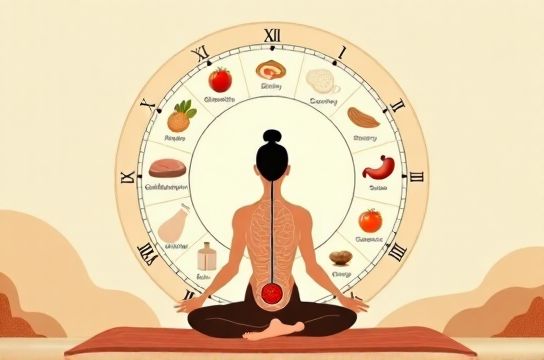
The core idea? Your body doesn’t work evenly around the clock. Instead, energy (or qi) flows through 12 major meridians, spending roughly two hours in each organ system. When a meridian is active, that organ functions at peak efficiency—and disruptions during its prime time may lead to long-term imbalance.
Take the liver meridian, for example. It’s most active between 1 a.m. and 3 a.m. Ever wake up wide awake during those hours? TCM says it could signal liver stress—often linked to emotions like anger or poor detox habits. Supporting your liver during its peak window (say, by sleeping deeply) can improve everything from skin clarity to mood stability.
Here’s a quick breakdown of the full meridian cycle:
| Time | Meridian | Key Functions | Wellness Tip |
|---|---|---|---|
| 3–5 a.m. | Lung | Respiration, immunity | Breathe deeply; avoid early stress |
| 5–7 a.m. | Large Intestine | Elimination, detox | Hydrate & stretch upon waking |
| 7–9 a.m. | Stomach | Digestion, nutrient absorption | Eat a hearty breakfast |
| 9–11 a.m. | Spleen | Energy production, metabolism | Avoid sugar crashes with protein |
| 11 a.m.–1 p.m. | Heart | Circulation, mental clarity | Focus on important tasks now |
| 1–3 p.m. | Small Intestine | Nutrient separation, focus | Light lunch; minimize distractions |
Now, you don’t need to overhaul your life overnight. Start small: align meals with the stomach meridian (7–9 a.m. and 1–3 p.m.) and prioritize sleep during liver time. One study published in the *Journal of Acupuncture and Meridian Studies* found that participants who adjusted routines based on meridian timing reported better sleep quality and digestion within just four weeks.
Another pro tip: Use meridian insights to time workouts. The gallbladder meridian (9–11 p.m.) governs decision-making and courage—so evening movement can actually support emotional balance. Try gentle yoga or walking post-dinner to harmonize energy flow.
Bottom line? While Western medicine focuses on isolated systems, the meridian clock offers a holistic lens. Whether you're battling fatigue, bloating, or brain fog, syncing with your body’s natural rhythm could be the missing piece. Give it two weeks—you might just reset your wellness game from the inside out.