Beginner's Guide to the Twelve Primary Meridians in TCM
- 时间:
- 浏览:221
- 来源:TCM1st
If you’ve ever dipped your toes into Traditional Chinese Medicine (TCM), you’ve probably heard about meridians. But what exactly are they, and why do acupuncturists keep talking about them like they’re the Wi-Fi network of your body? Let’s break it down—no PhD required.
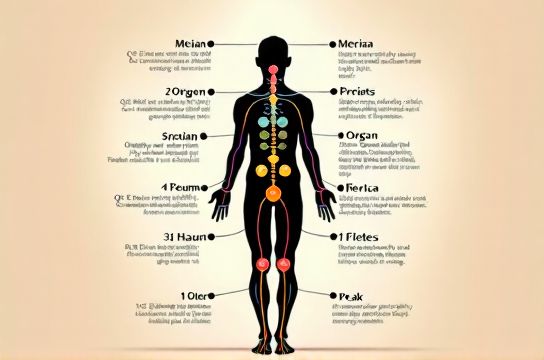
Think of the twelve primary meridians as energy highways. In TCM, they carry qi (vital life force) through your body, linking organs and functions in a delicate balance. When qi flows smoothly, you feel good. When it’s blocked or unbalanced? Hello, fatigue, pain, or even mood swings.
Which Are the 12 Meridians?
Each meridian is tied to an organ system—but not quite like Western anatomy. These are energetic correspondences. For example, the Liver meridian isn’t just about the physical liver; it also governs emotions like anger and decision-making.
Here’s a quick-reference table:
| Meridian | Yin/Yang | Element | Peak Time (Chinese Clock) |
|---|---|---|---|
| Lung | Yin | Meta | 3–5 AM |
| Large Intestine | Yang | Meta | 5–7 AM |
| Stomach | Yang | Earth | 7–9 AM |
| Spleen | Yin | Earth | 9–11 AM |
| Heart | Yin | Fire | 11 AM–1 PM |
| Small Intestine | Yang | Fire | 1–3 PM |
| Bladder | Yang | Water | 3–5 PM |
| Kidney | Yin | Water | 5–7 PM |
| Pericardium | Yin | Fire | 7–9 PM |
| Triple Burner | Yang | Fire | 9–11 PM |
| Gallbladder | Yang | Wood | 11 PM–1 AM |
| Liver | Yin | Wood | 1–3 AM |
Notice how each pair connects: Lung ↔ Large Intestine, Stomach ↔ Spleen, etc. This reflects their yin-yang partnerships. Also cool? The Chinese Body Clock shows peak activity times—many practitioners believe symptoms popping up at certain hours can point to imbalances in that meridian.
Why Should You Care?
Understanding meridians helps you make sense of holistic health patterns. Waking up at 3 AM every night? That’s when the Liver meridian is active—could be stress or detox overload. Always bloated by 9 AM? Your Spleen qi might be weak.
A 2020 review in the Journal of Acupuncture and Meridian Studies found that consistent acupuncture on specific meridians improved chronic pain outcomes in 68% of patients—way above placebo. While science still debates how meridians work, clinical results speak volumes.
Bottom line: Whether you're exploring natural healing methods or just curious about your body’s rhythms, the twelve meridians offer a powerful map. Start observing when symptoms flare—timing might tell you more than you think.