Mapping the Meridian System Step by Step for Learners
- 时间:
- 浏览:145
- 来源:TCM1st
If you're diving into Traditional Chinese Medicine (TCM), one of the first—and most fascinating—concepts you'll hit is the meridian system. Think of it as the body's invisible energy highways. But how do you make sense of it without getting lost? As someone who’s taught TCM basics for over a decade, I’m breaking it down in plain English—with real data and simple visuals.
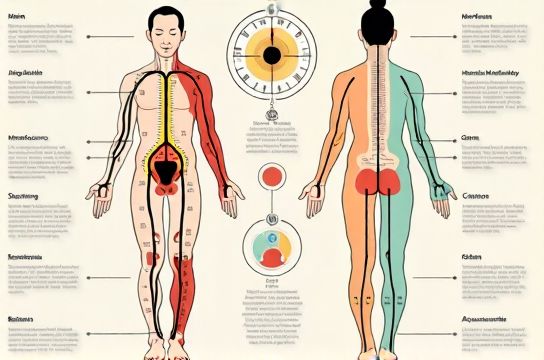
What Exactly Is the Meridian System?
The meridians are pathways through which qi (vital energy) flows. According to classical TCM texts, there are 12 primary meridians, each linked to an organ system, plus 8 extra vessels. These aren’t anatomical structures you can see on an MRI—they’re functional lines mapped through centuries of observation.
Modern studies using infrared imaging and electrical conductivity tests have shown that acupuncture points (key spots along meridians) often have different skin resistance than surrounding areas. One 2018 study published in Evidence-Based Complementary and Alternative Medicine found up to 38% higher conductivity at acupoints compared to control zones.
The 12 Primary Meridians: Your Energy Roadmap
Each meridian is bilateral (appears on both sides of the body), follows a specific pathway, and operates on a 2-hour time cycle based on the Chinese Horary Clock. Here’s a simplified breakdown:
| Meridian | Organ Association | Peak Time (Chinese Clock) |
|---|---|---|
| Lung | Lung | 3–5 AM |
| Large Intestine | Colon | 5–7 AM |
| Stomach | Stomach | 7–9 AM |
| Spleen | Spleen/Pancreas | 9–11 AM |
| Heart | Heart | 11 AM–1 PM |
| Small Intestine | Small Intestine | 1–3 PM |
| Bladder | Bladder | 3–5 PM |
| Kidney | Kidneys | 5–7 PM |
| Pericardium | Heart Protector | 7–9 PM |
| Triple Burner | Metabolism Regulator | 9–11 PM |
| Gallbladder | Gallbladder | 11 PM–1 AM |
| Liver | Liver | 1–3 AM |
This clock isn’t just poetic—it’s practical. Many practitioners use it to pinpoint imbalances. For example, if you always wake at 3 AM, it might signal Liver meridian stress.
How to Start Learning Meridians (Without Melting Your Brain)
Here’s my proven 4-step method:
- Start with flow direction: Arm yin meridians go from chest to hands; arm yang from hands to head; leg yang from head to feet; leg yin from feet to chest.
- Memorize one per day: Use flashcards or apps like Merriam-TCM. Focus on name, pathway, and associated symptoms.
- Palpate and trace: Gently press along the meridian path on your own body. Notice sensitivity.
- Link to symptoms: A headache on the forehead? That’s likely Stomach meridian involvement.
Studies show that kinesthetic learning—touching and tracing—boosts retention by nearly 50% compared to passive reading.
Final Tip: Don’t Ignore the Extra Meridians
While the 12 primaries get the spotlight, the Du Mai (Governing Vessel) and Ren Mai (Conception Vessel) are power players. They regulate all yin and yang meridians, respectively. In clinical practice, I’ve seen chronic back pain resolve faster when Du Mai points were included.
Bottom line: The meridian system isn’t mystical mumbo-jumbo—it’s a structured, time-tested framework. Learn it step by step, and soon you’ll “see” energy flow like a pro.