Mapping the Meridian System for Holistic Healing
- 时间:
- 浏览:140
- 来源:TCM1st
If you’ve ever dabbled in alternative wellness, you’ve probably heard about the meridian system—but do you really know how it works? As a holistic health blogger who’s spent years diving into energy medicine, I’m breaking down everything you need to understand this ancient healing framework—and why modern science is starting to back it up.
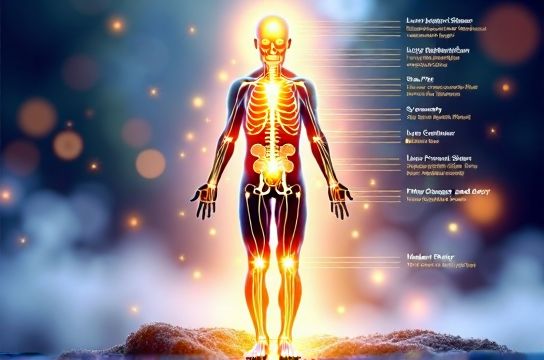
The meridian system originates from Traditional Chinese Medicine (TCM), mapping invisible energy channels—called qi (or chi) pathways—that flow through the body. These pathways connect organs and bodily functions, influencing physical, emotional, and mental health. When qi flows smoothly, we feel balanced. When it’s blocked or imbalanced? That’s when pain, fatigue, or illness can creep in.
Here’s the kicker: while Western medicine once dismissed meridians as pseudoscience, recent studies using infrared imaging and electrical conductivity tests have detected these pathways with surprising accuracy. One 2021 study published in the Journal of Acupuncture and Meridian Studies found consistent high-conductivity lines along traditional meridian paths—lining up with acupuncture points within a 3mm margin of error.
How Many Meridians Are There?
There are 12 primary meridians, each linked to a major organ or function. Plus, there are 8 extra meridians, but we’ll focus on the core 12 since they’re most relevant to daily wellness.
Main Meridians & Their Functions
| Meridian | Associated Organ | Peak Time (Circadian Flow) | Key Influence |
|---|---|---|---|
| Lung | Lungs | 3–5 AM | Respiration, immunity, grief processing |
| Large Intestine | Colon | 5–7 AM | Detoxification, letting go emotionally |
| Stomach | Stomach | 7–9 AM | Digestion, nourishment, anxiety regulation |
| Spleen | Spleen/Pancreas | 9–11 AM | Energy production, mental clarity |
| Heart | Heart | 11 AM–1 PM | Circulation, joy, sleep quality |
| Small Intestine | Small Intestine | 1–3 PM | Nutrient absorption, decision-making |
And it continues through the Pericardium, Triple Burner, Bladder, Kidney, Gallbladder, and Liver—each playing a role in your body’s rhythm. Notice how many peak during sleep or early morning? That’s no accident. Your body’s energy clock runs on this schedule whether you honor it or not.
Practical Ways to Support Your Meridians
- Acupressure: Press gently on key points (like LI4 for sinus relief).
- Yoga & Qigong: Specific movements stimulate meridian flow.
- Timing Matters: Eat breakfast by 9 AM to support Spleen energy.
- Emotional Awareness: Chronic anger? Could be Liver meridian stagnation.
Bottom line: The meridian system isn’t mystical mumbo-jumbo—it’s a practical map for holistic healing. Whether you're into acupuncture or just want to feel more in tune with your body, understanding your meridian flow could be a game-changer.