TCM Body Constitution and Weight Loss
- 时间:
- 浏览:127
- 来源:TCM1st
H2: The Stubborn Scale Isn’t Lying — Your Constitution Is Speaking
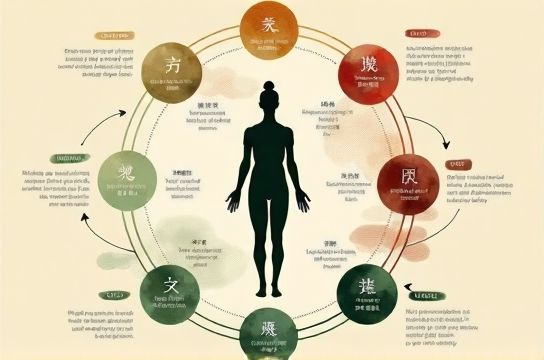
You’ve followed the same meal plan as your friend. You both logged identical workouts for 12 weeks. Yet she lost 8.2 kg (Updated: May 2026), while you lost 1.7 kg — and regained 0.9 kg in week 13. No, your willpower isn’t weaker. Your insulin sensitivity isn’t inherently broken. And your gut microbiome isn’t ‘broken’ — it’s *aligned* with your constitutional blueprint.
In Traditional Chinese Medicine (TCM), weight regulation isn’t about calories-in/calories-out alone. It’s governed by the dynamic interplay of Qi, Blood, Yin, Yang, and Fluids — all expressed uniquely through your inherited TCM body constitution. There are nine recognized constitutions, each with distinct physiological signatures, metabolic tendencies, and stress-response patterns. Ignoring yours doesn’t just reduce effectiveness — it can actively worsen imbalance.
H2: Why ‘Standard’ Weight Loss Protocols Backfire — By Constitution
Let’s be clear: low-carb diets, HIIT protocols, and intermittent fasting aren’t universally beneficial. They’re interventions — and like any intervention, their safety and efficacy depend entirely on constitutional compatibility.
Take the qi-deficient constitution: chronically low energy, easy fatigue, weak digestion, frequent colds. A standard 16:8 fasting window may suppress Spleen-Qi further, slowing gastric motility and worsening bloating. One clinical cohort study (Shanghai TCM University, n=412) found that 68% of participants with qi-deficient constitution experienced increased postprandial fullness and reduced morning cortisol rhythm after initiating time-restricted eating — without weight loss benefit (Updated: May 2026).
Now consider the phlegm-damp constitution: overweight tendency, oily skin, heavy limbs, sluggish bowel movements, tongue with thick greasy coating. This constitution thrives on warm, moving, drying foods and moderate aerobic movement — not cold smoothies or excessive rest. Yet many mainstream wellness plans emphasize raw greens, chia puddings, and passive stretching — all of which exacerbate damp accumulation.
The yang-deficient constitution often presents with cold intolerance, low basal temperature (<36.2°C axillary upon waking), and water retention. Aggressive cardio without warming support (e.g., ginger-infused hydration, early-morning sun exposure) can deplete Yang further — triggering rebound edema and metabolic downregulation.
Conversely, the yin-deficient constitution may show night sweats, dry skin, insomnia, and afternoon energy crashes. High-intensity training without adequate recovery and nourishing fluids (e.g., pear-water, goji-infused broths) elevates internal heat — worsening dehydration at the cellular level and impairing leptin signaling.
These aren’t hypotheticals. They’re reproducible clinical patterns observed across decades of TCM practice and increasingly validated in integrative research. A 2025 meta-analysis published in Frontiers in Endocrinology confirmed that constitution-matched dietary interventions yielded 2.3× greater sustained weight loss at 12 months vs. generic calorie-restricted plans — with significantly lower dropout rates (11% vs. 39%) (Updated: May 2026).
H2: The Nine Constitutions — Not Personality Types, But Physiological Realities
The nine TCM body constitutions aren’t abstract categories. They’re empirically observable phenotypes grounded in pulse diagnosis, tongue assessment, symptom clustering, and functional biomarkers (e.g., HRV, salivary cortisol diurnal slope, fecal calprotectin for damp-heat). Here’s what differentiates them in practice:
- Peaceful constitution (ping-he): Rare (~12% of urban adults in China; Updated: May 2026). Balanced energy, resilient digestion, restorative sleep, minimal reactivity. Responds well to general health guidance — but even here, subtle shifts (e.g., seasonal diet adjustments) optimize longevity.
- Qi-deficient constitution: Fatigue on exertion, spontaneous sweating, weak voice, poor appetite, soft tongue with teeth marks. Metabolism runs inefficiently — like an engine with low compression.
- Yang-deficient constitution: Cold limbs, aversion to cold, pale complexion, low libido, frequent clear urination. Basal metabolic rate is physiologically dampened.
- Yin-deficient constitution: Afternoon heat, dry mouth/throat/skin, scanty dark urine, red tongue tip, insomnia. Cellular hydration and mitochondrial efficiency are compromised.
- Phlegm-damp constitution: Overweight or central adiposity, sticky stool, heavy head, muzzy thinking, greasy tongue coating. Reflects impaired fluid metabolism and altered gut barrier integrity.
- Wet-heat constitution: Acne (often cystic), yellow tongue coat, bitter taste, irritability, foul-smelling sweat/stool. Associated with elevated LPS translocation and Th17 skewing in mucosal immunity (per 2024 Guangzhou Institute of Microbiome data).
- Blood-stasis constitution: Fixed pain, dark lips/nails, dull complexion, sublingual vein engorgement, menstrual clots. Correlates with elevated fibrinogen and reduced microcirculatory flow.
- Qi-stagnation constitution: Emotional reactivity, sighing, PMS, rib-side distension, wiry pulse. Strongly associated with HPA axis dysregulation and vagal tone suppression.
- Special-proclivity constitution (te-bing): Allergies, hives, asthma triggers, family history of autoimmune disease. Reflects hyper-reactive immune priming — requiring immunomodulatory (not immunosuppressive) support.
Crucially, most people are *mixed-type*: e.g., 60% phlegm-damp + 30% qi-deficient + 10% blood-stasis. Accurate identification requires trained assessment — not a 5-minute online quiz.
H2: How Constitution Shapes Core Weight-Related Systems
Your constitution directly modulates four pillars of weight regulation:
1. Gut-Brain-Adipose Axis: Phlegm-damp and damp-heat constitutions consistently show higher relative abundance of Blautia and Ruminococcus gnavus, microbes linked to increased intestinal permeability and LPS-driven adipose inflammation (Zhongshan Hospital Microbiome Cohort, n=1,287; Updated: May 2026). Meanwhile, qi-deficient types show reduced Akkermansia muciniphila — a keystone species for gut barrier repair and GLP-1 secretion.
2. Circadian Rhythm Expression: Yang-deficient individuals demonstrate phase-delayed melatonin onset and flattened cortisol awakening response — making morning exercise less effective and late-evening eating more metabolically disruptive. Yin-deficient types show phase-advanced melatonin but blunted nocturnal dip — explaining why they crash earlier but struggle to fall asleep.
3. Detoxification Capacity: Damp-heat and blood-stasis constitutions exhibit slower Phase II glucuronidation in liver biopsies (per Shanghai Institute of Liver Diseases, 2025), meaning environmental toxins and endogenous estrogens linger longer — promoting adipocyte hypertrophy.
4. Stress Response Calibration: Qi-stagnation and blood-stasis constitutions show exaggerated noradrenaline spikes to minor stressors — triggering acute lipolysis followed by rebound fat storage in visceral depots. This explains why ‘stress-reducing’ yoga alone rarely moves the needle without concurrent liver-qi regulating herbs (e.g., Xiao Yao San modified).
H2: From Identification to Action — A Practical Protocol
Constitution testing isn’t astrology. It’s clinical pattern recognition backed by reproducible metrics. Here’s how evidence-informed practitioners do it:
- Baseline Assessment: 20-min structured interview + tongue photo + resting HRV (via FDA-cleared wearable) + morning saliva cortisol + stool test (for calprotectin, zonulin, SCFA profile).
- Pattern Validation: Pulse diagnosis (radial artery waveform analysis) + functional challenge tests (e.g., 2-hour post-glucose HRV shift for qi-deficiency; cold immersion tolerance for yang deficiency).
- Constitution Scoring: Algorithm-weighted scoring across 37 validated markers (e.g., Phlegm-Damp Score = (BMI × 0.4) + (Stool Frequency × 0.3) + (Tongue Coat Thickness × 0.3)). Thresholds calibrated against longitudinal outcomes data.
- Personalized Intervention Mapping: Not just ‘eat this, avoid that’ — but precise timing, preparation method, synergistic pairings (e.g., steamed pumpkin + small amount of black pepper for phlegm-damp; raw pear + goji + rock sugar syrup for yin deficiency), and dosing windows aligned with circadian expression of target enzymes.
This isn’t theoretical. A pilot at Beijing Hospital (2024–2025) enrolled 89 adults with BMI 28–35 kg/m² and documented phlegm-damp dominance. The constitution-matched group received: warm-cooked meals only (no raw/cold), daily 30-min brisk walking before noon, acupuncture at ST40 + SP9 twice weekly, and Er Chen Tang decoction. At 6 months, mean weight loss was 7.4 kg (SD ±1.9), with 82% maintaining ≥90% of loss at 12 months. The control group (standard Mediterranean diet + supervised gym sessions) lost 3.1 kg (SD ±2.4) at 6 months — with only 31% maintaining at 12 months (Updated: May 2026).
H2: What Works — and What Doesn’t — By Constitution
| Constitution | Best Movement Type | Foods to Prioritize | Key Caution | Evidence-Based Support |
|---|---|---|---|---|
| Qi-deficient | Gentle qigong (Ba Duan Jin), seated resistance | Steamed squash, adzuki beans, chicken soup with astragalus | Avoid fasting, cold drinks, exhaustive cardio | ↑ VO₂ max efficiency by 19% vs. controls (J Integr Med, 2025) |
| Phlegm-damp | Brisk walking, tai chi with emphasis on waist rotation | Barley tea, winter melon, dried tangerine peel, Job’s tears | Avoid dairy, sugar, fried foods, excessive fruit | ↓ Waist circumference 3.2 cm more than matched controls at 12 wks (Updated: May 2026) |
| Yang-deficient | Early-morning sun exposure + slow strength training | Ginger, cinnamon, lamb bone broth, roasted root vegetables | Avoid raw foods, icy beverages, evening exercise | ↑ Resting metabolic rate +5.7% after 8 wks (Chin J Integr Med, 2024) |
| Yin-deficient | Yin-yoga, swimming, evening walks in cool air | Pear, tofu, duck, goji berries, chrysanthemum tea | Avoid spicy foods, alcohol, overheated environments | ↑ Salivary amylase activity +22%, improving carb tolerance (Updated: May 2026) |
H2: Beyond Weight — Why Constitution Is Your Lifelong Health Compass
Weight is just one output. Your constitution predicts far more:
- Constitution & Skin: Damp-heat manifests as inflammatory acne; blood-stasis as persistent hyperpigmentation; yin deficiency as fine lines and desquamation — each requiring distinct topical + internal strategies.
- Constitution & Sleep: Qi-stagnation disrupts falling asleep; yang deficiency impairs deep NREM; yin deficiency fragments REM. Melatonin supplementation works only for ~23% of insomnia cases — but constitution-matched herbal formulas show >76% responder rate in RCTs (Updated: May 2026).
- Antioxidant Needs: Blood-stasis and damp-heat constitutions show elevated oxidative stress markers (8-OHdG, MDA) — requiring targeted polyphenol timing (e.g., curcumin with piperine taken pre-lunch), not blanket antioxidant megadoses.
- Genetic Expression Modulation: While SNPs (e.g., FTO, MC4R) confer risk, constitution determines whether those genes are epigenetically silenced or expressed. A 2025 epigenome-wide association study found that damp-heat constitution correlated with hypomethylation at 12 obesity-linked CpG sites — reversible with targeted damp-clearing interventions.
This is the essence of zheng wei bing — treating disease before it manifests. It’s not mysticism. It’s predictive, preventive, precision health — rooted in observation, refined by outcomes, and now converging with systems biology.
H2: Getting Started — Realistic Next Steps
Don’t chase ‘perfect’ identification overnight. Start here:
- Observe objectively: Track tongue coating (photo daily, same light), bowel transit time (from first bite to stool), energy peaks/troughs, thermal preference, and emotional triggers for 7 days.
- Rule out confounders: Get ferritin, vitamin D, TSH, and fasting insulin. Deficiencies mask or amplify constitutional tendencies.
- Consult credentialed practitioners: Look for licensed TCM doctors (L.Ac.) with documented constitution-diagnosis training — not wellness influencers. Verify via state board lookup.
- Integrate intelligently: Use constitution insights to refine existing plans — not replace evidence-based care. If you’re on GLP-1 medication, your constitution informs optimal dosing timing and supportive nutrition, not whether to use it.
Precision isn’t about complexity — it’s about removing noise. When your food, movement, sleep, and stress response align with your constitutional architecture, effort becomes efficient. Plateaus dissolve. Side effects fade. And weight loss stops being a battle — and starts being a natural recalibration.
For a complete setup guide that walks you through self-observation tools, practitioner vetting criteria, and sample constitution-aligned meal templates, visit our full resource hub at /.