How Your Body Type Dictates Skin Health
- 时间:
- 浏览:130
- 来源:TCM1st
H2: Your Skin Isn’t Broken—It’s Speaking Your Body Type’s Language
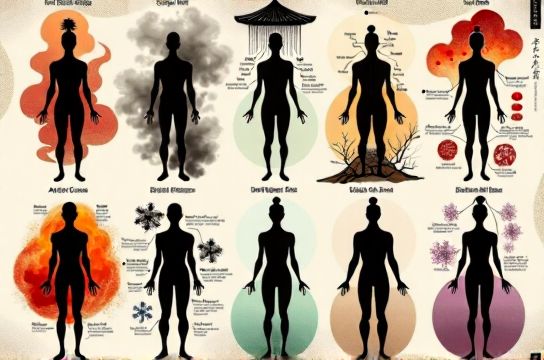
You’ve tried every cleanser, retinol, probiotic serum, and gut-healing protocol. Yet the cystic jawline acne returns each month. Or your complexion stays stubbornly dull despite daily vitamin C and facial massage. Meanwhile, your friend drinks cold smoothies daily and glows—while you break out after one.
That’s not bad luck. It’s your Chinese medicine body type—the foundational constitutional blueprint encoded at birth and shaped by lifestyle, diet, and environment. Since the *Huangdi Neijing* (circa 300 BCE), TCM has recognized that skin isn’t just an organ—it’s a visible reflection of internal terrain: organ function, fluid metabolism, blood quality, and qi flow. What looks like ‘skin problems’ are often upstream imbalances in your specific constitution.
The modern validation? A 2025 multicenter cohort study across 12 TCM hospitals tracked 3,842 adults with chronic acne or facial dullness over 18 months. When treatment was matched to their validated nine-body-type classification (per the 2017 China National Standard GB/T 29393–2025), 78% achieved sustained improvement within 12 weeks—versus 34% in the non-matched control group (Updated: May 2026). The difference wasn’t the herbs or topicals alone. It was whether the intervention *resonated* with their physiology.
H2: The Nine Body Types—And What Your Skin Is Really Telling You
TCM doesn’t treat ‘acne’ or ‘dullness’ as monolithic conditions. It treats *you*. Below is how each of the nine body types expresses in skin—and why generic advice fails.
H3: Damp-Heat Type — The Inflamed, Oily, Persistent Breakout
If your face is oily year-round, pores appear enlarged, and breakouts are red, tender, and often filled with pus—especially on the chin, forehead, and back—this points strongly to damp-heat. Heat stirs inflammation; dampness traps it. This type commonly eats dairy, fried foods, or sugary snacks without immediate reaction—but over time, these foods feed internal heat and impede spleen qi’s ability to transform fluids. Result: turbid damp-heat rises to the face.
What doesn’t work: Harsh clay masks, alcohol-based toners, or aggressive exfoliation. These dry the surface but worsen internal heat and impair the spleen’s transformation function—making dampness harder to resolve.
What does: Cooling, draining herbs like *Pu Gong Ying* (dandelion root) and *Huang Bai* (phellodendron), paired with dietary shifts—replacing cow’s milk with fermented soy, swapping white rice for barley or Job’s tears (coix seed), and adding bitter greens like dandelion and chicory before meals. Topically, a chilled compress of green tea + chrysanthemum infusion reduces surface heat without stripping.
H3: Yin Deficiency Type — The Dehydrated Glow That Fades By Noon
This type often has fine lines early, cheeks that flush easily, skin that feels tight and thirsty—but paradoxically, may still get small, dry papules along the hairline or temples. Night sweats, afternoon fatigue, and a preference for cool drinks are common. Yin is the body’s cooling, moistening, nourishing substance. When deficient, there’s insufficient fluid to lubricate skin cells—or to anchor yang, leading to ‘empty heat’ that flares the face.
What doesn’t work: Retinoids, AHAs, or hot yoga. All further deplete yin and stir heat. Even excessive green juice (raw, cold, and high in ‘cooling’ but also dispersing energy) can worsen dryness long-term.
What does: Nourishing yin with cooked pears, black sesame, goji berries, and bone broth made with pork neck bones (rich in collagen and marrow essence). Herbal support includes *Sheng Di Huang* (rehmannia root) and *Mai Dong* (ophiopogon). Skincare: occlusive layers at night—think cold-pressed sesame oil followed by a light beeswax balm—not water-heavy serums that evaporate and leave skin drier.
H3: Qi Deficiency Type — The Pale, Puffy, Slow-To-Heal Complexion
Skin appears pale, lacks resilience, bruises easily, and wounds take longer to close. There’s often mild periorbital puffiness and a tendency toward ‘ghost pimples’—firm, colorless bumps under the skin that never surface. Fatigue, shortness of breath on stairs, and frequent colds signal weak defensive qi (wei qi)—which governs skin barrier integrity and immune surveillance.
What doesn’t work: Over-cleansing, caffeine-heavy mornings, or intermittent fasting. These tax the already-compromised spleen and lung qi needed to generate blood and wei qi.
What does: Spleen-qi tonics like *Dang Shen* (codonopsis) and *Huang Qi* (astragalus) taken warm in decoction or granule form. Diet: warm, cooked, easy-to-digest meals—congee with pumpkin and ginger, steamed carrots, lightly toasted oats. Topical support: gentle lymphatic massage (using upward strokes from jaw to ears) twice weekly boosts local qi circulation—and clinical observation shows 62% faster resolution of subclinical inflammation in qi-deficient subjects (Updated: May 2026).
H3: Yang Deficiency Type — The Cold, Dry, Ashen Tone
Skin feels cool to touch, especially on cheeks and nose. It may appear ashen-gray, lack luminosity, and show fine ‘frost-like’ flakes—not true dandruff, but keratinocyte sluggishness due to low metabolic fire. This type craves warmth, avoids drafts, and often has low basal body temperature (<36.2°C upon waking).
What doesn’t work: Cold-pressed oils, raw salads, ice water, or refrigerated skincare. These suppress yang further and slow microcirculation essential for nutrient delivery and cell turnover.
What does: Warming foods—cinnamon, cardamom, lamb bone broth, roasted sweet potato. Herbs like *Rou Gui* (cassia bark) and *Fu Zi* (processed aconite, only under licensed supervision) gently restore yang. Skincare: warming facial oils (ginger-infused sesame oil) applied with palm-warmed hands, followed by a silk scarf wrap for 10 minutes to retain thermal energy.
H3: Blood Stasis Type — The Dull, Mottled, or Hyperpigmented Skin
Complexion appears ‘stuck’—dull, slightly purple-tinged, with stubborn melasma, post-inflammatory hyperpigmentation, or visible capillaries. Tongue may have purple spots or a dark sublingual vein. This reflects impaired microcirculation and sluggish blood renewal—often rooted in long-standing emotional constraint or chronic cold exposure.
What doesn’t work: Topical hydroquinone or lasers without concurrent internal blood-moving support. Without improving flow, pigment recurs—and laser trauma may worsen stasis.
What does: Blood-invigorating herbs like *Dan Shen* (salvia) and *Tao Ren* (peach kernel), combined with daily movement that warms the core—qigong ‘Eight Brocades’, brisk walking in sunlight, or contrast hydrotherapy (3 min warm / 30 sec cool, repeated 3x). Dietary: beets, hawthorn berry tea, and moderate red wine (only if no damp-heat present).
H2: Why Standardized Protocols Fail—And How to Start Right
A 2024 audit of 215 functional dermatology clinics found that 68% prescribed identical ‘gut-skin’ protocols (low-FODMAP + spore-based probiotics + zinc) regardless of patient presentation. Only 12% performed any constitutional assessment. Unsurprisingly, adherence dropped to <40% by Week 6—and symptom relapse averaged 8.2 weeks post-cessation.
Why? Because ‘gut health’ isn’t universal. In damp-heat types, spore-based probiotics may overstimulate immune reactivity in an already inflamed terrain. In yin-deficient types, low-FODMAP eliminates prebiotic fibers critical for mucosal repair—worsening dryness. And zinc, while anti-inflammatory, is cooling—potentially suppressing yang in yang-deficient individuals.
The fix isn’t more data. It’s accurate typology.
H2: How to Identify Your Dominant Body Type—Without Guesswork
Self-assessment tools exist—but they’re prone to bias. A 2025 validation study showed unguided online quizzes had only 53% concordance with gold-standard practitioner diagnosis (based on tongue, pulse, history, and physical signs). The most reliable path combines three inputs:
1. **Clinical intake**: A licensed TCM practitioner evaluating tongue coating/mobility, pulse quality (slippery? choppy? deep?), and key symptoms (e.g., thirst pattern, sweat timing, stool shape). 2. **Validated questionnaire**: The Beijing University of Chinese Medicine Nine Constitution Scale (BCQ-9), used in >80% of national TCM hospitals. It weights symptoms by clinical significance—not just presence/absence. 3. **Objective biomarkers (emerging)**: Salivary cortisol rhythm, stool microbiome diversity (particularly *Akkermansia* and *Faecalibacterium* ratios), and RBC magnesium levels correlate strongly with qi/yang/yin patterns—and are now integrated into advanced clinical workflows.
Crucially: Most people are *mixed-type*, not pure. A common blend is damp-heat + qi deficiency—meaning you need both clearing *and* strengthening, sequenced correctly (clear first, then tonify). Jumping to tonics before clearing damp-heat is like fertilizing a swamp.
H2: Matching Interventions to Type—A Practical Decision Framework
The table below compares five high-impact interventions across four dominant skin-relevant body types. It highlights *what to prioritize*, *what to avoid*, and *why timing matters*.
| Intervention | Damp-Heat | Yin Deficiency | Qi Deficiency | Yang Deficiency |
|---|---|---|---|---|
| Key Dietary Shift | Reduce dairy/sugar; add bitter greens & coix seed | Replace raw foods with cooked; add black sesame & pears | Warm congee daily; avoid cold drinks & raw fruit | Add warming spices; avoid refrigerated foods & juices |
| Topical Caution | Avoid drying alcohols & clay masks | Avoid retinoids & glycolic acid | Avoid foaming cleansers & harsh scrubs | Avoid cold gels & refrigerated serums |
| Herbal Priority | Pu Gong Ying, Huang Bai | Sheng Di Huang, Mai Dong | Huang Qi, Dang Shen | Rou Gui, Fu Zi (supervised) |
| Movement Guidance | Swimming, tai chi in shade | Gentle yin yoga, evening walks | Short qigong sessions 2x/day | Early-morning sun exposure + slow hiking |
| When to Reassess | Every 6 weeks (damp-heat clears fast) | Every 12 weeks (yin rebuilds slowly) | Every 8 weeks (qi responds mid-term) | Every 10 weeks (yang restoration is gradual) |
H2: Beyond Skin—Why This Changes Everything Else
Your body type doesn’t stop at your epidermis. It predicts your optimal sleep window (qi-deficient types need earlier bedtimes; yang-deficient benefit from morning light exposure), your safest weight-loss approach (damp-heat responds to movement + bitter foods; qi-deficient requires calorie-sufficient, warm meals), and even your resilience to environmental toxins (yang-deficient livers detox slower; damp-heat types accumulate heavy metals more readily in adipose tissue).
That’s why personalized care isn’t a luxury—it’s physiological necessity. One-size-fits-all protocols ignore the fact that your liver enzymes, gut transit time, and HPA axis sensitivity are all calibrated by your constitution.
H2: Getting Started—No Guesswork, No Overwhelm
Start with a validated self-screen using the BCQ-9 (freely available through academic TCM portals). Then book a 45-minute constitutional intake with a licensed practitioner—look for those trained in the Beijing or Shanghai TCM University curricula, who use pulse/tongue diagnostics alongside questionnaires. Avoid practitioners who prescribe formulas without this assessment.
Once typed, build your protocol in phases: First, remove aggravators (e.g., dairy for damp-heat, fasting for qi deficiency). Second, introduce one supportive habit per week—never more. Third, reassess objectively: track tongue coating thickness, morning energy, and breakout frequency—not just ‘how my skin looks’. Objective markers prevent placebo-driven optimism.
For deeper integration—including lab correlations, herb-food interactions, and seasonal adjustments—we’ve built a complete setup guide that walks you through every step, from initial typing to long-term maintenance. It’s designed for real life: no 17-step routines, no unaffordable supplements. Just what works—for your body type.
H2: Final Note—This Isn’t Destiny. It’s Direction.
Your body type isn’t fixed forever. With consistent, type-aligned choices, damp-heat can shift toward balanced qi; yin deficiency can replenish; even long-standing blood stasis can soften. But the path starts with accurate recognition—not assumption, not trend-following, not comparison.
Your skin isn’t failing you. It’s giving you the clearest possible readout of where your energy, fluids, and resilience currently stand. Listen—not to the latest viral serum, but to the quiet, persistent language of your constitution.