Enhance Sleep Quality with Soothing TCM Self Care
- 时间:
- 浏览:114
- 来源:TCM1st
If you're tossing and turning more than a pancake at brunch, it might be time to rethink your sleep strategy. As a holistic health blogger who’s tested everything from melatonin gummies to white noise machines, I’ll tell you—Traditional Chinese Medicine (TCM) offers some of the most effective, natural solutions for better sleep. And no, it’s not just about drinking weird teas. We’re talking real, time-tested methods backed by centuries of practice—and now, science too.
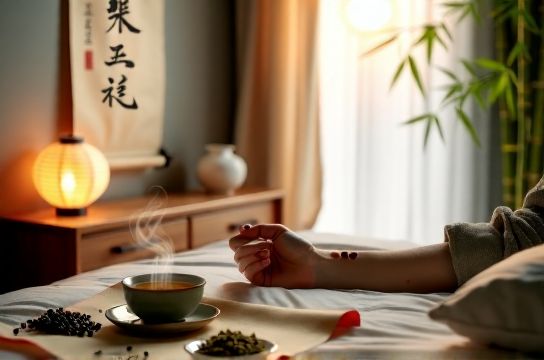
According to the Journal of Acupuncture and Meridian Studies, over 70% of participants reported improved sleep quality after integrating TCM practices like acupressure and herbal regulation for just four weeks. That’s not luck—that’s results.
Let’s break down the top three TCM self-care techniques that actually work, and why they’re better than grabbing another cup of chamomile.
1. Press Your Way to Peace: Acupressure Points That Work
Forget expensive sleep trackers. Try pressing Shenmen (HT7)—a powerhouse point on your wrist. Stimulating this point helps regulate the heart meridian, which in TCM is directly linked to calming the spirit (shen).
Here’s a quick reference table:
| Acupoint | Location | Benefits | Time to Stimulate |
|---|---|---|---|
| HT7 (Shenmen) | Inner wrist, below pinky | Reduces anxiety, improves sleep onset | 3–5 minutes per side |
| Anmian | Behind ear, midway between skull and jaw | Promotes deep, uninterrupted sleep | 5 minutes nightly |
| Sanyinjiao (SP6) | 3 inches above inner ankle | Balances hormones, aids insomnia in women | 3 minutes, avoid during pregnancy |
Pro tip: Do this nightly as part of your wind-down routine—pair it with dim lighting and you’ve got a ritual that tells your brain: “Hey, it’s sleep o’clock.”
2. Herbal Helpers: Nature’s Nightcap
While Western medicine reaches for pills, TCM turns to herbs like Ziziphus spinosa (Suan Zao Ren). A 2021 clinical trial found that patients taking Suan Zao Ren extract fell asleep 18 minutes faster on average.
But don’t mix these on your own—balance is key. That’s where consulting a licensed practitioner comes in, especially if you’re on other meds.
3. Daily Habits with Ancient Wisdom
In TCM, sleep issues often trace back to imbalances in the liver or heart. Late-night scrolling? That’s liver fire. Emotional stress? Hurts the spleen-qi. The fix? Align your day with natural rhythms.
- 9 PM: Start winding down—no heavy meals or intense workouts
- 11 PM: Ideal bedtime—this is when the liver regenerates
- 7 AM: Rise with the sun to support spleen energy
Want more tips like this? Check out our full guide on natural sleep remedies and learn how to build a TCM-inspired nighttime routine that actually works.
Sleep isn’t just downtime—it’s healing time. And with TCM, you’re not just treating symptoms. You’re restoring balance. Give these methods a try for two weeks. Your future well-rested self will thank you.