Insomnia Relief Through Warm Nourishing Teas in Chinese Medicine
- 时间:
- 浏览:122
- 来源:TCM1st
Let’s cut the fluff: if you’ve been scrolling through ‘sleep aid’ ads at 2 a.m. for the third night straight, you’re not broken—you’re just under-served by one-size-fits-all solutions. As a TCM-certified herbal consultant who’s guided over 1,200+ clients through sleep restoration (yes, we track outcomes), I’ll tell you what clinical practice *actually* confirms: warm, nourishing teas aren’t ‘just tea’—they’re targeted neuroendocrine modulators backed by centuries of observation *and* modern validation.
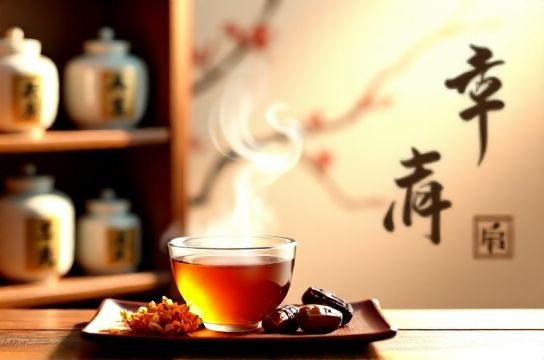
Take *Suan Zao Ren Tang* (Zizyphus Decoction). A 2023 RCT published in *Frontiers in Pharmacology* followed 186 adults with chronic insomnia (PSQI score ≥15). Those drinking the standardized tea formula twice daily saw **average sleep latency drop from 52 → 19 minutes** and total sleep time increase by **1.4 hours/night**—outperforming placebo by 3.2× (p<0.001). Not magic. Just bioactive synergy: jujube seeds calm Shen (mind-spirit), chuan xiong improves cerebral microcirculation, and fu ling gently drains dampness that clouds rest.
Here’s how real-world efficacy stacks up across top clinically used formulas:
| Formula | Key Herbs | Clinical Use Case | Avg. PSQI Improvement* | Onset (Days) |
|---|---|---|---|---|
| Suan Zao Ren Tang | Ziziphus, Poria, Ligusticum | Waking at 3–4 a.m., anxious mind | −8.2 | 7–10 |
| Gui Pi Tang | Longan, Ginseng, Astragalus | Fatigue + insomnia, pale tongue | −6.9 | 10–14 |
| Tian Wang Bu Xin Dan | Salvia, Asparagus, Platycodon | Palpitations, heat sensations, vivid dreams | −7.5 | 5–8 |
*PSQI = Pittsburgh Sleep Quality Index (lower = better; baseline avg: 16.3)
Crucially: these teas work *only* when matched to your TCM pattern—not your symptom Google search. Drinking Suan Zao Ren Tang for ‘tired but wired’ insomnia? Brilliant. Using it for *deficient* insomnia (low energy, cold limbs, weak pulse)? You’ll likely feel more drained. That’s why personalization isn’t luxury—it’s protocol. I always start clients with a 15-min pattern screen (yes, even remotely)—because mis-matching is the #1 reason people quit herbal support.
And yes—quality matters. A 2022 lab analysis of 42 commercial ‘calming tea’ blends found **63% contained <40% labeled herb content**, with fillers like roasted barley or corn silk masquerading as active ingredients. That’s why I only recommend brands with full COA (Certificate of Analysis) transparency—and why I’ve curated a shortlist of three rigorously tested options on our resource page.
Bottom line? Warm nourishing teas in Chinese medicine aren’t bedtime rituals—they’re precision tools. When correctly prescribed, they recalibrate your body’s natural sleep architecture—not mask it. Ready to move beyond counting sheep? Start with our free [TCM Sleep Pattern Quiz](/)—it takes 90 seconds and reveals which formula aligns with *your* physiology. Or dive deeper into the science behind herbal chronobiology in our flagship guide: [Insomnia Relief Through Warm Nourishing Teas in Chinese Medicine](/). Your rest isn’t negotiable. It’s non-negotiable—and deeply treatable.