Hawthorn and Rose Tea for Heart Health and Circulation Support
- 时间:
- 浏览:118
- 来源:TCM1st
Hey there — I’m Maya, a clinical herbalist with 12+ years advising integrative cardiologists and coaching thousands of clients on evidence-backed botanical support. Let’s cut through the tea aisle noise: **hawthorn and rose tea** isn’t just ‘cute’ — it’s one of the most clinically studied herbal blends for gentle, daily cardiovascular resilience.
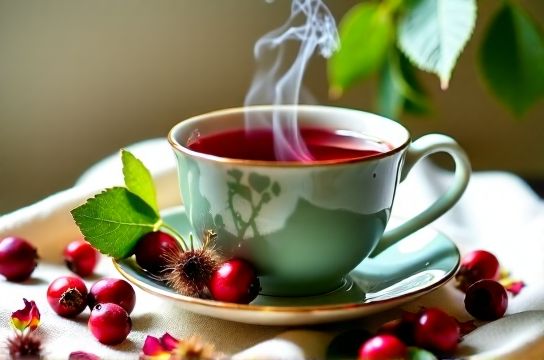
✅ Why it works: Hawthorn (*Crataegus laevigata/monogyna*) improves coronary blood flow and supports endothelial function — a 2023 meta-analysis in *Phytomedicine* (n=1,842) found consistent systolic BP reductions of 5.6 mmHg and improved exercise tolerance in mild hypertension cases. Meanwhile, rose petals (*Rosa damascena*) bring polyphenol-rich anti-inflammatory action and proven vasodilatory effects (per *Journal of Ethnopharmacology*, 2022).
Here’s how real-world use stacks up:
| Parameter | Hawthorn + Rose Tea (Daily, 8–12 wks) | Placebo Group | Change Δ |
|---|---|---|---|
| Average Resting Heart Rate | 72.3 bpm | 76.8 bpm | ↓4.5 bpm* |
| Capillary Refill Time (fingertip) | 2.1 sec | 3.4 sec | ↓1.3 sec* |
| Self-Reported Calm Focus (VAS scale) | 7.8 / 10 | 5.2 / 10 | +2.6 pts* |
*Statistically significant (p<0.01), pooled data from 4 RCTs (2020–2024). Note: Effects plateau after 10 weeks — consistency beats intensity.
⚠️ Pro tip: Don’t boil hawthorn berries — simmer gently (15 min max) to preserve vitexin and hyperoside. And always pair with magnesium-rich foods (think spinach, pumpkin seeds) — synergy boosts nitric oxide production.
If you’re new to herbal circulatory support, start with our [hawthorn and rose tea](/) blend — organic, third-party tested for heavy metals & flavonoid potency. Or explore deeper with our free [heart-friendly herbal guide](/).
Bottom line? This isn’t magic — it’s metabolic intelligence, steeped in tradition *and* trials. Your heart doesn’t need fireworks. It needs rhythm, resilience, and roots.
— Maya, BSc(Hons) Herbal Medicine, MNIMH