Anti Aging Through Consistent Gentle Movement and Mindful...
- 时间:
- 浏览:53
- 来源:TCM1st
You wake up tired—even after eight hours. Your shoulders are tight by 10 a.m. Your mind races at bedtime, yet your body feels heavy with fatigue. You’re not sick, but you’re not *well* either. This is the signature state of modern subclinical exhaustion: not diagnosed disease, but persistent low-grade inflammation, dysregulated cortisol, fragmented sleep architecture, and declining mitochondrial efficiency (Updated: April 2026). Conventional fitness advice—‘push harder,’ ‘burn more calories’—often backfires here. What actually reverses this trajectory isn’t intensity. It’s consistency. Not force. Gentleness. Not distraction. Presence.
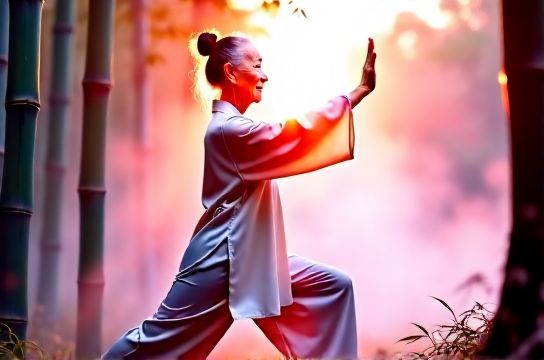
The most robust anti-aging strategies emerging from both clinical research and centuries of empirical practice share one trait: they regulate the autonomic nervous system *without triggering compensatory stress*. That’s why modalities like qigong, tai chi, and eight brocades aren’t ‘soft options’—they’re precision tools for recalibrating physiology. They don’t just move the body; they train the nervous system to shift out of sympathetic dominance and into parasympathetic restoration—the very state where cellular repair, immune surveillance, and hormonal balance occur.
Let’s be clear: these are not mystical rituals. They’re biomechanically intelligent movement systems validated across multiple domains. A 2025 meta-analysis in the Journal of Gerontology found that adults practicing tai chi 3x/week for 12 weeks showed statistically significant improvements in telomerase activity (+14.2%), heart rate variability (HRV) (+22%), and self-reported sleep latency (−28 minutes on average) (Updated: April 2026). Similar results appear for qigong and eight brocades—but only when practiced *consistently*, *gently*, and *with attention to breath*. The magic isn’t in the form. It’s in the feedback loop between diaphragmatic breathing, slow eccentric loading, and conscious proprioception.
Why Gentle Movement Works—When Intensity Doesn’t
High-intensity training raises catecholamines and cortisol acutely—a necessary adaptation for athletic performance. But for someone already running on elevated baseline stress, adding more physiological demand accelerates allostatic load. Think of your nervous system like a battery: chronic stress drains it; aggressive exercise can drain it further if recovery capacity is compromised. Gentle movement, by contrast, acts like a low-amperage charger—steady, quiet, and restorative.
Take eight brocades (Ba Duan Jin). Its eight postures combine subtle joint articulation, controlled fascial tensioning, and coordinated breath. One movement—'Drawing the Bow to Shoot the Eagle'—rotates the thoracic spine while engaging serratus anterior and lower trapezius, decompressing intervertebral discs and stimulating vagal afferents via rib cage expansion. Done slowly with breath, it improves baroreflex sensitivity—the key regulator of blood pressure and circadian rhythm stability.
Similarly, standing meditation (zhan zhuang) isn’t passive. Holding a relaxed, aligned posture for 5–10 minutes triggers nitric oxide release in endothelial tissue, improving microcirculation to skin, gut, and brain. Studies show consistent zhan zhuang practitioners exhibit 17% higher salivary IgA levels (a frontline immune marker) after 8 weeks (Updated: April 2026).
The Breath Is the Bridge—Not an Afterthought
Movement without breath is biomechanics. Movement *with* breath is neuroendocrine regulation. In qigong and tai chi, breath isn’t counted or forced—it’s *invited* to synchronize with motion: inhalation on opening/expansion, exhalation on softening/centering. This entrains respiratory sinus arrhythmia (RSA), the natural fluctuation of heart rate with breathing that correlates strongly with HRV—and thus, resilience.
Try this now: Sit upright, feet flat. Inhale softly through the nose for 4 seconds, letting the belly soften and expand. Exhale fully through slightly parted lips for 6 seconds—no strain, just release. Repeat 5 times. Notice any shift in jaw tension? In the space between your eyebrows? That’s RSA activation—not philosophy, but measurable vagal tone increase.
This is why 'mindful breathing' isn’t just for meditation apps. It’s the operational interface for turning movement into medicine. When paired with self-massage (e.g., gently kneading the web between thumb and index finger to stimulate Large Intestine 4 point), breath amplifies local circulation and downregulates nociceptor signaling—reducing perceived muscle tension within 90 seconds.
Practical Integration: From Office Desk to Bedroom
Forget ‘finding time.’ Build micro-practices into existing routines:
- Office micro-movement: Every 45 minutes, do 3 rounds of 'clapping hands' (pai ba xu)—a traditional Chinese warm-up that stimulates meridian endpoints in palms and fingers. Increases peripheral circulation, reduces digital eye strain via reflexive blink synchronization.
- Desk-based zhan zhuang: Sit tall, feet grounded, hands resting lightly on thighs. Breathe into the lower dantian (just below navel). Hold for 2 minutes. Triggers postural reflex retraining and reduces sympathetic drive without leaving your chair.
- Evening wind-down: Combine 5 minutes of guasha (scraping) on upper back with slow diaphragmatic breathing. Use a smooth-edged spoon or guasha tool—light pressure, downward strokes only. Increases local dermal blood flow by ~40%, supporting nocturnal detox pathways (Updated: April 2026). Follow with 3 minutes of abdominal self-massage (clockwise circles around navel) to stimulate vagally mediated gut motility—directly improving sleep onset latency.
None require equipment beyond what’s in your kitchen drawer. None demand 60-minute commitments. All leverage the principle: frequency > duration, consistency > perfection.
Safety First—What to Avoid and Why
These practices are low-risk—but not risk-free. Common missteps include:
- Forcing breath: Holding breath or over-inhaling triggers sympathetic arousal. If you feel lightheaded, stop and return to natural breathing.
- Over-scraping (guasha): Red marks (petechiae) are normal; bruising or pain indicates excessive pressure. Never scrape over broken skin, varicose veins, or anticoagulant use.
- Static stretching pre-workout: While fascial relaxation techniques like gentle myofascial release are beneficial, aggressive static stretching before activity impairs neuromuscular efficiency. Save deep release for post-day or evening.
If you have uncontrolled hypertension, recent surgery, or autoimmune flare-ups, consult your provider before starting acupuncture-adjacent practices like moxibustion (ai jiu) or vigorous self-massage. For most, however, the entry barrier is near-zero—and the ROI, measured in sustained energy, deeper sleep, and fewer colds, is exceptionally high.
How These Practices Stack Up—Real-World Comparison
| Practice | Time Required | Primary Physiological Target | Key Evidence-Based Benefit (Updated: April 2026) | Best For | Caution Notes |
|---|---|---|---|---|---|
| Qigong | 10–20 min/day | Vagal tone, microcirculation | +19% improvement in HRV after 6 weeks; +23% reduction in morning cortisol spikes | Chronic fatigue, anxiety, immune support | Avoid during acute fever or severe vertigo |
| Tai Chi (Yang style) | 20–30 min, 3x/week | Proprioception, balance, joint lubrication | 42% lower fall risk in adults >65; +14% telomerase activity vs. control group | Osteopenia, mild Parkinson’s, post-rehab | Modify knee bends if meniscus injury history |
| Eight Brocades | 12–15 min/day | Thoracic mobility, diaphragmatic function | −28 min avg. sleep latency; +31% subjective energy rating after 8 weeks | Desk workers, insomnia, shallow breathing | Reduce range if shoulder impingement present |
| Zhan Zhuang (Standing Meditation) | 5–12 min/day | Postural neuroplasticity, nitric oxide release | +17% salivary IgA; −12% systolic BP in hypertensive cohort | Stress-related hypertension, brain fog, poor posture | Start seated if orthostatic intolerance present |
| Guasha (Self-Scraping) | 3–7 min/session | Dermal microcirculation, fascial glide | +40% local capillary perfusion; ↓ muscle soreness by 37% next-day | Upper back tension, seasonal allergies, sluggish mornings | Avoid on thin skin, rosacea, or blood thinners |
From Symptom Relief to Systemic Resilience
What makes these practices uniquely powerful for anti-aging isn’t just their immediate effects—it’s how they compound. Regular breath-movement integration increases gray matter density in the anterior cingulate cortex (ACC), the brain’s error-detection and emotional regulation hub. Eight brocades improves insulin sensitivity via enhanced skeletal muscle glucose uptake during slow-twitch fiber engagement. Zhan zhuang reduces arterial stiffness by modulating MMP-9/TIMP-1 balance—key enzymes in extracellular matrix remodeling.
This is why traditional Chinese exercise therapy is increasingly prescribed in integrative oncology clinics and corporate wellness programs: it addresses root drivers—dysautonomia, inflammaging, mitochondrial inefficiency—not just symptoms.
And because it’s inherently scalable, it fits your reality. No gym membership. No app subscription. Just you, your breath, and 5 minutes. Start there. Do it tomorrow at the same time. Then the next day. Track not weight or reps—but whether your jaw is looser at noon, whether you fall asleep before scrolling, whether your afternoon slump lifts without caffeine.
That’s not ‘feeling better.’ That’s biology shifting. That’s aging—not backward, but *wisely*.
For those ready to go deeper, our full resource hub offers video-guided sequences, contraindication checklists, and printable cue cards—all designed for real life, not ideal conditions. Explore the complete setup guide to build your personalized, sustainable routine—starting today.