The Evolution of Healing Traditions in Chinese Medical Science
- 时间:
- 浏览:105
- 来源:TCM1st
If you're diving into the world of holistic health, you've probably heard about Traditional Chinese Medicine (TCM). But how did ancient healing rituals evolve into a globally respected medical system? Let’s break it down—no jargon, just real talk and solid facts.
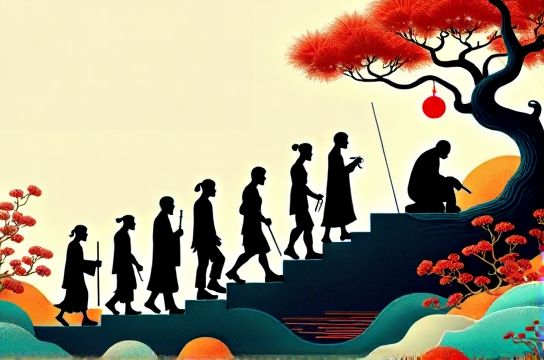
Chinese medical science isn’t just acupuncture and herbal tea. It’s a 3,000-year-old framework that blends observation, philosophy, and clinical practice. From oracle bones recording illnesses in the Shang Dynasty to modern hospitals integrating TCM with Western medicine, the journey is nothing short of revolutionary.
One key shift happened during the Han Dynasty (206 BCE–220 CE), when texts like the Huangdi Neijing (Yellow Emperor’s Inner Canon) laid the theoretical groundwork—yes, qi, yin-yang, and the five elements weren’t just spiritual fluff but early attempts to systematize diagnosis.
Fast forward to today: TCM isn’t stuck in the past. China invests over $15 billion annually in TCM research and infrastructure. In 2022, the global TCM market hit $143 billion, projected to reach $287 billion by 2030 (CAGR 7.9%). That’s not hype—that’s demand.
How TCM Stands Up to Modern Science
Skeptical? Fair. But consider artemisinin—an antimalarial drug derived from Artemisia annua, a herb mentioned in ancient TCM texts. Tu Youyou won the 2015 Nobel Prize for this discovery, pulling data from a 1,600-year-old manuscript. Talk about timeless wisdom.
Here’s a snapshot of TCM integration in modern healthcare:
| Aspect | Traditional Practice | Modern Application |
|---|---|---|
| Acupuncture | Meridian-based energy flow | Used in pain clinics; recognized by WHO for 28+ conditions |
| Herbal Formulas | Decoctions like Liu Wei Di Huang Wan | Standardized extracts in tablets; studied for diabetes, liver health |
| Diagnostic Methods | Pulse reading, tongue analysis | Digital pulse analyzers, AI-assisted tongue diagnosis |
This isn’t just tradition—it’s adaptation. And that’s where Chinese medical science proves its staying power. Countries like Germany and Canada now cover certain TCM treatments under public or private insurance, thanks to clinical evidence.
But here’s the real tea: TCM doesn’t claim to replace Western medicine. It complements it. In major Chinese hospitals, patients often receive chemotherapy alongside herbal support to reduce side effects. A 2021 meta-analysis found that integrative care improved quality of life in cancer patients by 38% compared to conventional treatment alone.
The bottom line? Whether you’re exploring natural remedies or questioning alternative systems, understanding the evolution of healing traditions helps you make smarter choices. TCM isn’t magic—it’s a living science, refined across dynasties and now backed by data.
So next time someone dismisses it as ‘ancient superstition,’ hit ’em with the facts: Nobel prizes, billion-dollar markets, and real-world results. Now that’s how tradition earns its place in the modern world.