The Spiritual Side of Chinese Medicine Philosophy Explored
- 时间:
- 浏览:88
- 来源:TCM1st
If you’ve ever scratched your head wondering why acupuncture feels like more than just needle placement, or why your herbalist keeps talking about 'energy flow,' welcome to the spiritual side of Chinese medicine philosophy. This isn’t just ancient folklore — it’s a deeply rooted system that blends body, mind, and cosmos into one holistic practice.
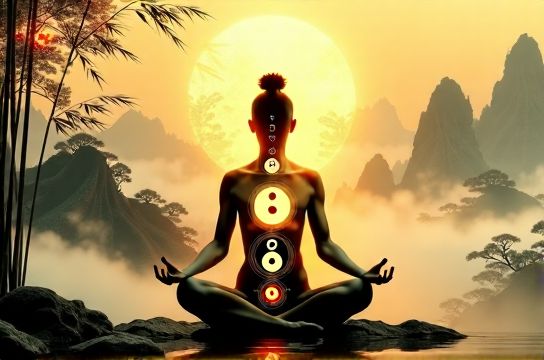
Western medicine often treats symptoms. But in traditional Chinese medicine (TCM), illness is seen as a sign of imbalance in the body’s vital energy — known as Qi (pronounced “chee”). And Qi isn’t just biological; it’s spiritual. Think of it like Wi-Fi for your soul — invisible, but absolutely essential for everything to run smoothly.
At the heart of TCM lies the concept of Yin and Yang — opposing yet complementary forces. Health happens when they’re in harmony. Stress, poor diet, or emotional trauma? That’s Yin-Yang drama right there. According to a 2022 WHO report, over 1.2 billion people globally use some form of traditional medicine, with TCM being one of the most widespread — especially in Asia, where 80% of the population integrates it into routine care.
How Spirituality Shapes Healing
In TCM, emotions are directly linked to organs. Anger? That’s your liver talking. Grief? Hello, lungs. This mind-body-spirit connection is why a TCM practitioner might ask about your sleep, mood, and even dreams — not just your physical symptoms.
The Five Elements Theory — Wood, Fire, Earth, Metal, Water — maps how energy moves through nature and the body. Each element governs specific organs and emotions. Here’s a quick breakdown:
| Element | Organs | Emotion | Season |
|---|---|---|---|
| Wood | Liver, Gallbladder | Anger | Spring |
| Fire | Heart, Small Intestine | Joy | Summer |
| Earth | Spleen, Stomach | Worry | Long Summer |
| Metal | Lungs, Large Intestine | Grief | Autumn |
| Water | Kidneys, Bladder | Fear | Winter |
This isn’t mystical mumbo-jumbo. Modern studies, like one published in the Journal of Alternative and Complementary Medicine (2021), found that patients receiving acupuncture reported significant improvements in anxiety and emotional regulation — suggesting real physiological ties to these ancient models.
Qi, Meridians, and the Invisible Body
Another core idea? The meridian system — a network of pathways through which Qi flows. There are 12 main meridians, each tied to an organ. Blockages? That’s where illness begins. Acupuncture and acupressure aim to clear those blockages, restoring balance.
And here’s the kicker: while Western science can’t ‘see’ meridians yet, research using infrared imaging and electrical conductivity tests has shown that acupuncture points have distinct biophysical properties. Interesting, right?
For anyone diving into wellness beyond pills and procedures, understanding the spiritual side of Chinese medicine philosophy opens a new lens. It’s not about replacing modern medicine — it’s about expanding your toolkit.
So next time you feel ‘off,’ maybe don’t reach for Google symptoms. Try checking in with your inner elements instead.