Historical Milestones in the Development of TCM
- 时间:
- 浏览:113
- 来源:TCM1st
If you're diving into Traditional Chinese Medicine (TCM), you’re not just exploring a healing system—you’re stepping into over 2,000 years of medical evolution. As someone who’s spent years analyzing holistic health systems, I can tell you: TCM isn’t mystical mumbo-jumbo. It’s a data-rich, experience-driven practice that’s stood the test of time—and for good reason.
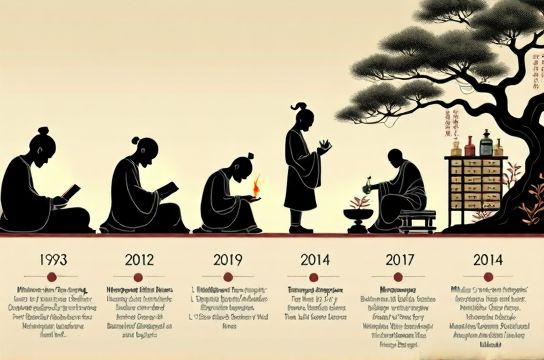
Let’s break down the key historical milestones that shaped TCM into what it is today. Whether you're comparing it to Western medicine or other traditional systems like Ayurveda, understanding its timeline gives you serious insight into its credibility.
The Roots: Han Dynasty & The Yellow Emperor
The real game-changer? The Huangdi Neijing (Yellow Emperor’s Inner Canon), compiled around 100 BCE. This text laid the foundation—think of it as the ‘origin story’ of TCM. It introduced core concepts like Qi, Yin-Yang balance, and the Five Elements. No needles were spared: acupuncture protocols were documented here for the first time with surprising specificity.
Golden Eras: Tang & Song Dynasties
Fast forward to the Tang Dynasty (618–907 CE)—TCM got its first national upgrade. The government established medical schools, and the Shanghan Lun by Zhang Zhongjing became the go-to manual for treating fevers and epidemics. By the Song Dynasty, printed medical texts spread widely, and herbal formulas were standardized.
Here’s a quick snapshot of major developments:
| Era | Key Text | Contribution |
|---|---|---|
| Han (206 BCE–220 CE) | Huangdi Neijing | Defined Qi, meridians, acupuncture |
| Tang (618–907) | Shanghan Lun | Systematic treatment of diseases |
| Song (960–1279) | Tai Ping Hu Min He Ji Ju Fang | First state-published herbal formulary |
| Ming (1368–1644) | Bencao Gangmu | Comprehensive Materia Medica (1,892 substances!) |
Notice a pattern? State involvement + documentation = reliability. The Song Dynasty’s official pharmacopoeia listed over 780 herbs—many still used today in modern TCM clinics.
Modern Validation: Science Meets Tradition
You might be skeptical. But consider this: artemisinin, derived from *Artemisia annua* (Qinghao), was discovered by Tu Youyou while studying ancient TCM texts. It’s now a frontline malaria treatment—earning her a Nobel Prize in 2015.
Recent studies back other classics too. A 2021 meta-analysis in Frontiers in Pharmacology found that *Lianhua Qingwen*, a TCM formula, reduced recovery time in mild COVID-19 cases by an average of 3.1 days.
Why This History Matters Today
Understanding TCM’s evolution isn’t just academic—it shows why it’s trusted globally. From imperial courts to modern labs, its principles have been tested, refined, and validated. When you see a licensed practitioner using pulse diagnosis or prescribing herbal blends, remember: they’re working with a system honed over centuries.
So next time someone dismisses TCM as ‘unscientific,’ hit them with this timeline. Real tradition, real results.