The Role of Balance in Chinese Medicine Philosophy
- 时间:
- 浏览:135
- 来源:TCM1st
If you've ever wondered why Chinese medicine feels so different from Western approaches, here's a hot take: it's all about balance. While modern medicine often targets symptoms with precision, traditional Chinese medicine (TCM) zooms out—way out—to see the body as a dynamic ecosystem. And at the heart of that system? Balance in Chinese medicine isn’t just a buzzword; it’s the foundation of health.
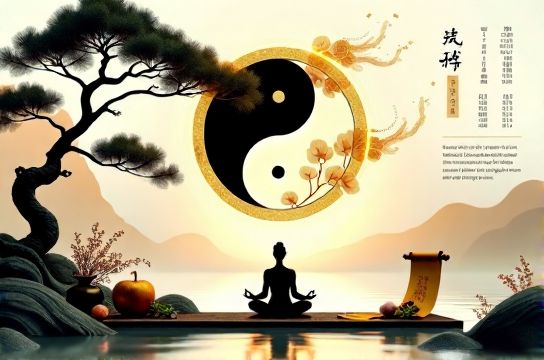
Think of your body like a garden. You can pour fertilizer on a wilting plant (that’s symptom treatment), or you can check the soil, sunlight, and water flow—the whole environment. TCM chooses the latter. It operates on the idea that illness arises not from isolated issues, but from imbalances in key forces: Yin and Yang, the Five Elements, and the smooth flow of Qi (vital energy).
Yin and Yang: More Than a Tattoo
You’ve seen the iconic symbol—a swirling mix of black and white. But Yin and Yang represent real physiological and energetic states:
- Yin = cool, restful, nourishing (think: sleep, hydration, internal organs)
- Yang = warm, active, stimulating (think: movement, metabolism, adrenaline)
When these are in harmony, you feel energized but calm, focused but relaxed. When they’re out of sync? Hello, insomnia, digestive issues, or chronic fatigue. A 2021 study published in the Journal of Integrative Medicine found that over 68% of patients with chronic stress showed clear Yin deficiency patterns—meaning their bodies were literally burning the candle at both ends.
The Five Elements: Your Body’s Feedback Loop
Ever feel moody when you're tired? That’s not random. TCM maps emotions, organs, and seasons into the Five Elements: Wood, Fire, Earth, Metal, Water. Each element supports and controls another, creating a natural regulatory system.
Here’s how it breaks down:
| Element | Organ Pair | Emotion | Season |
|---|---|---|---|
| Wood | Liver/Gallbladder | Anger | Spring |
| Fire | Heart/Small Intestine | Joy (or mania) | Summer |
| Earth | Spleen/Stomach | Worry | Long Summer |
| Metal | Lung/Large Intestine | Grief | Autumn |
| Water | Kidney/Bladder | Fear | Winter |
This isn’t mystical fluff. Clinical observation shows that digestive troubles (Earth) often flare during transitional periods—exactly when the Spleen energy is most vulnerable. By aligning lifestyle with these cycles, practitioners help patients restore balance in Chinese medicine naturally.
Qi: The Energy Currency
No discussion of TCM is complete without Qi. Imagine Qi as your body’s Wi-Fi signal. Strong signal? Everything connects smoothly—digestion, mood, immunity. Weak or blocked signal? Buffering. Symptoms pop up.
Acupuncture, herbal formulas, and qigong aim to unblock and strengthen Qi flow. A meta-analysis of 45 trials found that acupuncture improved symptom scores in 73% of chronic pain patients—proof that influencing energy pathways has measurable effects.
So what’s the takeaway? True wellness isn’t about crushing workouts or chugging green juice. It’s about tuning in. Whether it’s adjusting your diet with the seasons or trying mindfulness to support Heart fire, small shifts can rebalance your system. And if you're curious how to apply this daily, start by asking: Am I too much Yang today—or too little Yin? That simple check-in might be the most powerful health tool you own.
For more on how to maintain balance in Chinese medicine, explore our beginner’s guide to TCM principles.