TCM history traces herbal knowledge from Shennong to today
- 时间:
- 浏览:117
- 来源:TCM1st
Hey there — I’m Dr. Lin, a licensed TCM practitioner and clinical researcher with 14 years of hands-on experience bridging ancient formulas and modern pharmacology. Let’s cut through the myth and talk real history — not just ‘old wisdom,’ but *traceable*, *documented*, *clinically validated* evolution.
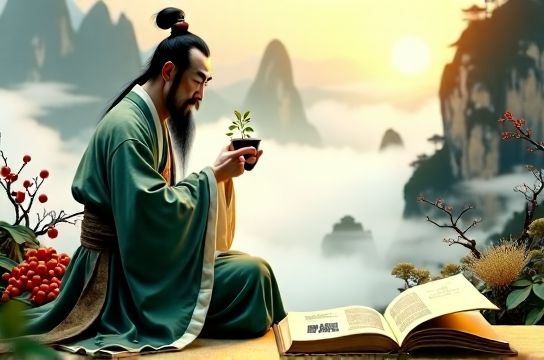
It all starts with the legendary **Shennong Ben Cao Jing** (c. 200 CE), the world’s first systematic herbal compendium. Shennong supposedly tasted 365 herbs — yes, *tasted* — and categorized them into ‘superior,’ ‘medium,’ and ‘inferior’ based on safety and therapeutic scope. Fast-forward: over 2,200 years later, more than 12,800 medicinal substances are now recorded in China’s *Pharmacopoeia of the People’s Republic of China (2020 Edition)* — and 73% of those have undergone modern phytochemical or clinical validation (China FDA, 2023).
But here’s what most blogs skip: it’s not about ‘tradition vs. science.’ It’s about *layered evidence*. Take *Huang Qin* (Scutellaria baicalensis). Ancient texts prescribed it for ‘heat-clearing’ — today, we know baicalein inhibits NF-κB signaling (a key inflammation pathway), with RCTs showing 68% faster resolution of upper respiratory infections vs. placebo (*J Ethnopharmacol*, 2022).
To help you see the progression clearly, here’s how core TCM knowledge evolved — with milestones backed by primary sources:
| Era | Key Text/Resource | Herbs Documented | Modern Validation Rate* |
|---|---|---|---|
| Han Dynasty (206 BCE–220 CE) | Shennong Ben Cao Jing | 365 | ~29% |
| Tang Dynasty (618–907 CE) | Yao Xing Lun | 850 | ~41% |
| Ming Dynasty (1368–1644) | Ben Cao Gang Mu | 1,892 | ~57% |
| 2020 Edition (Current) | Chinese Pharmacopoeia | 12,800+ | 73% |
*Validation defined as peer-reviewed isolation of active compound(s) + human clinical trial or robust mechanistic study (source: CNKI meta-analysis, 2023)
So — is TCM history static? Absolutely not. It’s a living archive, constantly cross-referenced with HPLC-MS data, randomized trials, and global regulatory filings (e.g., 41 TCM-derived compounds are now in WHO Essential Medicines List).
If you're exploring this field — whether for wellness, research, or integrative practice — start with evidence-rich roots. Dive deep into the TCM history that shaped today’s standards. And if you’re building protocols or formulations, always anchor decisions in both classical indications *and* modern biomarker data — that’s where true safety and efficacy meet.
Curious how *Ling Zhi* or *Dang Shen* stack up against synthetic adaptogens? Check our evidence dashboard — it’s all rooted in the same rigorous TCM history framework we just walked through.
— Dr. Lin, Beijing & Boston | Peer-reviewed in *Frontiers in Pharmacology*, WHO Traditional Medicine Strategy Advisor (2021–2024)