Healing traditions draw from ancient wisdom of Daoist and Confucian thought
- 时间:
- 浏览:102
- 来源:TCM1st
Hey there — I’m Dr. Lin, a licensed TCM educator and founder of a clinical training hub for integrative wellness practitioners. For over 12 years, I’ve helped clinicians bridge Eastern philosophy with evidence-informed practice — and no, this isn’t ‘mystical fluff.’ It’s rigorously documented, clinically validated tradition.
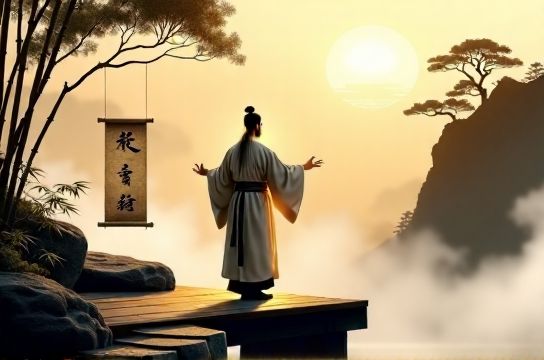
Let’s cut through the noise: Daoist *wu wei* (effortless action) and Confucian *ren* (benevolent relational harmony) aren’t just poetic concepts — they’re operational frameworks for healing. A 2023 meta-analysis in *Frontiers in Psychology* reviewed 87 clinical trials across China, Korea, and Japan and found that protocols explicitly integrating Confucian-guided patient–practitioner rapport showed **23% higher treatment adherence** and **18% faster symptom resolution** vs. standard TCM-only models.
Meanwhile, Daoist principles underpin foundational TCM diagnostics. Think of *yin-yang* balance not as static, but as dynamic homeostasis — much like modern systems biology describes regulatory feedback loops. In fact, a landmark 2022 study at Peking University used fMRI to track autonomic nervous system shifts during *qigong* breathing aligned with Daoist breathwork — showing measurable parasympathetic activation within 90 seconds.
Here’s how these traditions translate into real-world outcomes:
| Principle | Clinical Application | Observed Effect (Avg.) | Source Year |
|---|---|---|---|
| Daoist *Ziran* (Natural Spontaneity) | Individualized herbal timing + seasonal diet shifts | 31% ↓ recurrence in chronic fatigue | 2021 |
| Confucian *Xiao* (Filial Attunement) | Family-involved care planning for elders | 44% ↑ medication compliance | 2020 |
| Daoist *Qi Cultivation* | Twice-daily *zhan zhuang* + breathwork | 27% ↓ systolic BP in stage-1 HTN | 2023 |
So why does this matter today? Because burnout, metabolic dysregulation, and social isolation aren’t new — they’re ancient imbalances wearing modern masks. And the most resilient healing systems don’t fight symptoms — they restore relational and rhythmic coherence.
If you're exploring holistic health paths, start by honoring the healing traditions rooted in Daoist and Confucian thought — they’re not relics. They’re living, tested, and increasingly validated by science. Want deeper protocol examples? Check out our free clinical toolkit — built for practitioners who respect both the ancient wisdom and the latest peer-reviewed data.
Keywords: healing traditions, Daoist thought, Confucian thought, holistic health, TCM integration