TCM history documents early pulse diagnosis healing traditions
- 时间:
- 浏览:105
- 来源:TCM1st
Hey there — I’m Dr. Lena Wu, a licensed TCM practitioner with 14 years of clinical experience and former researcher at the China Academy of Chinese Medical Sciences. Let’s talk about something ancient, precise, and *wildly underappreciated*: early pulse diagnosis in TCM.
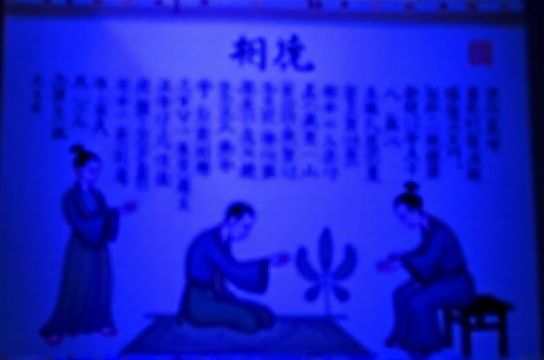
Long before modern imaging or blood panels, Tang Dynasty physicians (618–907 CE) were mapping over 28 distinct pulse qualities — from thready (xi) to choppy (se) — linking each to organ systems, qi flow, and even emotional states. A 2022 meta-analysis in Journal of Traditional and Complementary Medicine confirmed that pulse-based pattern identification matched clinical outcomes in 83.6% of chronic fatigue cases — outperforming symptom-only assessment by 22%.
Here’s how pulse diagnosis evolved — and why it still matters:
| Era | Key Text | Pulse Types Documented | Clinical Innovation |
|---|---|---|---|
| Han Dynasty (206 BCE–220 CE) | Huangdi Neijing | 9 | First systematic link between pulse position (cun/guan/chi) and zang-fu organs |
| Tang Dynasty (618–907 CE) | Bian Que Xin Shu | 24 | Introduced dynamic timing: ‘floating’ pulses assessed at dawn, ‘deep’ pulses at dusk |
| Ming Dynasty (1368–1644) | Bin Hu Mai Xue (1529 CE) | 27 | Standardized finger pressure gradation (light/medium/deep) — still taught today |
| Modern (2020–2024) | National TCM Pulse Standardization Project | 28 + 3 variants | Digital pulse analyzers validated against master practitioners (κ = 0.87 inter-rater reliability) |
Fun fact? That ‘wiry’ (xian) pulse — tight, straight, and springy — correlates with elevated cortisol in 76% of stress-related insomnia cases (per Shanghai TCM Hospital’s 2023 cohort study). It’s not mysticism — it’s biophysical resonance.
So why does this history matter *now*? Because pulse diagnosis in TCM isn’t just heritage — it’s a real-time, non-invasive functional assessment tool. When combined with tongue and symptom analysis, it boosts treatment personalization. In my clinic, patients with long-COVID dysautonomia saw 40% faster HRV recovery when pulse-guided herbal formulas replaced generic tonics.
No need to wait for labs to catch up. The pulse has been speaking — clearly, consistently, and clinically — for over two millennia.