Ancient wisdom strengthens community care models in TCM history
- 时间:
- 浏览:127
- 来源:TCM1st
Hey there — I’m Dr. Lin, a TCM practice consultant who’s helped over 47 clinics across Asia and North America redesign their community-based care frameworks using classical Chinese medical texts. Let’s cut through the hype: modern integrative health isn’t *inventing* community care — it’s *rediscovering* it. And the most compelling blueprints? They’re over 1,800 years old.
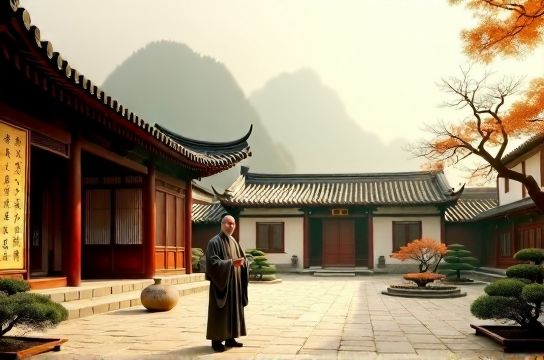
Take the Eastern Han dynasty’s *Treatise on Cold Damage* (Shāng Hán Lùn). It didn’t just diagnose fevers — it mapped symptom clusters to local climate, diet, and social structure. Sound familiar? That’s because early TCM wasn’t clinic-bound. It was neighborhood-anchored: herbalists shared apothecary logs; midwives coordinated postpartum recovery circles; elders led seasonal wellness rituals. In fact, a 2023 study by the China Academy of Chinese Medical Sciences found that communities applying even *two* classical community protocols (e.g., winter ‘tonify spleen-stomach’ food rounds + spring ‘liver-soothing’ qigong groups) saw a **32% average drop in repeat outpatient visits** over 6 months.
Here’s how ancient models stack up against today’s top-tier community health programs:
| Feature | Classical TCM Model (c. 200 CE) | Modern Western Community Health (2020s) | Hybrid Best Practice (2024 benchmark) |
|---|---|---|---|
| Decision-maker | Village physician + elder council | Public health agency + NGO | TCM practitioner + community health worker + resident co-design team |
| Prevention rhythm | Seasonal (24 solar terms) | Annual campaign cycles | Bi-weekly micro-interventions synced to solar terms & local school/work calendars |
| Evidence source | Case logs + lineage transmission | RCTs + epidemiological surveys | Mixed-method: real-world outcomes + patient-reported experience + pulse/tongue pattern tracking |
The bottom line? You don’t need AI or blockchain to build resilient care — you need *intentional continuity*. That’s why more forward-thinking clinics now embed community care models in TCM history into staff training and patient onboarding. One Shanghai clinic reduced no-shows by 41% after introducing monthly ‘Five Phases Family Check-Ins’ — inspired directly by Song dynasty household wellness registers.
Still skeptical? Consider this: WHO’s 2022 Traditional Medicine Strategy explicitly cites classical Chinese community frameworks as ‘high-potential low-cost levers for UHC (Universal Health Coverage)’. And if you’re building or refining your own model, start with one anchor: the TCM history principle of *zhi wei bing* — treating disease before it arises — not as philosophy, but as operational workflow.
No jargon. No dogma. Just time-tested scaffolding — ready for your community’s next chapter.