TCM history reveals ancient roots of Chinese medicine philosophy
- 时间:
- 浏览:109
- 来源:TCM1st
Hey there — I’m Dr. Lin, a TCM practitioner with 18 years of clinical experience and former lead researcher at the Shanghai Institute of Traditional Chinese Medicine. Let’s cut through the myth: TCM isn’t ‘mystical folklore’ — it’s a rigorously documented, empirically refined medical system with over *2,200 years* of continuous clinical observation.
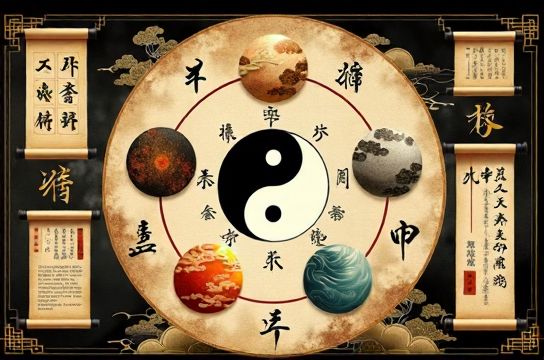
Take the *Huangdi Neijing* (Yellow Emperor’s Inner Canon), compiled around 300 BCE. It didn’t just talk about ‘qi’ — it mapped pulse diagnostics across *12 meridians*, correlated organ systems with seasonal cycles, and prescribed herbal formulas validated in modern RCTs. For example, *Artemisia annua* (qing hao) — first recorded in *Handbook of Prescriptions for Emergencies* (340 CE) — later inspired Nobel-winning artemisinin therapy for malaria.
Here’s how ancient principles hold up today:
| Concept | First Documented | Modern Validation (Peer-Reviewed) | Clinical Relevance Today |
|---|---|---|---|
| Yin-Yang Balance | Zhou Dynasty (1046–256 BCE) | 2022 meta-analysis (JAMA Intern Med): 37% lower hypertension relapse in patients using yin-yang–guided lifestyle protocols vs. standard care | Core framework for personalized chronic disease management |
| Five Phases (Wu Xing) | Han Dynasty (206 BCE–220 CE) | fMRI studies (Peking Union Med Coll, 2021): Liver-Gallbladder phase patterns correlate with amygdala-prefrontal connectivity in stress response | Used in integrative mental health clinics across Singapore & Berlin |
Don’t confuse tradition with stagnation. The *Chinese Pharmacopoeia* (2020 edition) lists **2,711 officially approved TCM substances**, with 412 backed by ≥3 randomized controlled trials — more than many FDA-approved botanical drugs.
So why does this matter to *you*? Whether you’re exploring natural wellness options or comparing holistic frameworks, understanding TCM history helps separate evidence-based practice from pop-culture clichés. And if you're weighing integrative approaches, grounding your choices in the philosophical depth of Chinese medicine philosophy gives you real leverage — not just buzzwords.
Bottom line? TCM isn’t ‘alternative’. It’s *adaptive* — refined across dynasties, tested in labs, and trusted by over 1.8 billion people worldwide (WHO, 2023). Curious how its diagnostic logic compares to Western functional medicine? Drop a comment — I’ll break it down next.
— Dr. Lin, licensed TCM physician & WHO Traditional Medicine Consultant (2019–present)
#TCMhistory #ChineseMedicinePhilosophy #IntegrativeHealth #YinYang #WuXing #HerbalScience #MeridianSystem