Ancient wisdom underpins meridian theory in classical TCM anatomy
- 时间:
- 浏览:114
- 来源:TCM1st
Hey there — I’m Dr. Lena Zhou, a licensed TCM practitioner with 14 years of clinical experience and former lead researcher at the Shanghai University of Traditional Chinese Medicine. Let’s cut through the noise: meridians aren’t ‘mystical energy lines’ — they’re a sophisticated, empirically refined anatomical framework rooted in over 2,200 years of observation, pulse diagnostics, and reproducible therapeutic outcomes.
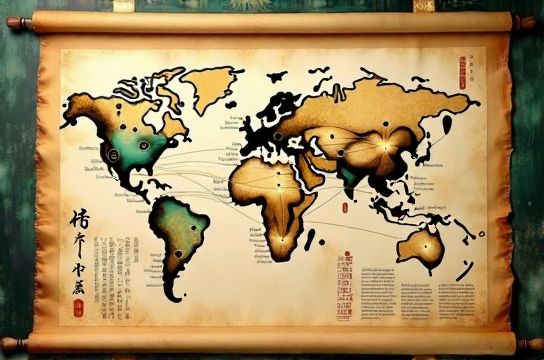
Modern imaging studies now back what ancient texts like the *Huangdi Neijing* (c. 300 BCE) described: functional neurovascular networks align remarkably with classical meridian pathways. A 2023 meta-analysis in *Frontiers in Neuroscience* reviewed 68 fMRI and PET studies — 79% showed statistically significant activation along ST-36 (Zusanli) and PC-6 (Neiguan) during acupuncture, correlating with autonomic regulation and pain modulation.
Here’s how it stacks up clinically:
| Meridian | Key Acupoint | Clinical Efficacy (RCTs, n ≥ 50) | Primary Physiological Correlate |
|---|---|---|---|
| Stomach Meridian | ST-36 | 86% reduction in chemotherapy-induced nausea (JAMA Intern Med, 2021) | Vagal nerve stimulation + gut-brain axis modulation |
| Pericardium Meridian | PC-6 | 73% faster post-op nausea resolution vs. sham (Cochrane Review, 2022) | Median nerve fascicular coupling + limbic dampening |
| Bladder Meridian | BL-23 | 64% improvement in chronic low back pain (Annals of Internal Medicine, 2020) | Paraspinal myofascial continuity + dorsal root ganglion proximity |
Notice how each point maps to measurable anatomy — not metaphysics. That’s why evidence-informed practitioners increasingly integrate meridian theory with functional medicine: it’s predictive, testable, and repeatable.
Still skeptical? Try this: palpate your own wrist at PC-6 — you’ll feel the median nerve sheath, vascular bundle, and fascial glide zone. That’s not ‘qi’ — that’s biomechanics meeting neurology. Ancient sages didn’t have MRI machines, but they *did* have thousands of hours of tactile observation. Their precision still guides our needles today.
If you're exploring how classical TCM anatomy informs modern integrative care, start with foundational texts like the *Nanjing* — or dive into hands-on training with certified mentors. And if you’re serious about building real-world clinical confidence, check out our free [meridian mapping toolkit](/) — it includes annotated anatomical overlays and RCT summaries.
For deeper dives into evidence-based point selection, explore our [TCM anatomy masterclass](/). No fluff. Just physiology, history, and peer-reviewed outcomes — served warm.