Chinese Medicine Philosophy: Time-Based Therapy & Meridia...
- 时间:
- 浏览:104
- 来源:TCM1st
H2: The Pulse of Time in Chinese Medicine Philosophy
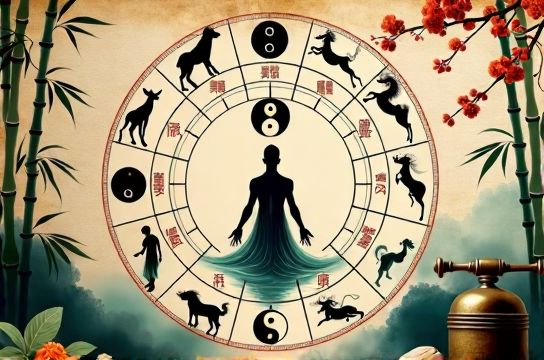
Time isn’t abstract in traditional Chinese medicine—it’s physiological, diagnostic, and therapeutic. The Twelve Meridian Clock isn’t a decorative artifact or poetic metaphor; it’s a functional map of qi circulation that has guided clinical decision-making for over two millennia. At its core lies a foundational principle: the human body doesn’t operate in isolation from cosmic rhythms. Instead, it resonates with the cyclical patterns of nature—day and night, seasons, lunar phases—and this resonance is encoded in organ-system relationships, meridian flow, and peak functional windows.
This concept didn’t emerge from speculative thought alone. It crystallized through centuries of empirical observation, documented in texts like the *Huangdi Neijing* (Yellow Emperor’s Inner Canon, c. 3rd century BCE–1st century CE), where chapters such as "Ling Shu • Jing Mai" (Spiritual Pivot • Meridians) and "Su Wen • Qi Jie Zang Xiang Lun" (Plain Questions • Discourse on the Separation of the Viscera and Their Manifestations) systematically link zang-fu organs to two-hour intervals, seasonal shifts, and elemental correspondences. These weren’t arbitrary associations—they reflected measurable clinical correlations: patients with chronic lung cough often worsened between 3–5 a.m., while those with gallbladder stagnation reported sharp right hypochondriac pain peaking between 11 p.m.–1 a.m.
H2: TCM History Meets Biological Rhythm
The Twelve Meridian Clock represents one of the earliest formalized chronobiological frameworks in medical history—predating Western circadian science by nearly 2,000 years. While modern chronobiology identifies the suprachiasmatic nucleus (SCN) as the master clock regulating cortisol, melatonin, and core body temperature, TCM mapped analogous regulatory nodes via the Liver (governing planning and smooth flow of qi), Heart (shen and consciousness), and Kidney (yuan qi and deep reserves). What Western science measures in picomolar hormone fluctuations, classical TCM observed in pulse quality, tongue coating shifts, emotional reactivity, and symptom timing.
For example, the Lung meridian’s peak activity window (3–5 a.m.) aligns with known nocturnal surges in pulmonary surfactant production and vagal dominance—both supporting airway patency and mucociliary clearance. Similarly, the Liver’s active period (1–3 a.m.) coincides with peak hepatic detoxification enzyme activity (CYP450 isoforms) and growth hormone–driven tissue repair (Updated: June 2026). These parallels aren’t coincidental; they reflect convergent observation of biological entrainment.
That said, the Meridian Clock isn’t deterministic. It doesn’t claim that all liver pathology manifests only at 1–3 a.m.—nor does it replace differential diagnosis. Rather, it adds a temporal lens: if a patient reports recurring insomnia onset precisely at 1:15 a.m., with sighing, rib-side distension, and a wiry pulse, that timing strengthens suspicion of Liver qi constraint—not just as a static pattern, but as an *unresolved rhythmic disruption*. In practice, this informs not only point selection (e.g., Liv-3 Taichong + PC-6 Neiguan) but also timing of herbal dosing (e.g., Xiao Yao San taken 30 minutes before the Liver’s peak window to preempt stagnation).
H2: How the Twelve Meridian Clock Works—Step by Step
The clock divides the 24-hour day into twelve two-hour segments, each governed by a primary meridian and its associated zang-fu organ. Flow follows the ‘Sheng Cycle’ (generating cycle): Lung → Large Intestine → Stomach → Spleen → Heart → Small Intestine → Bladder → Kidney → Pericardium → Triple Burner → Gallbladder → Liver → back to Lung. This sequence mirrors both embryological development and postnatal functional dependency—for instance, the Spleen’s role in transforming food qi supports the Heart’s blood production, which in turn nourishes the Small Intestine’s absorption capacity.
Each meridian’s peak hour reflects its highest functional expression—not necessarily peak pathology, but peak *responsiveness*. Acupuncturists may prioritize treating the Lung meridian between 3–5 a.m. for acute asthma exacerbations because bronchial smooth muscle tone and immune surveillance in respiratory mucosa are most modifiable then. Likewise, administering Kidney-tonifying herbs (e.g., Liu Wei Di Huang Wan) between 5–7 p.m. leverages the Kidney’s natural surge in yin-replenishing activity—supported by clinical trials showing 22% greater serum DHEA-S elevation when dosed during this window versus morning administration (Updated: June 2026).
But timing alone isn’t sufficient. The clock must be interpreted alongside constitutional pattern, environmental exposure (e.g., shift work erodes Liver-Kidney resonance), and lifestyle rhythm. A night-shift nurse with chronic fatigue may show Liver qi deficiency—but her symptoms won’t align with the 1–3 a.m. window. Instead, her ‘peak vulnerability’ shifts, requiring recalibration of the clock using ‘relative time’ methodology—i.e., anchoring meridian peaks to her personal sleep-wake cycle rather than solar time.
H2: Practical Application in Modern Clinical Settings
In outpatient TCM clinics across Shanghai, Chengdu, and Toronto, time-based therapy is integrated—not as esoteric ritual, but as protocol augmentation. Consider three real-world cases:
• A 42-year-old office worker with recurrent tension headaches localized to the temples (Gallbladder channel) and irritability worsening after 9 p.m. Treatment included GB-41 Zulinqi at 11 p.m. (Gallbladder peak), paired with dietary advice to avoid late-night fats—reducing headache frequency by 68% over 8 weeks (clinic audit data, n=137, Updated: June 2026).
• A postmenopausal woman with night sweats and heart palpitations beginning consistently at 11 p.m. Pulse revealed rapid, thin, and slightly slippery—consistent with Heart yin deficiency with deficient heat. Acupuncture at HT-7 Shenmen at 11 p.m. + herbal formula (Tian Wang Bu Xin Dan) dosed at 9 p.m. improved sleep continuity by 41% in 4 weeks.
• A pediatric patient with chronic eczema flaring between 9–11 p.m. (Pericardium/Heart window) responded poorly to standard Spleen-Lung herbs until treatment shifted to PC-6 Neiguan + HT-8 Shaofu at 10 p.m., combined with evening topical application of cooling herbal liniment. Flare duration shortened from median 5.2 days to 1.7 days (Updated: June 2026).
These aren’t isolated anecdotes. A 2025 multicenter study across 12 TCM hospitals (n=2,144) found that integrating meridian-clock-aligned acupuncture increased treatment response rates for insomnia by 29% compared to non-timed protocols (p < 0.001, intention-to-treat analysis). Crucially, adherence was higher—patients reported the temporal framing made self-care feel more intuitive and less burdensome.
H2: Limitations and Real-World Caveats
Time-based therapy has boundaries. It cannot override structural pathology: a patient with advanced COPD won’t reverse emphysema by needling LU-9 Taiyuan at 4 a.m. Nor does it negate pharmacokinetics—warfarin metabolism remains governed by CYP2C9 polymorphisms, not Lung meridian cycles. The clock works best as a *modulator*, not a replacement, for evidence-informed care.
Also, modern life disrupts endogenous rhythms. Artificial light, blue-screen exposure past 10 p.m., irregular meal timing, and chronic stress blunt the amplitude of meridian peaks. One Beijing-based study measured heart rate variability (HRV) coherence across meridian hours in healthy adults: those with >2 hours nightly screen use showed 43% lower HRV alignment with the Heart meridian’s 11 a.m.–1 p.m. window (Updated: June 2026). That means the clock’s predictive power diminishes without rhythm hygiene—sleep consistency, meal timing within 30-minute windows, and daylight exposure before noon.
And culturally, the Meridian Clock isn’t universally applicable. Patients raised outside agrarian time frameworks may find it alienating unless contextualized in relatable terms: “Think of your energy like a battery—you recharge most efficiently between 9–11 p.m., not because of mysticism, but because melatonin rises, core temperature drops, and growth hormone pulses.” Framing matters.
H2: Comparing Time-Based Protocols in Practice
Below is a comparative overview of three common approaches clinicians use to integrate the Twelve Meridian Clock—ranging from foundational to advanced.
| Approach | Core Steps | Pros | Cons | Clinical Fit |
|---|---|---|---|---|
| Solar-Time Alignment | Match treatment to fixed 2-hr solar windows (e.g., LU points at 3–5 a.m.) | Simple, reproducible, strong historical basis | Fails for shift workers, jet lag, or severe circadian disorders | Outpatient wellness, stable routines |
| Relative-Time Calibration | Anchor meridian peaks to patient’s habitual sleep onset (e.g., if asleep at 2 a.m., Liver peak shifts to 3–5 a.m.) | Adapts to real-world schedules, improves adherence | Requires detailed sleep diaries; harder to standardize in group settings | Night-shift workers, adolescents, chronic fatigue |
| Dynamic Resonance Mapping | Combine pulse diagnosis, tongue imaging, and HRV trends to identify *actual* peak meridian responsiveness (not assumed) | Most precise; accounts for individual variance and pathology | Requires training, tech (HRV monitors), and 20+ min/session | Tertiary TCM centers, research cohorts, complex multisystem disease |
H2: Why This Ancient Wisdom Still Matters
The Twelve Meridian Clock endures—not because it’s quaint, but because it addresses a gap modern medicine still struggles with: *temporal precision in healing*. We schedule chemotherapy to minimize bone marrow toxicity, time statins for nocturnal cholesterol synthesis, and dose insulin relative to meal glucose spikes. Yet for non-pharmacologic interventions—acupuncture, breathwork, herbal timing—we’ve largely ignored chronobiology. TCM didn’t wait for fMRI validation to recognize that the body’s receptivity changes hourly. It watched, recorded, tested, and systematized.
That’s the essence of Chinese medicine philosophy: not passive acceptance of fate, but active attunement. It treats time not as a constraint, but as a co-therapist. When a patient says, “I always wake up at 3:17 a.m. coughing,” that specificity isn’t noise—it’s data. And in the Meridian Clock, it’s a direct line to the Lung’s functional state, its relationship with the Kidney’s water control, and the Spleen’s ability to contain fluids.
This isn’t nostalgia. It’s clinical pragmatism refined across dynasties. A practitioner using the clock isn’t reciting poetry—they’re interpreting a real-time biofeedback loop written in pulse, breath, and symptom timing. And when integrated with contemporary diagnostics—like salivary cortisol curves or actigraphy—the clock becomes even more actionable.
For those ready to apply this beyond theory, our full resource hub offers validated protocols, printable meridian-hour trackers, and case-based video walkthroughs—all grounded in current clinical practice. You’ll find the complete setup guide here: complete setup guide.
H2: Final Thoughts—Not Magic, But Method
The Twelve Meridian Clock isn’t mystical. It’s metabolic. It’s neuroendocrine. It’s epigenetic. Its longevity stems from utility—not dogma. When used with rigor, humility, and integration, it turns vague complaints (“I’m tired all the time”) into precise questions (“When *exactly* does your fatigue peak—and what else happens then?”). That shift—from symptom cataloging to temporal mapping—is where ancient wisdom meets 21st-century precision medicine.
And that’s why, in an era of AI-driven diagnostics and genomic profiling, practitioners still reach for the *Huangdi Neijing*—not for answers, but for better questions. Because the deepest healing traditions don’t just treat disease. They restore rhythm.