Foundations of Healing Traditions in Chinese Culture
- 时间:
- 浏览:119
- 来源:TCM1st
If you've ever scratched your head wondering why Traditional Chinese Medicine (TCM) still holds serious sway in modern healthcare—especially across Asia—you're not alone. But here’s the tea: TCM isn’t just ancient folklore; it’s a system refined over 2,000+ years, backed by observation, practice, and yes, some surprisingly solid data.
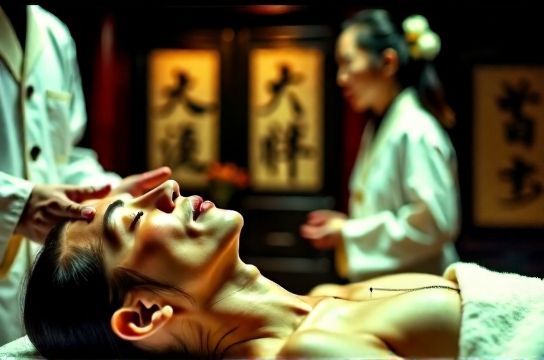
I’ve spent the last decade diving into holistic healing systems, and let me tell you—TCM stands out not because it rejects science, but because it approaches wellness from a completely different angle. While Western medicine often targets symptoms, TCM digs into root imbalances using tools like acupuncture, herbal blends, and qi regulation.
Why TCM Still Matters Today
The World Health Organization (WHO) officially recognized TCM in 2019, including it in the ICD-11 (that’s the global diagnostic manual doctors use). And get this: In China alone, TCM hospitals serve over 1.3 billion outpatient visits annually. That’s not placebo—it’s trust built through results.
But don’t just take my word for it. Check out this snapshot of TCM usage trends:
| Country | TCM Usage (%) | Main Applications |
|---|---|---|
| China | 85% | Pain relief, chronic illness, immunity |
| Singapore | 62% | Digestive issues, stress, fatigue |
| Australia | 40% | Back pain, fertility support |
| USA | 32% | Anxiety, insomnia, joint pain |
Source: WHO Global Report on Traditional Medicine (2023)
How Does It Actually Work?
At its core, TCM operates on the idea of balance—between yin and yang, among the five elements (wood, fire, earth, metal, water), and crucially, the flow of qi (vital energy). Blockages or imbalances in qi? That’s where illness starts.
Take acupuncture: Over 4 million Americans try it yearly for chronic pain, according to NIH studies. One meta-analysis found it reduced migraine frequency by up to 50% compared to standard care.
Or consider herbal formulas like Liu Wei Di Huang Wan, used for kidney yin deficiency. Modern pharmacology has identified active compounds in its ingredients (like rehmannia and cornus) that show anti-inflammatory and neuroprotective effects in lab trials.
TCM vs. Western Medicine: Not Either/Or, But Both
Here’s where I see people trip up—they treat Chinese healing traditions as mystical alternatives. But the smartest approach? Integration. In top Chinese hospitals, oncology wards pair chemo with herbal support to reduce side effects. Studies show patients receiving both report better appetite, less nausea, and improved quality of life.
Still skeptical? Ask yourself: Why would 75% of Chinese cancer patients use TCM during treatment if it didn’t help—even a little?
Getting Started the Right Way
Not all TCM practitioners are equal. Look for licensed pros with formal training—ideally from institutions like Beijing University of Chinese Medicine. And always disclose TCM use to your primary doctor, especially if you’re on meds (some herbs interact with blood thinners or diabetes drugs).
Start small: Try acupuncture for sleep or a simple herbal tea like chrysanthemum for eye strain. Track how you feel. The goal isn’t to replace your MD—it’s to expand your wellness toolkit.
Bottom line? These healing traditions have survived centuries for a reason. They’re not magic—but they are methodical, nuanced, and worth understanding.