The Enduring Relevance of TCM History in Global Medicine Today
- 时间:
- 浏览:133
- 来源:TCM1st
If you’ve been keeping an eye on global wellness trends, you’ve probably noticed a surge in interest around Traditional Chinese Medicine (TCM) history. But this isn’t just another wellness fad—it’s a centuries-old system making serious waves in modern healthcare. As someone who’s spent over a decade analyzing integrative medicine practices, I’m here to break down why TCM isn’t just surviving in today’s world—it’s thriving.
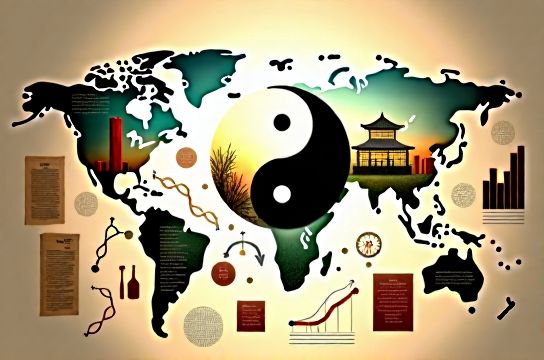
Why TCM Still Matters in Modern Healthcare
Let’s get one thing straight: TCM isn’t about replacing Western medicine. It’s about complementing it. According to the World Health Organization (WHO), over 100 countries now recognize and regulate TCM practices, with acupuncture and herbal formulations integrated into national health systems across Europe, Australia, and parts of North America.
The secret? A holistic framework rooted in balance—yin and yang, qi flow, organ networks—that predates modern diagnostics by thousands of years. While Western medicine excels in acute care, TCM shines in prevention and chronic condition management.
By the Numbers: TCM’s Global Reach
Check out this snapshot of TCM’s international footprint:
| Country/Region | TCM Practitioners (Est.) | Annual Market Value (USD) | Legal Recognition |
|---|---|---|---|
| China | 500,000+ | $130 billion | Full integration |
| United States | 40,000 | $3.2 billion | Licensed in 44 states |
| Germany | 25,000 | $1.1 billion | Partial insurance coverage |
| Australia | 5,000 | $480 million | National registration |
Source: WHO Global Report on Traditional and Complementary Medicine (2023)
Science Meets Ancient Wisdom
Skeptical? You’re not alone. But consider this: artemisinin, derived from Artemisia annua (Qinghao), was discovered through studying ancient TCM texts. It’s now a frontline treatment for malaria, saving millions of lives—and earned Tu Youyou a Nobel Prize in 2015.
More recently, clinical trials have shown that herbal formulas like Liuwei Dihuang Wan can support kidney function in early-stage chronic disease, while acupuncture has demonstrated measurable effects on pain modulation via fMRI studies.
Challenges & The Road Ahead
Of course, TCM isn’t without controversy. Quality control, herb-drug interactions, and inconsistent training standards remain real concerns. But standardization efforts—like the International Standard Classification of TCM (ISO/TC 249)—are paving the way for safer, more transparent practice worldwide.
The future? Integration. We’re already seeing ‘TCM-Western fusion clinics’ in cities like London and Vancouver, where MDs and licensed TCM practitioners collaborate on patient care plans.
Final Thoughts
Understanding TCM history isn’t just about honoring tradition—it’s about unlocking practical tools for modern health challenges. Whether you're managing stress, chronic pain, or long-term wellness, the wisdom of TCM offers more than remedies: it offers a mindset shift toward balance, prevention, and personalized care.
So next time you hear about acupuncture or herbal tonics, don’t dismiss it as ‘alternative.’ Think of it as expanded medicine—one that’s been centuries in the making.