Key Figures in TCM History Who Transformed Healing Traditions
- 时间:
- 浏览:122
- 来源:TCM1st
If you're diving into the world of natural healing, you can't ignore the giants whose shoulders we stand on—especially in Traditional Chinese Medicine (TCM). These pioneers didn’t just treat symptoms; they reshaped entire philosophies of health. Let’s break down the most influential figures who turned ancient wisdom into a global healing movement.
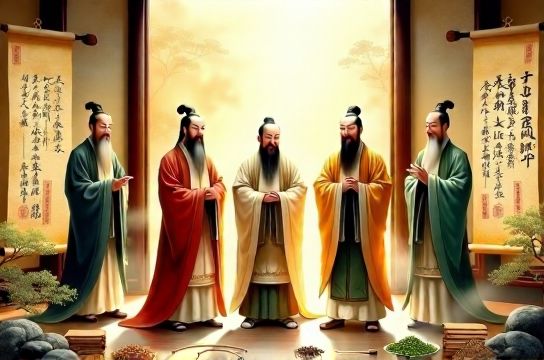
1. Huang Di – The Yellow Emperor
You’ve probably heard of the Huangdi Neijing—the foundational text of TCM. Spoiler: Huang Di might not have written it himself, but his name carries the weight of authority. Dating back to 300–200 BCE, this text introduced core concepts like Yin-Yang balance and the Five Elements (Wood, Fire, Earth, Metal, Water).
| Figure | Era | Key Contribution | Legacy Impact |
|---|---|---|---|
| Huang Di | c. 2698–2598 BCE (legendary) | Authored Huangdi Neijing | Framework for diagnosis & prevention |
| Zhang Zhongjing | 150–219 CE | Pioneered pattern differentiation | Basis of modern TCM diagnostics |
| Sun Simiao | 581–682 CE | Integrated ethics with medicine | "King of Medicine" title earned |
| Li Shizhen | 1518–1593 CE | Compiled Bencao Gangmu | Most comprehensive herbal database |
2. Zhang Zhongjing – The Father of TCM Diagnostics
While others focused on theory, Zhang Zhongjing brought practicality. Living during the Eastern Han Dynasty, he lost many family members to disease—which lit a fire under him. His book, Shanghan Zabing Lun, laid the groundwork for pattern identification (辨证论治), still used today. Think of it as TCM’s version of personalized medicine.
3. Sun Simiao – The Medicine Buddha
This Tang Dynasty healer wasn’t just smart—he was compassionate. Sun Simiao believed doctors should treat all patients equally, rich or poor. He wrote the Beiji Qianjin Yaofang, emphasizing preventive care and diet. Over 5,000 remedies? Yeah, he meant business. He’s so respected, temples were built in his honor.
4. Li Shizhen – The Herbal Legend
If you’ve ever taken a TCM herbal formula, thank Li Shizhen. His Compendium of Materia Medica (Bencao Gangmu) cataloged 1,892 substances, including plants, minerals, and animals. It took him 27 years—and he even tested many herbs himself. Talk about dedication. Modern researchers still reference his work when studying natural compounds.
So why does this matter today? Because ancient TCM principles are being validated by science. For example, artemisinin—a malaria drug—was inspired by Li Shizhen’s notes. That’s the power of timeless knowledge.
Bottom line: These aren’t just historical names. They’re innovators who built a system that’s still evolving. Whether you're exploring acupuncture or herbal therapy, knowing their stories adds depth to your journey.