Historical Milestones That Shaped the Development of TCM History
- 时间:
- 浏览:138
- 来源:TCM1st
If you're diving into the world of natural healing, you've probably heard about Traditional Chinese Medicine (TCM). But do you know how it evolved from ancient rituals to a globally respected system? Let’s walk through the key historical milestones that shaped the development of TCM history — no boring textbooks, just real talk and solid facts.
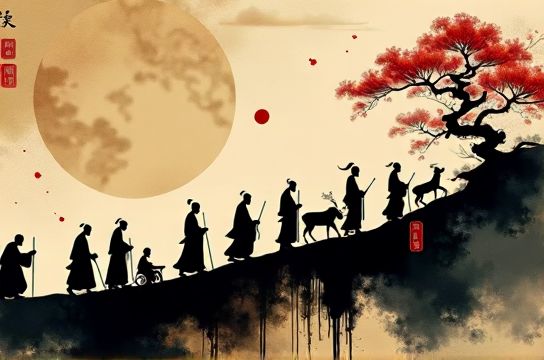
TCM isn’t just acupuncture and herbs. It’s a 3,000-year-old medical tradition rooted in philosophy, observation, and practice. From oracle bones to imperial hospitals, here are the game-changing moments that built modern TCM.
1. The Shang Dynasty (1600–1046 BCE): First Clues
Believe it or not, the earliest hints of TCM come from cracked turtle shells. Yes, really. During the Shang Dynasty, healers used pyromancy — burning bones to predict illness. While not 'medicine' in the modern sense, these rituals show early attempts to link health with cosmic forces, laying the groundwork for TCM’s holistic view.
2. Huangdi Neijing: The Big Bang of TCM (circa 100 BCE)
This is where TCM got serious. The Huangdi Neijing (Yellow Emperor’s Inner Canon) is the first comprehensive medical text. It introduced core concepts like Qi, Yin-Yang, and the Five Phases. Think of it as the 'Bible' of TCM — still studied today.
3. Han Dynasty Breakthroughs (206 BCE – 220 CE)
Zhang Zhongjing dropped the Shanghan Lun — a clinical masterpiece focusing on herbal formulas for fevers. Around the same time, Hua Tuo pioneered surgery (with wine anesthesia!) and therapeutic exercise (wuqinxi — animal mimicking moves).
4. Tang Dynasty Standardization (618–907 CE)
The first official medical school? Yup — established in 624 CE. The Tang government compiled the Newly Revised Materia Medica, listing 850 medicinal substances. This was the world’s first state-sponsored pharmacopoeia.
5. Song Dynasty Innovation (960–1279 CE)
Printed medical texts went mainstream. Wang Weiyi designed the first bronze acupuncture model for training. Acupuncture points were standardized — a huge leap in education and consistency.
6. Modern Revival & Global Spread (20th–21st Century)
After near extinction in the 1920s, TCM made a comeback. In 1950, China officially integrated TCM into the national healthcare system. Today, WHO recognizes over 100 conditions treatable with acupuncture and herbal medicine.
Key TCM Milestones at a Glance
| Period | Milestone | Impact |
|---|---|---|
| Shang Dynasty | Pyromancy & oracle bones | Early mind-body-health connection |
| Warring States–Han | Huangdi Neijing published | Foundation of TCM theory |
| Han Dynasty | Shanghan Lun by Zhang Zhongjing | First clinical treatment guide |
| Tang Dynasty | State Medical Academy founded | First formal TCM education |
| Song Dynasty | Bronze acupuncture model | Standardized point location |
| Modern Era | WHO recognition (2019) | Global legitimacy |
From ancient divination to evidence-based practice, the journey of TCM history is anything but static. It’s a living tradition — constantly adapting, yet deeply rooted in timeless principles. Whether you're a skeptic or a believer, you can’t ignore its impact.